
Will the Apple Watch Series 12 Kick off a New Era for Apple’s Wearables?
 Galina Bogdanova
Toggle Dark Mode
Although the bulk of the rumor mill typically focuses on Apple’s upcoming iPhones — and that’s especially true this year with the anticipated launch of Apple’s first foldable iPhone — those aren’t the only products we’re expecting in September. The fall is also that time of year when Apple unveils up to three new Apple Watch models, and while we’re not sure how many are coming this year, new reports are starting to surface on what we can expect from at least the mainstream Series 12.
The consensus among leakers and analysts over the past few months is that we will see an Apple Watch Series 12 and Apple Watch Ultra 4, although the jury is still out on the latter model, as Apple only released the Ultra 3 last year, and it has yet to settle into an annual cycle for that higher-end model. The theory that Apple will skip the Apple Watch SE this year is considerably less surprising, since only three of those have been released since the first one came along in 2020, and the Apple Watch SE 3 is less than a year old.

As to what may be coming in the Series 12 and the Ultra 4 — if the latter one makes an appearance — expect mostly iterative improvements. That’s been the playbook for the Apple Watch since at least 2020, and every time we hear about exciting new changes, we almost always come away disappointed after Apple’s event.
That’s not to say there haven’t been significant small changes made over the years. The Apple Watch Series 7 did get a larger, nicer, and more durable display and also brought fast charging to the wearable for the first time. However, many were let down because the pundits had everyone expecting a wholesale redesign (and no, Apple didn’t chicken out and change the design at the last minute — those were simply more rumors started by leakers who couldn’t admit they got it wrong).
We saw the same effect in 2024 when predictions of a new “Apple Watch X” led folks to expect Apple would release a big “anniversary edition” in September. While reports closer to the event were more circumspect, Apple’s decision to hold its event on September 9, 2024 — ten years to the day of the first Apple Watch announcement — got everyone’s hopes up again.
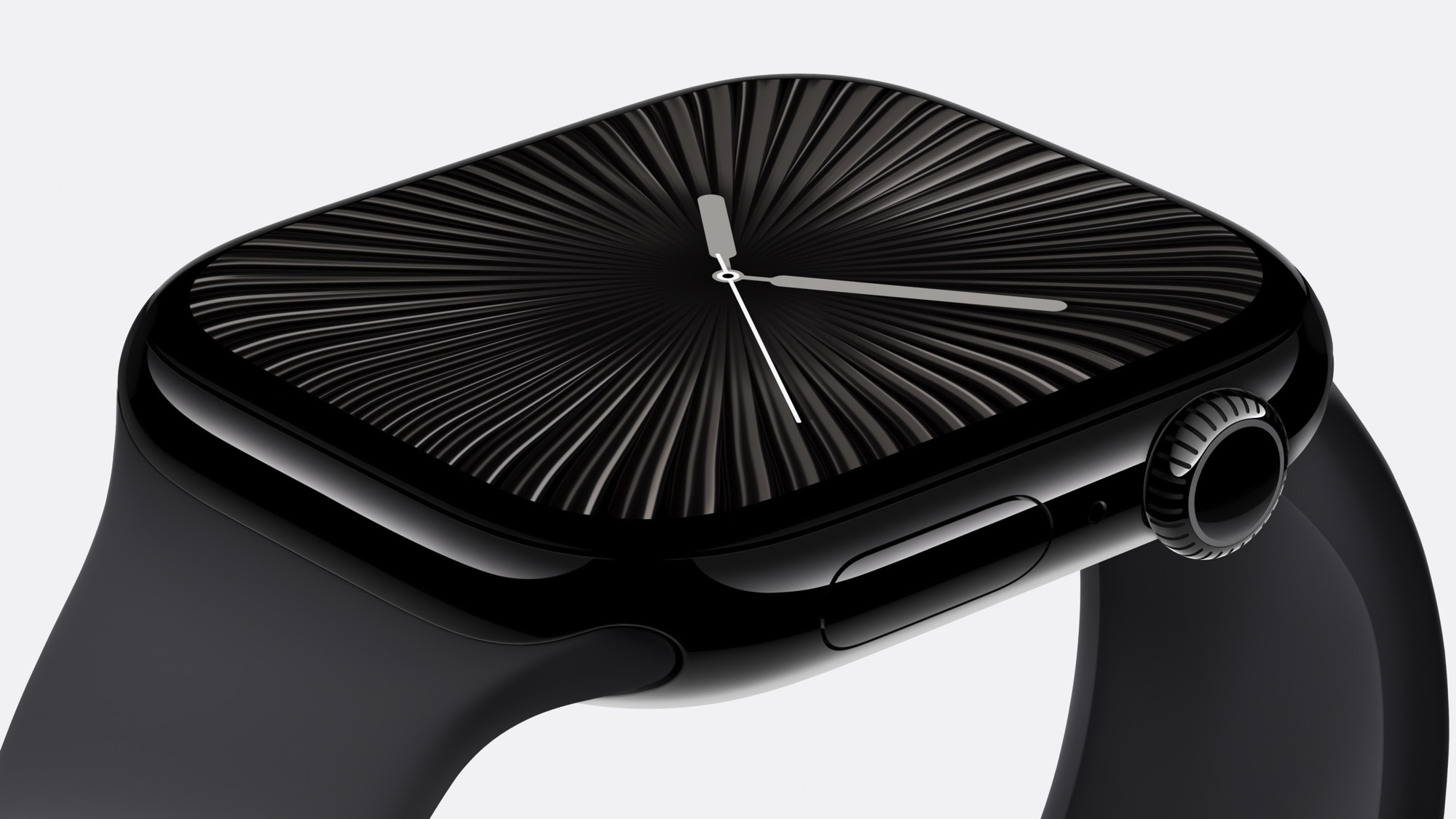
That said, the actual Apple Watch Series 10 still sported some nice design changes, but they were evolutionary: a larger display with better viewing angles and a thinner and lighter design. Essentially, it was a repeat of the kind of changes we saw with the Series 7 — and the Series 4 before that — suggesting that Apple has settled into a three-year cycle of modest design improvements.
If that’s true, then it’s fair to say that we can expect the Apple Watch Series 12 to look identical to the current model. It’s likely too soon for Apple to make any sweeping changes to the look of the wearable. This suggests the real changes will be on the inside.
That will undoubtedly include a new chip. Although it remains to be seen whether that will result in any performance improvements, the timing suggests it’s due for some.
Like the design, Apple doesn’t fully refresh its Apple Watch chips each year, instead repackaging the same core silicon — and last year it didn’t even do that, with the Apple Watch Series 11 sporting the same S10 chip found in its 2024 predecessor.
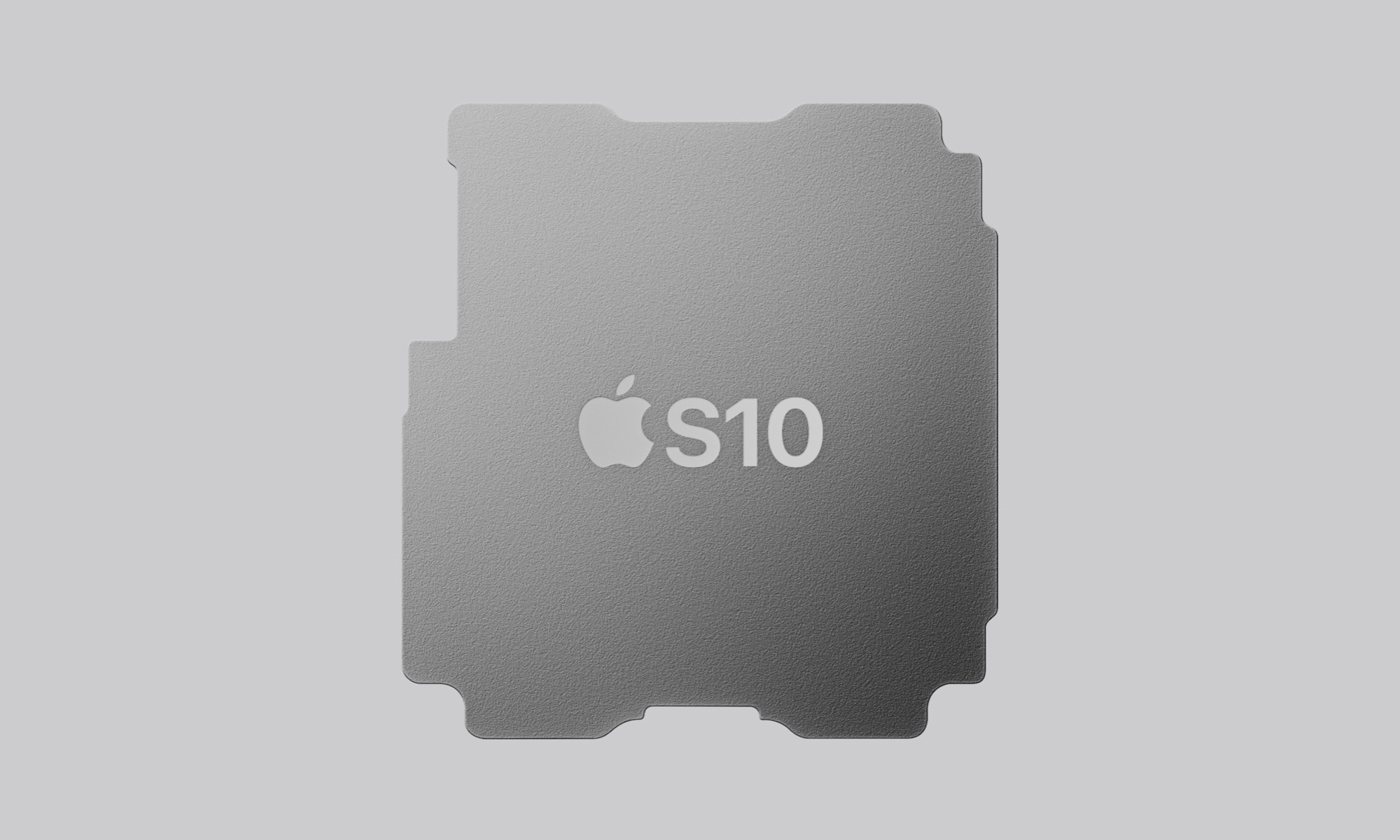
Still, even if Apple had called it the “S11,” it would have undoubtedly been the same chip under the hood, just like we saw with previous Apple Watch generations: the S4 and S5 and the S6, S7, and S8 were all part of the same core silicon family, meaning the Apple Watch Series 4, Series 6, and Series 9 were the only models that brought actual performance improvements — and it’s also why most of the new software features that came to the Series 10 and Series 11 also work on the Series 9.
Since Apple has used the same silicon for the last three generations of Apple Watch, it’s quite likely that this year’s “S12” chip will result in another performance boost for the Apple Watch Series 12. The cycle alone strongly suggests this, but internal code references have also shown this year’s models will get a new “Watch8” family designation. That’s a step up from the “Watch7” shared by the Series 9 through Series 11 models, which means we’re entering a new era for Apple’s wearable.
Touch ID on Your Wrist?
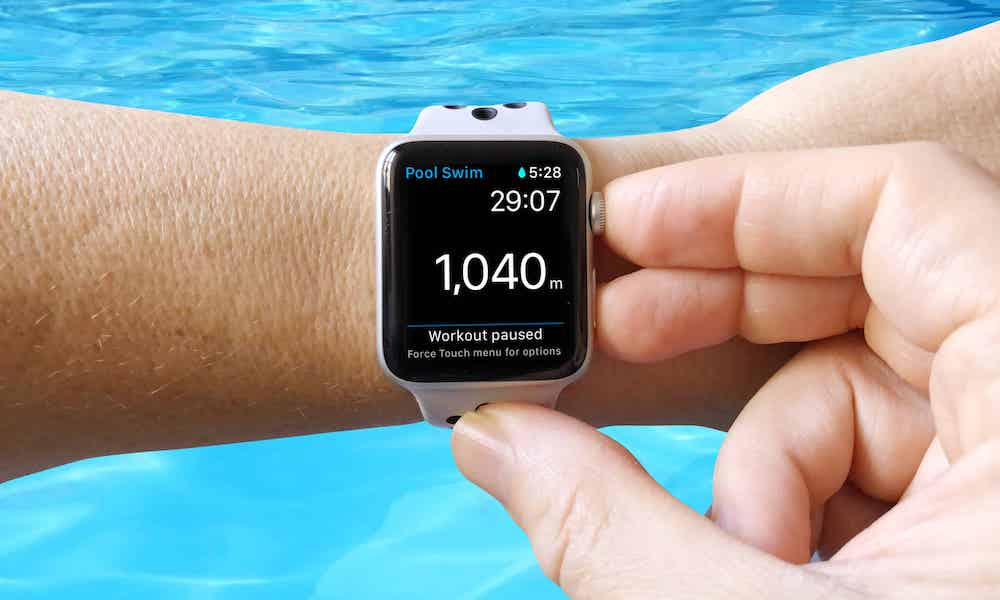
Nevertheless, there’s one rumor that’s been making the rounds that could represent a pretty big upgrade — if it’s accurate.
Last summer, Filipe Esposito reported at Macworld on internal code references that suggested that Apple was at least experimenting with Touch ID on the Apple Watch. References to the 2026 Apple Watch were seen alongside mentions of “AppleMesa” — Apple’s known internal codename for Touch ID.
Nevertheless, this was believed to be very preliminary even at the time. There were no references to actual Touch ID drivers, and Esposito was quick to point out that this definitely wasn’t coming to the 2025 models. However, with a few supply chain reports hitting (yet again) at another “major redesign” of the 2026 Apple Watch that would include new sensors, it seemed at least plausible that Touch ID could be among them.
Still, the fact that more reliable sources like Ming-Chi Kuo and Bloomberg’s Mark Gurman have been dead silent on the notion of Touch ID on the Apple Watch should give us some pause. Apple often experiments with things years before actually implementing them — and sometimes it scraps its plans altogether if it can’t make something work to its satisfaction.
Hence, it’s not all that surprising to see Weibo leaker Instant Digital declaring the rumors of Touch ID on the Apple Watch to be “completely false.” Apple has more important things to focus with the Apple Watch, the leaker says, such as larger batteries and more advanced health sensors, than to worry about a fingerprint sensor that’s of dubious value to the user experience.
Apple rarely adopts technology for its own sake, and a Touch ID sensor on the Apple Watch feels like it would fall into that category. The Apple Watch already offers a light form of biometric authentication in Wrist Detection, which leaves the wearable unlocked as long as it remains in contact with your skin. This means most users only have to unlock their Apple Watch once per day and can then continue conveniently using it without any further authentication requirements — even for things like Apple Pay. A Touch ID sensor would add needless friction for something that already works quite well. Apple could make it optional, of course, letting users choose between Wrist Detection and a higher-security Touch ID mode, but that’s spending a lot of engineering effort to add a feature that many folks may never use.
That said, there’s evidence that Apple is at least considering this, but that raises the question of whether it’s simply for a new biometric authentication method or part of a much more significant new feature Apple has in mind where higher security might be needed. If so, Touch ID could come to the Apple Watch eventually, but it may be a few years before the rest of the pieces are in place to truly make it necessary for whatever Apple has in mind.
[The information provided in this article has NOT been confirmed by Apple and may be speculation. Provided details may not be factual. Take all rumors, tech or otherwise, with a grain of salt.]






