Apple’s ‘iPhone Fold’ Could Be a Pocketable iPad Dream (and a Wallet Nightmare)
 AI-generated concept image of a foldable iPhone [iDrop News / AI]
Toggle Dark Mode
The rumor mill surrounding Apple’s plans for a foldable iPhone has kicked into high gear over the past year, with all signs pointing to 2026 being the year of the “iPhone Fold.”
By now, we know that we can expect a book-style foldable, similar to Samsung’s Galaxy Z Fold and Google’s Pixel Fold, and more recent reports have pointed to a crease-free display, battery power to spare, and the return of Touch ID. It’s unclear if that lost one will be in addition to, or instead of, Face ID, but it’s almost certainly the answer to the conundrum of providing biometric authentication on a device with two screens.
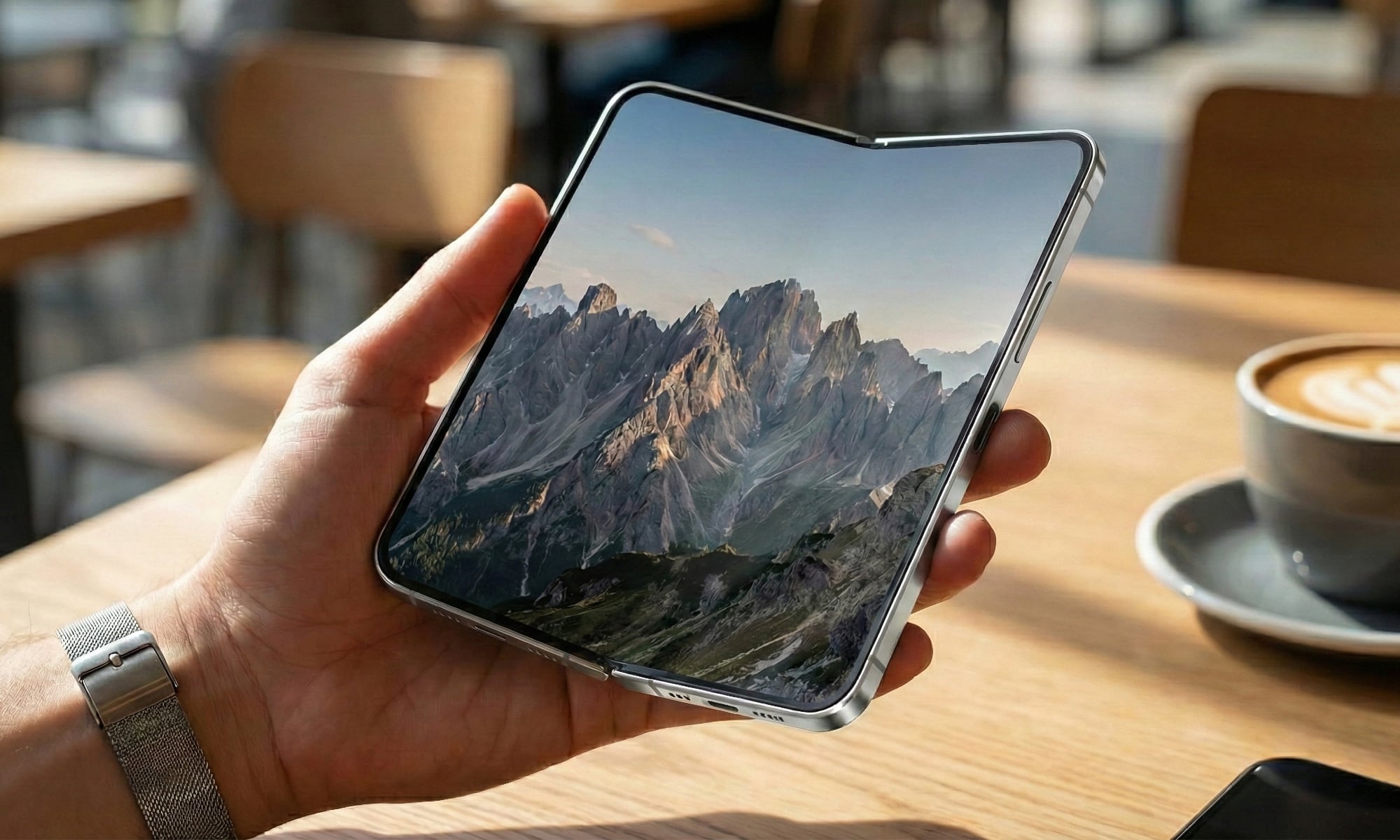
By all accounts, Apple’s foldable iPhone will effectively be a pocketable iPad mini, expanding to a 7.8-inch display when open. However, it’s never been entirely clear how Apple plans to use that extra screen real estate.
As I wrote in 2022, one of the biggest challenges Apple faced in creating a foldable iPhone was getting iOS ready for it. Back then, Samsung’s Galaxy Z Fold 4 had just arrived, and Android was just beginning to come of age, with Android 12L being the first to support larger screens. Samsung had taken its own One UI layer and added some clever multitasking features that really took its new foldable to the next level. Meanwhile, Apple was still floundering to grasp the concept of multitasking in iPadOS.
Of course, a lot has changed since then. Last year’s release of iPadOS 26 was a game-changer that finally gives the iPad the potential to replace a laptop, but it’s also clear that it was paving the way for the iPhone Fold.
Still, the question has remained as to whether this will run iOS, iPadOS, or some hybrid flavor in between. While we’ve already heard a great deal from analysts and leakers about the foldable iPhone’s hardware specs, it’s only this week that Bloomberg’s Mark Gurman is giving us some insight into what the software side of things will look like.
iPad-Style Multitasking…
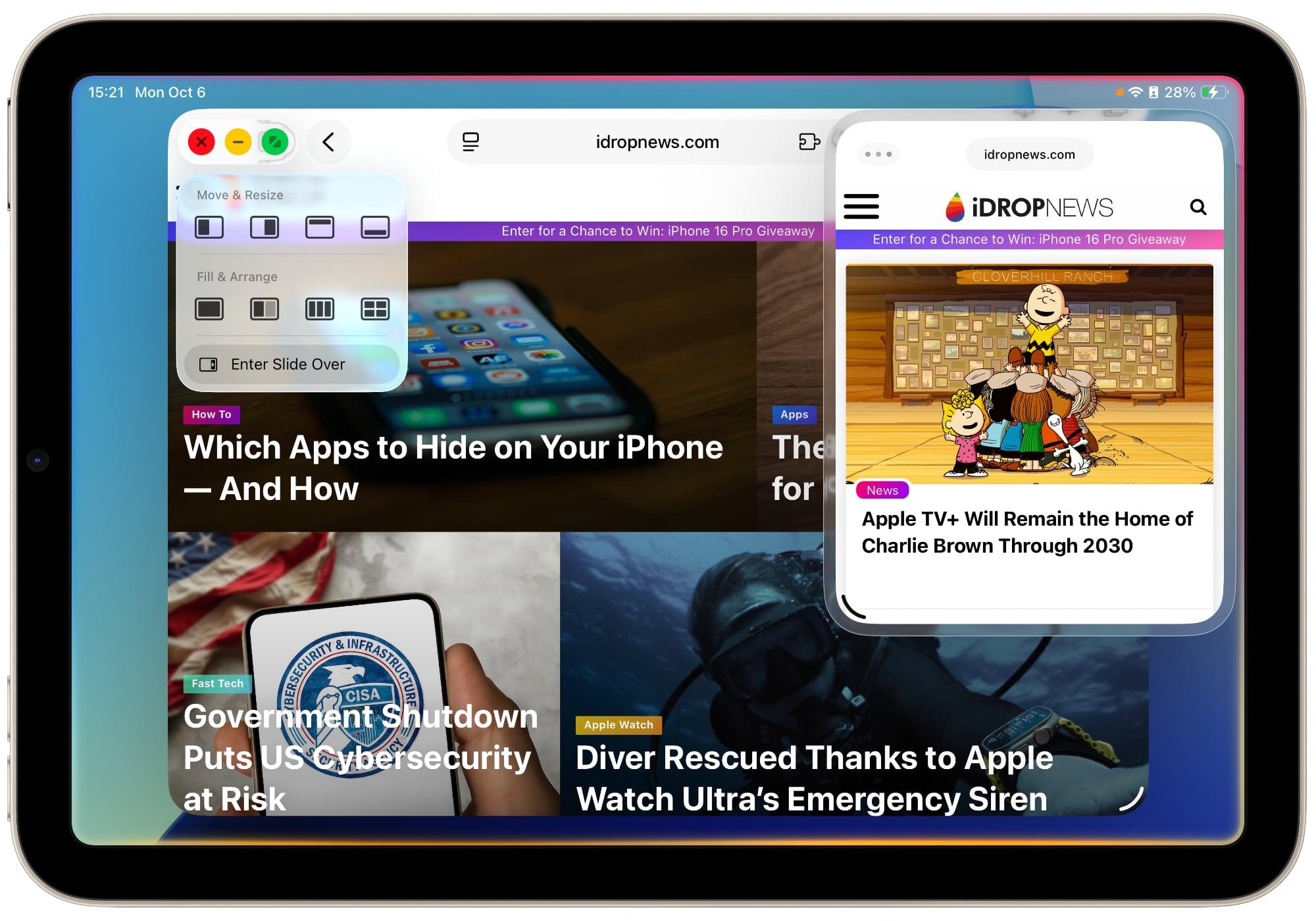
Apple has to do something with all the extra real estate on the foldable iPhone’s expansive 7.8-inch display, and it seems the answer will be to adopt an iPad-style layout, allowing apps to run side-by-side for the first time on an iPhone.
Apple Inc.’s forthcoming foldable iPhone will include updates to the iOS operating system that enable iPad-like layouts and side-by-side apps for the first time, enhancing the device’s appeal for multitasking.
Mark Gurman
The inside display is expected to use a wider aspect ratio than most foldable currently on the market, giving it a feel more like an iPad mini held in landscape orientation, and Gurman’s sources believe that could be a key selling point to help distinguish it from the rest of the market by making it more appealing for watching video and running traditional productivity apps.
…But No iPad Apps
However, the similarity to the iPad may end there. According to Gurman, the iPhone Fold will still run iOS — not iPadOS — and won’t have direct support for iPad apps. Instead, he says developers will need to “redesign their iPhone apps to more closely resemble iPad software.”
Apple is developing new iOS app layouts and revamping its core iPhone programs to add sidebars along the left edge of the screen, similar to many of its iPad apps. Developers will also be able to adapt their iPhone software for the new interface, which will use proportions similar to an iPad in landscape mode.
Mark Gurman
There’s some logic to this, as iPadOS 26 would arguably be too much for a foldable iPhone. Power users might be disappointed by not running several windows at once, but the simpler multitasking system should make the interface far more accessible and less confusing for typical users.
Taking Time to Get It Right
Gurman goes on to note that Apple’s insistence on producing a foldable without the problems that have plagued its rivals is one of the reasons it’s taken so long. In addition to getting iOS and iPadOS ready for the foldable experience, Apple also mandated from the beginning that its foldable have a crease-free display and the most durable hinge ever used in a foldable device. Perfecting those two things has taken time, and Apple has had to make a few compromises along the way.
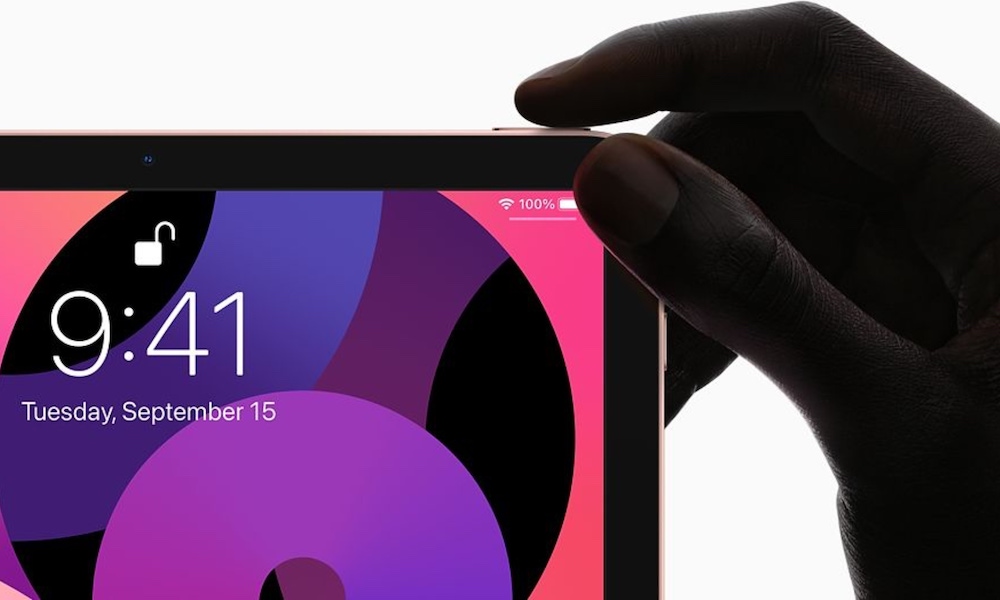
One of these things, Gurman says, will be the full removal of Face ID. Contrary to earlier speculation that the iPhone Fold might support Face ID it only one mode, Apple is putting Touch ID into the side button. That will be the first time we’ve seen the fingerprint sensor on a new iPhone since the 2022 iPhone SE — a model that was really just a throwback to the design of the 2017 iPhone 8. The side button placement will be a first for any iPhone, although it will mirror what Apple has done on most of its iPads over the past five years or so, making another way in which the foldable iPhone will be simpatico with Apple’s tablets.
The elimination of Face ID was necessary to make the front panel as thin as possible. Without the full sensor array, Apple will also be able to use a hole-punch cutout for the camera, although the Dynamic Island user interface will still be present to handle system alerts and all the other stuff it does. On the inside, Gurman says Apple tested an under-display camera, but determined that it produced worse image quality.
Without Face ID, one open question is whether the iPhone Fold will feature a True Depth camera. That’s long been considered integral to Face ID, as it was introduced in the iPhone X at the same time, but Face ID also uses additional sensors. Apple could cut those while still leaving the depth-sensing camera to support other features like portrait photos, but we’ll have to wait and see how that plays out. Like most rival foldables, the iPhone Fold isn’t expected to be a photography powerhouse, likely featuring the same two rear cameras as a standard iPhone model. Apple will save the higher-end photo capabilities for the iPhone Pro models.
How Much Will It Cost?
Gurman doesn’t get into specifics about the prices, other than to echo the “roughly $2,000” that’s long been reported. However, Weibo leaker Instant Digital weighed in this week with estimated Chinese prices. If accurate, these would put the foldable iPhone somewhere between $2,300 (15,999 yuan) for a 256 GB model and $2,900 (19,999 yuan) for the 1 TB version.
To be clear, we also have no idea what Apple will call its new foldable. We’ve been using “iPhone Fold” as a placeholder, which in some ways is as likely a name as any, but it’s also possible that Apple won’t want to do something quite so “on the nose,” since Samsung has already been using that for years — and Google already jumped on that bandwagon.

A relatively unknown Weibo leaker, WhyLab, has speculated that this is where the long-rumored “iPhone Ultra” name may finally land, but also suggests the starting price could be as low as 10,000 yuan, which seems a little low compared to everything we’ve heard from other, more reliable sources.
In the same post, WhyLab also claims that the new touchscreen OLED MacBook Pro will be dubbed the “MacBook Ultra” and the upcoming camera-equipped AirPods could become the “AirPods Ultra.”
While these ideas aren’t too far-fetched, they’re best taken with a healthy dose of salt, and not just because the source is new to the game. Product names are one of the few cards that Apple holds very close to its chest; they rarely leak out at all, and when they do, it’s days, not months, before an official announcement. After all, we only heard the name “MacBook Neo” — a name that nobody saw coming — the day before the announcement, and it was Apple itself that let the cat out of the bag.