Apple’s New Studio Displays Are a Sight for Sore Eyes (And Wallets)
Toggle Dark Mode
When Apple CEO Tim Cook teased a ‘big week ahead’ last Thursday, it wasn’t too hard to get our bingo cards ready for what was undoubtedly coming. After all, Apple’s product launch schedules have become somewhat predictable, so it was a given that the iPhone 17e, M4 iPad Air, and M5 MacBook Air were all in the cards. Add in the overdue M5 Pro/Max MacBook Pro models, and the much-rumored low-cost MacBook that’s expected to show up tomorrow, and that’s already a pretty full slate.
Still, there was at least one other “wildcard” product in the mix: the Studio Display, Apple’s premium monitor that debuted alongside the Mac Studio in 2022. With four years since its last update, it seemed the timing was right for a new Studio Display, and Bloomberg’s Mark Gurman recently said it was ready to ship — although he was skeptical that Apple would launch it this week as he felt it might be “overkill” during Apple’s “early-March frenzy.”

That left an open question as to whether we’d see a new Studio Display this week, particularly since the Mac Studio that serves as its natural partner doesn’t seem to be ready just yet. However, I can personally attest that it’s also a great companion to the MacBook Pro, and with Apple debuting the most powerful MacBooks ever today, it obviously decided that it was the perfect time to announce not just one, but two new Apple Studio Displays.
The Apple Studio Display
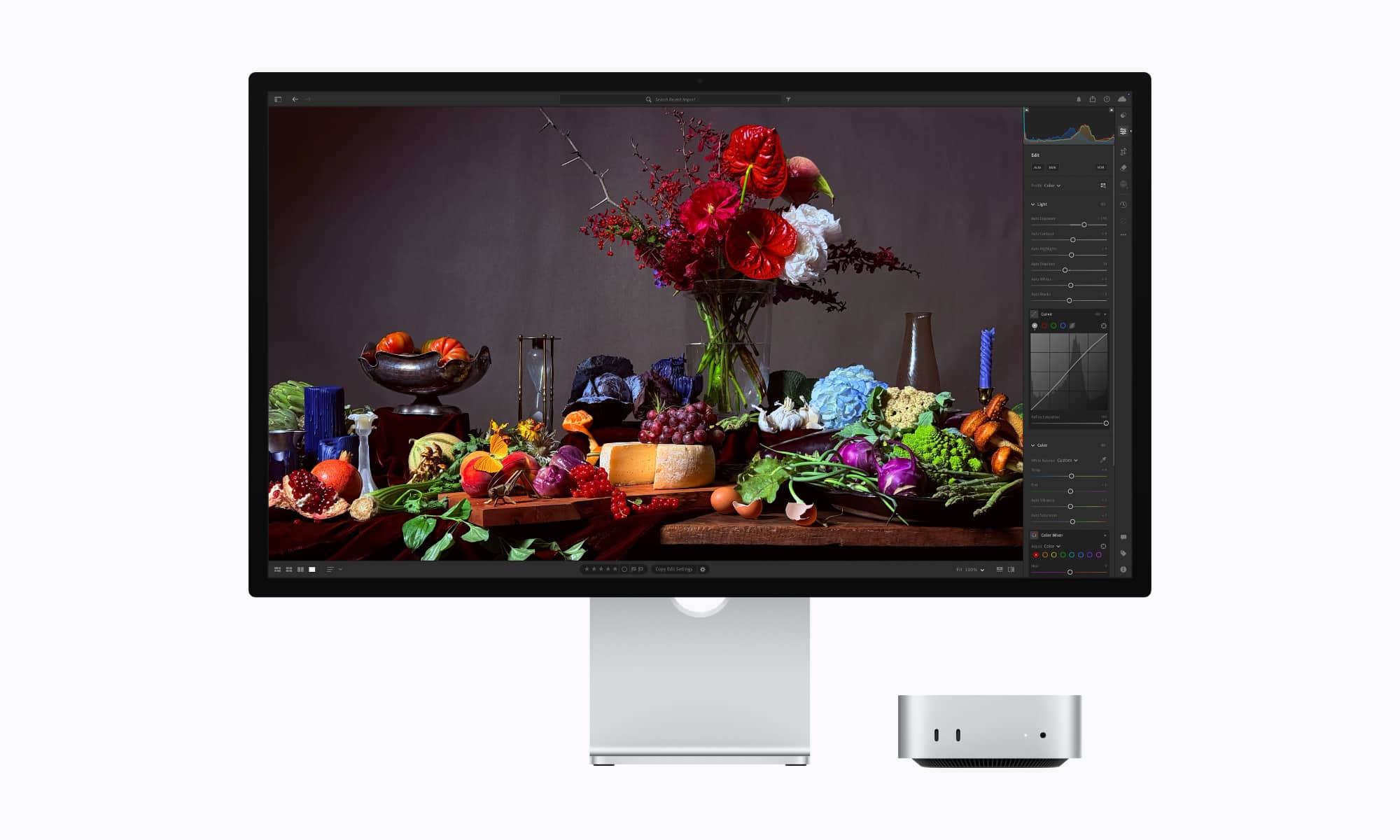
The first of these, the Apple Studio Display, is the direct successor to the 2022 model. It features the same design and sells for the same price, with the only notable changes being a significant upgrade to the Thunderbolt ports and the addition of Desk View to the 12 MP Center Stage camera — a feature that previously required mounting an iPhone on top of the screen in Continuity Camera mode. Apple says the image quality has also been improved.
While the new Apple Studio Display switches to Thunderbolt 5, that actually has a tangible benefit, as it now offers a second Thunderbolt 5 port on the back. The 2022 Apple Studio Display had a single Thunderbolt 3 port, but that was used to connect to your Mac; the other three ports were straight USB-C, meaning the display couldn’t be used as a Thunderbolt hub. The extra port on the 2026 Apple Studio Display means you’ll no longer need to sacrifice a Thunderbolt 5 port just to connect your screen, as it effectively creates a pass-through connection. The other two ports remain USB-C.
Everything else about the new Apple Studio Display remains mostly the same as the prior model, including a 60 Hz refresh rate, 5K resolution (5120 x 2880 pixels at 218 pixels per inch), a high-fidelity six-speaker sound system with support for Spatial Audio, and a studio-quality three-mic array, although it now includes a Thunderbolt 5 Pro cable in the box, and Apple notes the speaker system delivers “30% deeper bass,” which suggests there have been a few internal tweaks, even if the specs remain unchanged.
It starts at the same $1,599 as its predecessor, and includes a tilt-adjustable stand, and can be upgraded to a tilt- and height- adjustable stand or nano-texture glass for extra cost. It will be available for pre-order starting tomorrow, March 4, and arrive in stores next Wednesday, March 11.
The Apple Studio Display XDR
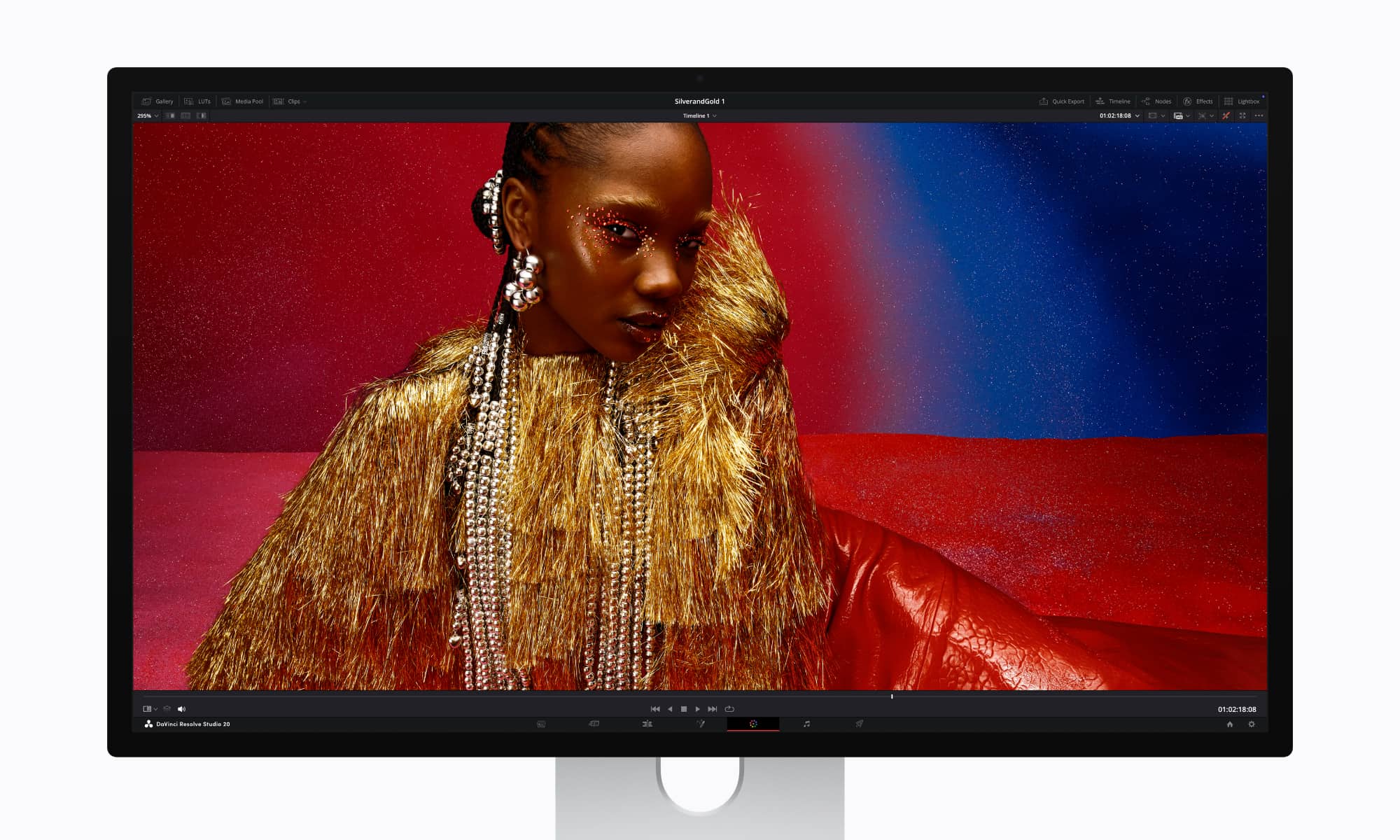
While the Apple Studio Display is largely a spec-bump upgrade, the real star of the show is the new Apple Studio Display XDR, which provides a flagship monitor to replace the 2019 Pro Display XDR — and does so at a less eye-watering price tag.
The Studio Display XDR will still set you back at least $3,299, but that’s a lot better than the $4,999 price tag of its predecessor. It also packs in a lot more at that lower price tag, since technology has evolved just a bit in the past seven years, although the biggest compromise is its smaller 27-inch size, which is something folks will have to live with as the Pro Display XDR has been officially discontinued in light of this latest model.
The Studio Display XDR is still a 5K display, with the same resolution as its more affordable sibling, but it stands out by offering a 120 Hz refresh rate with Adaptive Sync, plus mini-LED backlighting with 2304 dimming zones, and up to 1,000 nits of SDR brightness and 2,000 nits of HDR peak brightness.
This also unlocks a whole new set of reference modes that go beyond even what the original Pro Display XDR offered. This includes Adobe RGB-D50 for Design and Print and Adobe RGB-D65 for Photography, plus DICOM Medical Imaging at 350 and 600 nits.
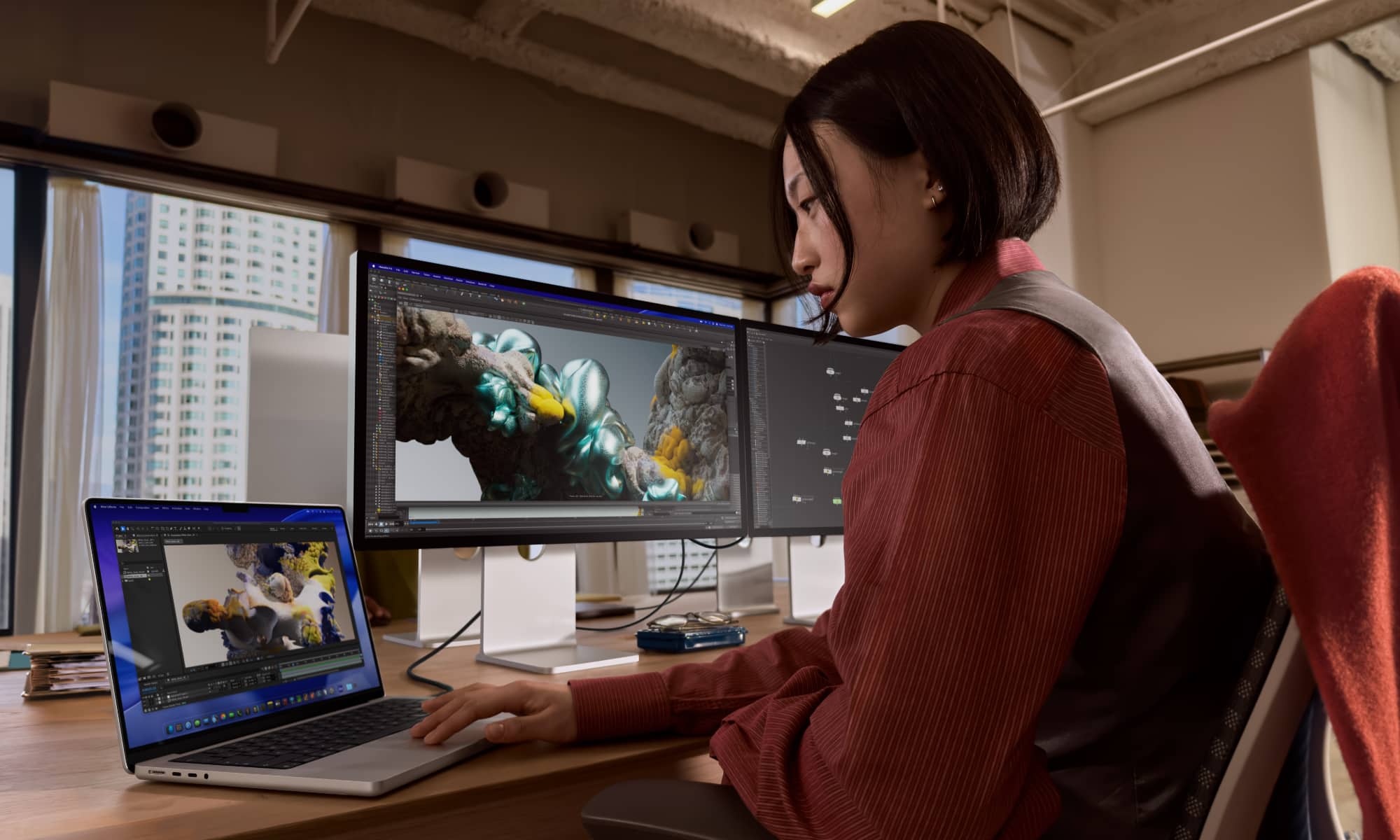
It’s this much better panel that really sets the Studio Display XDR apart, as the rest of its features are on par with the Studio Display; it features the same 12 MP Center Stage Camera with Desk View, the same high-quality studio speaker and microphone systems, and two Thunderbolt 5 ports, although the higher-end model offers 140W host charging — enough to keep even a 16-inch M5 Max MacBook Pro happy.
It also comes in the same configurations, although the base $3,299 model comes with the tilt- and height-adjustable stand, which is a $400 upgrade on the standard Studio Display, effectively putting the actual price difference between the two models at only $1,300. A nano-texture glass upgrade is also available for another $300. As with the base Studio Display, you’ll get a Thunderbolt 5 Pro cable in the box to take advantage of the new ports, and the Apple polishing cloth if you opt for the nano-texture glass.