Leaks Suggest iPhone 18 to Get Even Brighter
Toggle Dark Mode
While most of the reports we’ve been hearing recently center on Apple’s iPhone 18 Pro and the much-rumored “iPhone Fold,” the standard iPhone 18 isn’t being left out entirely. While we haven’t heard much about what to expect from the new model beyond the usual year-over-year improvements, a new report suggests it could have one noticeable change in store: a brighter screen.
That’s according to a post from “Instant Digital” on Weibo. As shared by MacRumors , the serial leaker has said that BOE, one of the Chinese companies that supplies screens for the iPhone, may be ruled out due to its inability to make display panels bright enough to meet Apple’s new requirements.

That indirectly points to a brighter display for the iPhone 18, although there’s no indication of exactly how much brighter we should expect it to be.
It may also be too early to say for sure where this will end up. Several reliable sources have already suggested that we won’t be seeing an iPhone 18 this year. Apple has been mulling over a strategically split release cycle where its big September event would focus exclusively on the flagship pro models, with the standard iPhone held off until the following spring to be released alongside its next “e-series” model (following this year’s iPhone 17e, which will likely show up in the next few weeks). With that relatively new budget model becoming a regular occurrence, plus the iPhone Air and upcoming “iPhone Fold,” it’s easy to see why Apple wants to split things up.
The Shifting iPhone Release Cycle
This would explain why we’re hearing so much more about the iPhone Pro models, but it may not be the sole reason. Apple’s standard iPhone models traditionally get less coverage in the rumor mill as the changes are often minimal, and even when something does change, it’s typically less newsworthy than the groundbreaking features that come to each year’s iPhone Pro lineup.
This is likely to be even more true for the iPhone 18. After four years of relatively unchanged screen specs, Apple took a huge leap forward when it added its 120 Hz ProMotion display to the iPhone 17 last year, effectively giving it the same panel and features found in the iPhone Pro models — including the Always On display. That’s likely to be the norm on the standard iPhone for the next few years, even as the iPhone Pro displays advance in other ways.
The 120 Hz ProMotion display is already a leading industry standard. While some Android handsets go further — Asus and Motorola are well known for their 144 Hz and 165 Hz displays — most agree that those are overkill for all but the most gaming-focused smartphones.
That leaves brightness as the only practical upgrade for Apple to help boost its displays, and it’s already shown a penchant for this with previous models. Over the past few years, Apple has doubled the peak HDR brightness, from 800 nits on the iPhone 13 to 1,600 nits on the iPhone 17, with the latter now hitting 3,000 nits of outdoor peak brightness.
Closing the Gap Between Standard and Pro Tiers
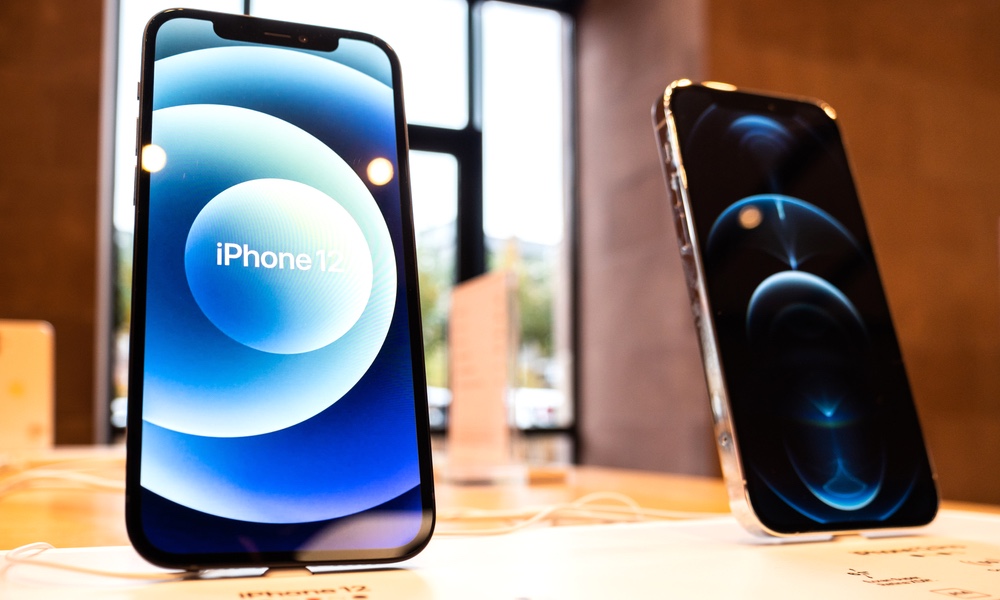
For years, the standard iPhone models lagged behind their pro counterparts in this area, and Apple often seemed to deliberately make this distinction to set the two lineups apart. For example, the 2020 iPhone 12 and iPhone 12 Pro used identical screens with the brightness artificially turned down on the iPhone 12 — even when swapping in a brighter iPhone 12 Pro display.
That difference became a bit easier for Apple to justify when it moved to 120 Hz ProMotion displays in the iPhone 13 Pro lineup, leaving the standard models behind with 60 Hz refresh rates, but it all changed last year when the iPhone 17 got the same panel as the iPhone 17 Pro, and Apple therefore decided to give them the same specs.
That leads to the obvious question of what this means for the iPhone 18 Pro. A brighter iPhone 18 display wouldn’t just be “catching up” to the Pro model; it would exceed what the iPhone 17 Pro is currently capable of. Apple is unlikely to put a better screen in its standard model, so if these reports about the iPhone 18 screen are true, then we have to assume the change will be coming across the board, and we’ll see it first this fall.
The other possibility is that BOE is simply having trouble cranking out OLED panels at the current brightness levels. Korea’s The Elec suggests that’s not a new problem; the display maker has been having quality problems since last year, when it began supplying more complex LTPO OLED panels for the iPhone 17 120 Hz display, as opposed to the older LTPS panels for prior standard models with a 60 Hz refresh rate.
This would be the first time BOE has been called upon to produce these more sophisticated panels, as Samsung Display is the traditional supplier for the iPhone Pro screens, which have used LTPO technology since it was introduced in the iPhone 13 Pro.
Some recent reports suggest the iPhone 18 lineup could move to more advanced “LTPO+” panels, possibly tied to the company’s work on under-display Face ID sensors. However, even if those are accurate — and they may be premature — Apple’s usually playbook would be to restrict that new technology to the iPhone 18 Pro and iPhone 18 Pro Max. Still, if these are being considered for the iPhone 18, it’s not hard to imagine BOE’s struggles with plain LTPO disqualifying it from producing the more complex “Plus” variant, which uses a tandem OLED structure similar to what Apple debuted in the 2024 iPad Pro.
[The information provided in this article has NOT been confirmed by Apple and may be speculation. Provided details may not be factual. Take all rumors, tech or otherwise, with a grain of salt.]