Leak Suggests the OLED MacBook Pro Is on Track for This Fall
 Federico Orlandi
Toggle Dark Mode
There are good odds that Apple’s more powerful M5 Pro and M5 Max MacBooks are just about the corner, and now a new rumor suggests another reason that Apple may want to get its final M5 series MacBook Pro models out sooner rather than later.
While multiple reports over the past few months have hinted at a completely redesigned M6 OLED MacBook Pro coming in the next 12 to 18 months, a new supply chain leak suggests that these may be arriving earlier than expected.

According to a report from yeux1122 on Naver, Samsung has begun mass production of a new generation of cutting-edge OLED panels that are destined for a new Apple MacBook Pro. These panels will eventually be distributed more widely, but not until after Apple gets its hands on the first batch. The aligns with other reports we’ve seen that Apple and Samsung have inked an exclusive deal to provide OLED panels for future Macs.
These particular panels are described as 8.6-generation OLED screens that weren’t expected to go into production until later this year, which implies that at least one critical component of the new M6 MacBook Pro is ahead of schedule.
Of course, this doesn’t necessarily mean the M6 MacBook Pro will be ready any sooner, since there’s more to building a new Mac than just the display, and Apple may still need to get everything else lined up to begin mass production. Still, it’s a good sign that things are moving briskly ahead, and with Apple’s “just-in-time” logistics, a January start for panel production usually signals a Q4 product launch.
Thin is Back In: A Next-Level MacBook Pro

Apple’s last big MacBook Pro redesign was in 2021, when it unveiled its new 14-inch and 16-inch form factors to house the powerful M1 Pro and M1 Max chips. The new design adopted mini LED displays, ditched the controversial Touch Bar in favor of a row of physical function keys, and brought back many of the ports that had been dropped years earlier in Apple’s quest for design minimalism.
Subsequent M-series MacBook Pro models have shared this same design, changing things up only slightly in 2023 when Apple added a new Space Black color to the mix and welcomed the base M3 model into the family, ditching the legacy 13-inch Intel-era design that had been used for the prior M1 and M2 models.
Although Apple doesn’t necessarily run on a specific schedule for redesigning its Macs, five years is a good time to change things up, particularly as we move into the second wave of the Apple silicon era.
By all accounts, the M6 MacBook Pro will not only feature an OLED panel, providing even deeper blacks and richer and more vibrant colors than the mini LED used on current models, but it’s also supposed to allow for an even thinner design as Apple returns to its pursuit of slimness — without the compromises of previous attempts.
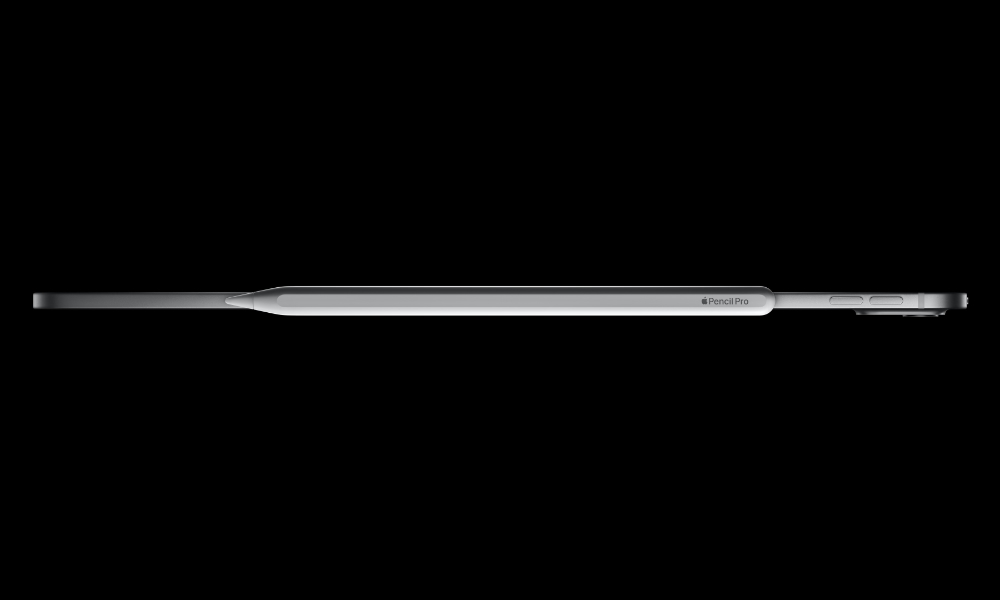
Apple’s modern “thinnovation” era began in early 2024 when its new M4 iPad Pro became the slimmest device the company had ever made, with the 5.3 mm 11-inch model beating out the record held by the 5.4 mm 2012 iPod nano, and the 13-inch model coming in at an even more svelte 5.1 mm.
Key to that ultra-thinness was Apple’s move to a tandem OLED panel that also solved the burn-in and longevity issues that had long plagued previous OLED technologies. These came as a first for any of its iPads, so it’s not hard to see how the same technology could be used to give a MacBook Pro the same treatment.
However, there’s only so far Apple can go with a MacBook Pro, especially with its commitment to return to a full set of ports in 2021. Previous attempts at creating ultra-thin MacBooks resulted in tradeoffs like the beleaguered butterfly keyboard and USB-C ports that required pros to carry around a bag full of dongles for connectivity. Apple doesn’t seem to have any intention of returning to those days; not only has it learned its lessons, but the forces that pushed for extreme thinness at all costs have long since left the company to pursue more whimsical ventures.
A ‘Touching’ Surprise?
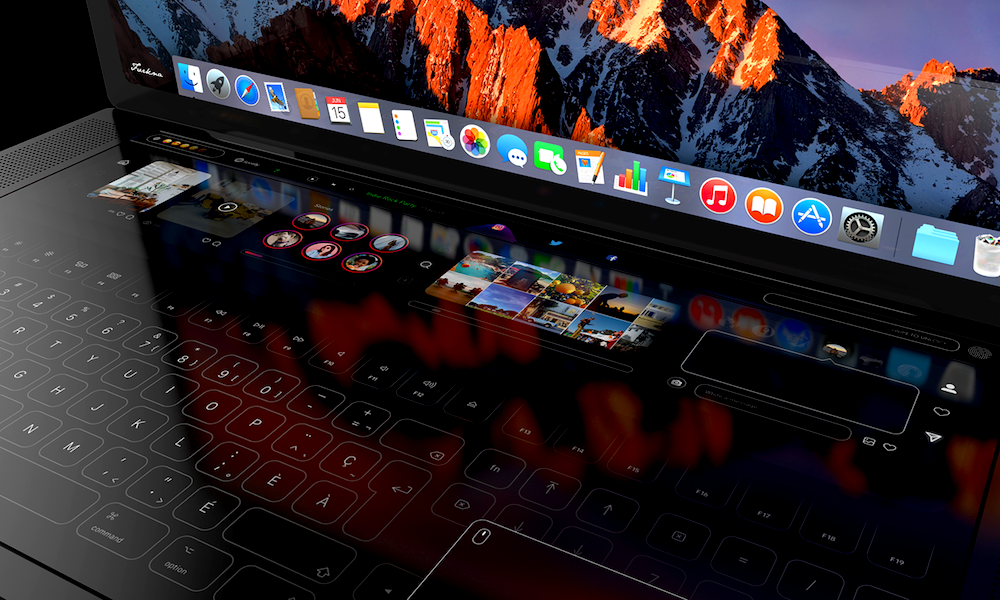
It was inevitable that Apple would eventually move to OLED for its Macs. We’ll probably see OLED across the board by 2030, but the MacBook Pro is the most logical place for the company to start.
However, recent reports have suggested that this year’s model may herald the biggest change to ever come to the lineup. Analyst Ming-Chi Kuo believes that, after years of holding out on the idea, Apple will use this OLED panel and redesign to introduce a touchscreen to the MacBook Pro.
While it remains unclear what form this will take, the technology is certainly ready to handle it. Samsung Display has already announced On-Cell Touch AMOLED technology (OCTA) that integrates touch-sensitive features directly into the OLED panel without the need for an extra touchscreen layer.
There’s no firm word on whether the new 8.6-generation displays that have reportedly just gone into production will feature OCTA, but it’s certainly within the realm of possibility.
Reports also suggest that Apple may remove the notch in favor of a hole-punch or Dynamic Island-style pill-shaped cutout for the camera, returning some missing real estate to the menu bar.
It remains an open question when these new MacBook Pro models will arrive. This OLED panel production rumor is encouraging — if it’s accurate — but there are many other pieces of the puzzle that need to come together. We don’t expect to see anything appear before October, but the nature of the redesign also suggests that Apple will wait until its entire set of M6 chips are ready so it can put its best foot forward by launching the new design on its most powerful M6 Max models, rather than staggering them like it did with the M5 models.
[The information provided in this article has NOT been confirmed by Apple and may be speculation. Provided details may not be factual. Take all rumors, tech or otherwise, with a grain of salt.]