Apple Still Perfecting Crease-Free Glass for the ‘iPhone Fold’
 EverythingApplePro
Toggle Dark Mode
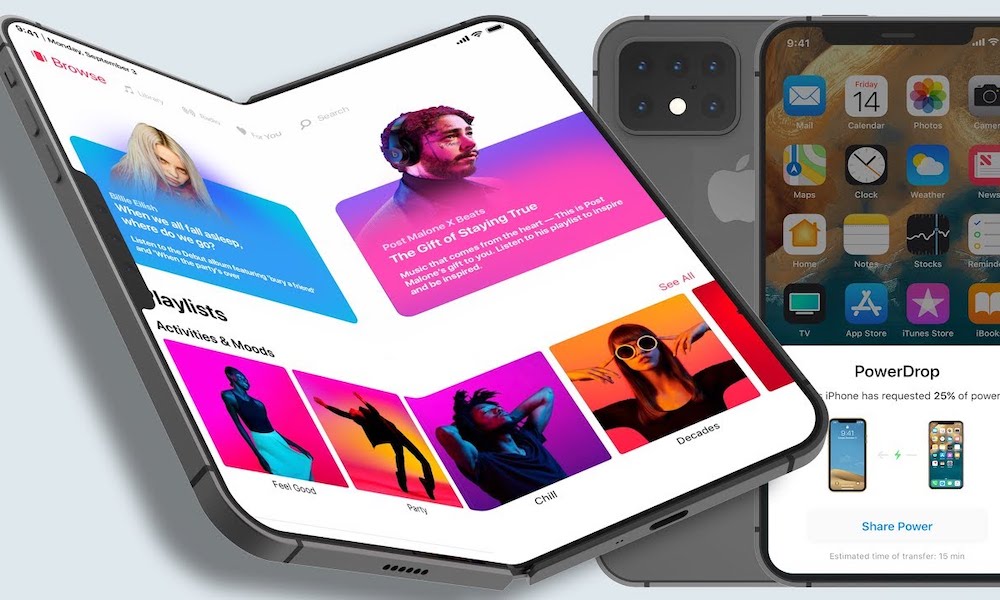
By all accounts, next year will mark the release of Apple’s long-awaited “iPhone Fold.” While Apple’s device is coming late to the foldable game, many analysts believe that’s because the company has spent years shaving off the rough edges that have plagued many other foldables.
It stands to reason that Apple — being Apple — wants to produce a device that puts its best design foot forward right out of the gate. One of the most important aspects in delivering an elegant foldable user experience is a crease-free display. That’s something that others like Samsung and OnePlus have only recently come close to achieving, but multiple insiders have said over the years that’s not a compromise that Apple is willing to make.
To give you an idea of how serious this is for Apple,reports of the company testing screens and hinges go back to 2019. It’s never been a question of if Apple could produce a foldable — a multi-trillion dollar company can certainly do anything its rivals can — but whether it can produce one that’s up to its standards. That’s understandable for a device that it reportedly plans to sell for at least $2,400.
Now, six years later, it seems that Apple still hasn’t achieved whatever that standard is. Even though every reliable analyst says the foldable iPhone is finally expected to arrive next fall, a Weibo report from leaker “Digital Chat Station” suggests it’s still working on perfecting the crease-free display.
Machine-translated from Chinese, the post reads:
Apple’s goal for a foldable screen is indeed “visually crease-free,” and they are experimenting with ultra-thin flexible glass (UFG) of varying thicknesses. Currently, there are still some technical challenges to overcome, but it won’t be available until September next year, so there’s still time.
Key to this problem is the challenge of the new UFG glass referred to above. This is Apple’s improvement on the “UTG” glass used in Samsung’s foldables. Apple’s design reportedly relies on glass that’s thinner at the fold and thicker on the main part of the screen to provide foldability without compromising durability.
While this may sound concerning at first blush, it’s worth noting that Digital Chat Station doesn’t seem too worried, suggesting that there’s plenty of time for Apple to sort things out to at least get a device on the market. However, the challenges Apple and its suppliers may face in producing these crease-free screens could easily explain recent predictions of supply shortages when the device first launches. Based on what Ming-Chi Kuo calls “early-stage yield challenges,” several analysts believe you might have a better chance of winning the lottery than getting your hands on a new iPhone Fold in 2026.
Depending on how things go, this could be a rare instance in which Apple pre-announces a new iPhone model weeks or months ahead of the ship date. That hasn’t happened in a significant way since the original iPhone launched in 2007, and that was largely because, as Steve Jobs said at the time, he wanted to be the one to announce it rather than letting the US Federal Communications Commission (FCC) do so through regulatory filings.
In 2020, supply and manufacturing challenges created by the COVID-19 pandemic in 2020 also resulted in a rare postponement of the iPhone 12 launch event into October, followed by an even further delay of the iPhone 12 Pro Max and iPhone 12 mini, which didn’t go on sale until November.
However, perhaps the biggest harbinger of a potential iPhone Fold delay is what we saw the last time Apple released a groundbreaking new iPhone. While Apple’s 2017 launch event held to its typical schedule, occurring on September 15, the revolutionary new iPhone X didn’t go up for pre-order until October 27, wasn’t in stores until November 3, 2017, and even then was in short supply. When the iPhone Fold finally arrives, it’s likely to kick off the same kind of revolution that the iPhone X did. It may not do that in exactly the same way, but it’s still fair to say it will change the iPhone game just as much as its 2017 predecessor did.
[The information provided in this article has NOT been confirmed by Apple and may be speculation. Provided details may not be factual. Take all rumors, tech or otherwise, with a grain of salt.]