
PSA: Today is the Deadline to Update Your Apple Home

Toggle Dark Mode
Apple has been reminding smart home users to update to the new version of its HomeKit architecture since last May, but in case you missed it, today is the final deadline. That means that if you haven’t manually updated, you might find some of your smart home devices will stop working the way they should tomorrow morning.
While it’s understandable that Apple doesn’t want to continue supporting legacy HomeKit frameworks forever, there’s some interesting timing here. Rumors have been swirling for well over a year that Apple has a new “HomePad” home hub in the works, and it’s a safe bet that once this arrives it’s going to require the new HomeKit architecture to do its thing. Pushing the upgrade now ensures users’ homes are ready for whatever is coming next — and that could be soon.

In 2022, Apple redesigned its HomeKit frameworks to help smooth the path to Matter support in iOS 16. This came alongside a redesigned Home app for the iPhone and iPad, but the underlying architecture upgrade was left for individual users to opt into — until now.
Although smart home users who wanted to add Matter accessories to Apple Home or take advantage of other new features that came along in later iOS releases would be required to update, many folks with simpler homes filled with older accessories saw little reason to do so. The new architecture promised faster and more reliable performance, but the rollout also wasn’t without its share of problems that were enough to give some users pause.
While the new Home app arrived in iOS 16.0 in September 2022, the ability to upgrade to the new frameworks didn’t show up until the iOS 16.2 betas, and then turned out to be a bit of a mess. Many developers and public beta testers who updated their homes to the new version experienced problems, forcing some to delete and recreate their HomeKit setups from scratch to get everything working again. Apple pulled the update from the final iOS 16.2 release in early 2023, taking a few more weeks to iron out the bugs before reintroducing it in iOS 16.4.
Still, the upgrade remained optional until last May, when Apple quietly updated its support document to add a note that “Support for the previous version of Apple Home will end in the fall of 2025,” advising users to “Update now to avoid interruptions with your accessories and automations.”
That suggested that iOS 26 would mark the final transition, but Apple later extended that deadline to February 10, 2026 — and here we are.
What Happens Now?
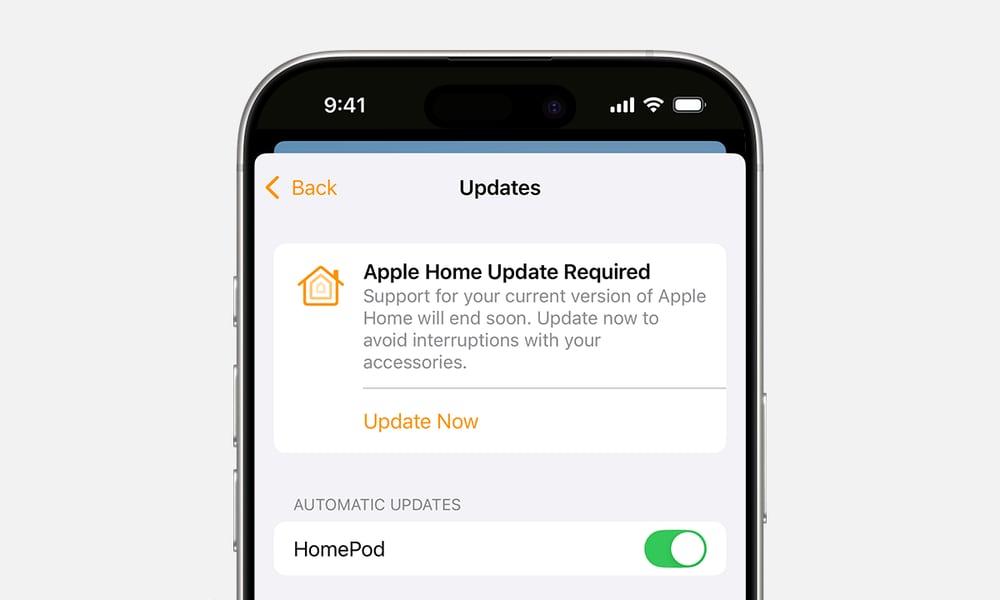
Leading up to today’s deadline, Apple’s support article suggested that some homes would be automatically updated, but that wouldn’t be possible in all cases:
Support for your current version of Apple Home will end this fall. Some homes will be automatically updated at that time, but others need to be updated manually. You can update now to avoid interruptions with your accessories, automations, and critical alerts.
While the deadline was moved to the fall, that update policy doesn’t seem to have changed. Apple’s current Update Apple Home support document simply says “you may be automatically upgraded to the latest version of Apple Home” (emphasis ours).
Apple doesn’t go into any detail on what the criteria for this is, but with support for the previous version ending today, it’s a safe bet that those homes that aren’t automatically updated will need to do so manually to restore proper operation. So, if your HomeKit accessories have suddenly stopped working properly, that’s likely the reason.
Even if your home qualifies for an automatic update, there are things that can go awry, so it’s always better to be proactive and perform the update under your own control. Here’s how to do that:
- Ensure any Apple TV and HomePod devices in your home are running the latest software updates.
- Open the Home app on your iPhone, iPad, or Mac.
- Select the three-dot button in the top-right corner.
- Choose Home Settings from the menu.
- Scroll down and select Software Update.
- Tap the Update Now button under “Apple Home Update Required.” If this section doesn’t appear, that means you’re already on the new HomeKit architecture.
- Follow the prompts until you see a message that says, “This home and all accessories are up to date.”
If you’re the owner of multiple Apple Home configurations, they’ll all be updated at the same time.
A Sign of Things to Come?
Upgrading to the new HomeKit architecture has quite a few advantages. While it had a rocky start, Apple has had three years to work out the bugs, and I can confirm it truly is more stable and reliable than the old one by far. It also adds support for several other new features (and likely more to come):
- Matter devices.
- Controlling robot vacuum cleaners (added in iOS 18.4).
- Activity History for accessories like locks, garage doors, and door sensors so you can see when these devices have been opened, closed, locked, or unlocked — and by whom (added in iOS 17).
- Guest access to let you share control of specific accessories with other users, such as letting a visitor control the lights in the guest room or letting someone into your garage without giving them the key to your front door (added in iOS 18).
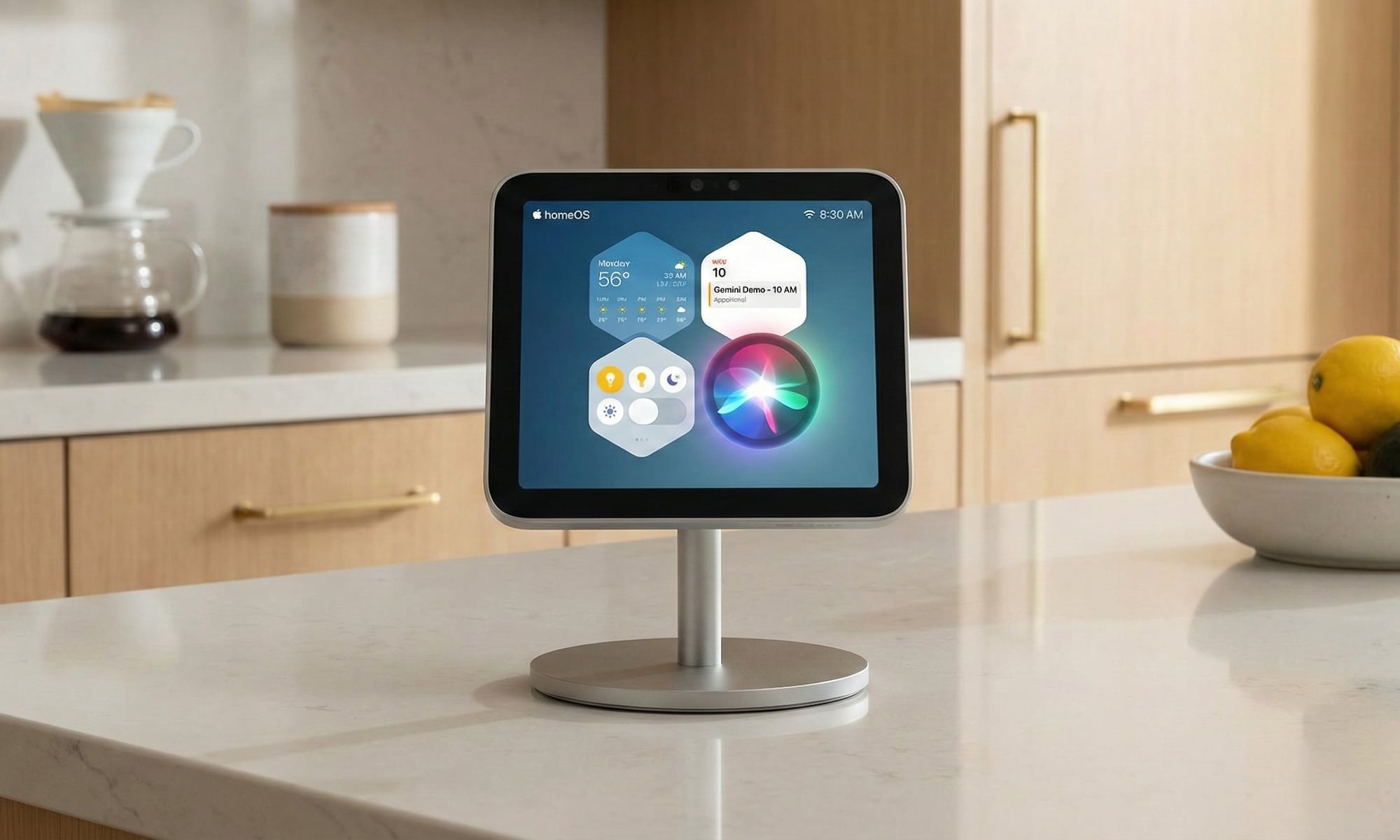
As we mentioned earlier, Apple also has not only a new home hub, but several other first-party home accessories rumored to be in the pipeline. It’s a safe bet that these will all require the new HomeKit architecture, and it’s also slightly telling that the home hub was initially supposed to be released last year before reportedly being pushed off by Siri delays — around the same time Apple also moved its deadline from the “fall of 2025” to “February 10, 2026.”
End of Home Access for Older Devices
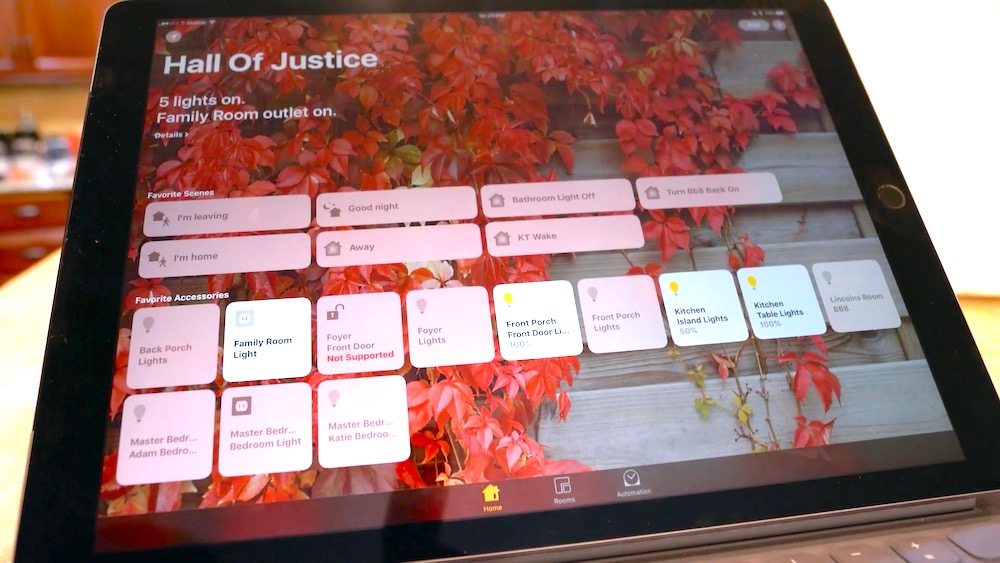
Sadly, there is a downside to this forced update. The new HomeKit architecture requires iOS 16.2, iPadOS 16.2, macOS 13.1, tvOS 16.2, or watchOS 9.2 or later on all participating devices. Those devices that can’t be updated will lose access to the home.
Important Note for Families: Once you upgrade your Home architecture, every person you’ve invited to control your home must also be running the latest software. If a guest or family member has an older device that cannot run iOS 16.2 or later, they will lose the ability to control the home until they upgrade their hardware — and that includes things like unlocking the front door.
However, that’s not as serious as it sounds. Nearly every device released in the past 8–10 years can run at least these versions, and if you haven’t updated, you really should.
| Device | Minimum Version | Oldest Supported Model |
|---|---|---|
| iPhone | iOS 16.2 | iPhone 8 / iPhone X (2017) |
| iPad | iPadOS 16.2 | iPad (5th Gen) / iPad Pro (2015) |
| Apple TV | tvOS 16.2 | Apple TV HD (2015) |
| Mac | macOS 13.1 | Most 2017 models or newer |
Of course, there are older devices that can’t be updated, but we’re talking about the nine-year-old iPhones and pre-2015 iPads. Some households may have some of those being used as dedicated home controllers or possibly kids’ tablets. They’ll still be usable for other things, but they’ll be cut off from controlling home devices.
Lastly, the other big change in the new HomeKit architecture is the inability to use an iPad as a home hub (although it still works fine as a controller, as long as it’s running iPadOS 16.2 or later). Apple dropped that in iPadOS 16, although it left limited support in place for those on the older HomeKit architecture. However, even back then you’d still get much more functionality with an Apple TV, regardless of whether you upgraded to the new version of HomeKit or not.
The good news is that Apple continues to set a remarkably low bar for what can be used as a home hub. You won’t need to rush out and buy Apple’s new display-equipped hub even if it shows up tomorrow. Any HomePod or Apple TV — even the original 2015 Apple TV HD — can still be used for this purpose.
[The information provided in this article has NOT been confirmed by Apple and may be speculation. Provided details may not be factual. Take all rumors, tech or otherwise, with a grain of salt.]






