Folded Before It Unfolded? Apple Reportedly Axes 18-Inch ‘Mac Fold’
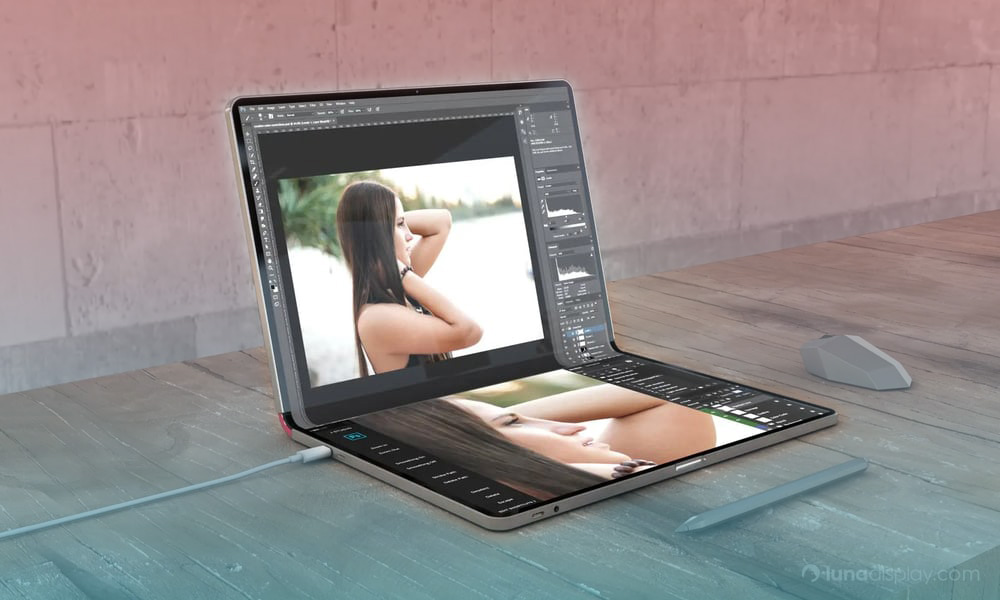 AstroPad / Elijah Fox
Toggle Dark Mode
While the foldable iPhone is finally just around the corner, another long-rumored folding Apple device may never see the light of day.
Over the past few years, we’ve heard varying reports of foldable iPads and foldable MacBooks. Some have suggested they pointed to a single hybrid device, while others believed Apple was working on both angles.

We first began hearing about a foldable iPad in 2019, back when some analysts believed the foldable iPhone was only a few months away — an idea that seems downright quaint as we sit here in 2026 anticipating its launch at next week’s “Surprise and Shine” event.
Still, the rumor mill for a larger Apple foldable was almost as persistent as the one for the “iPhone Fold” and “iPhone Flip” (nobody was quite sure which edge it would fold on in those days). However, by 2022 it seemed these had gelled into the notion of a folding Mac, with some pretty solid evidence that Apple was at least working on such a device.
Reliable supply chain analysts such as Ross Young pointed to Apple exploring foldable displays of up to 20 inches in size. That’s far too big for an iPhone or even an iPad, so the only logical conclusion was that Apple was working on this for a MacBook-style device.
According to the speculation of the time, users would be able to unfold this device completely to use it as a full 20-inch display with an external keyboard, like an iMac, delivering resolutions of 4K or even higher. This wouldn’t be a foldable iPad per se, as many expected it would run some variation of macOS rather than iPadOS, and sources were using the phrase “foldable notebook” to describe it.
The rumors continued into 2024, with analyst Ming-Chi Kuo adding his voice to the chorus and revealing that Apple had contracted LG to produce 20.2-inch and 18.8-inch displays, although Young added that Apple had dropped the larger “20.25-inch” version for “cost reasons,” and was instead going with an 18.76-inch display. Reports suggested this would fold down to something similar in size to a 13-inch MacBook, although nobody was quite sure if that’s what Apple would call it.
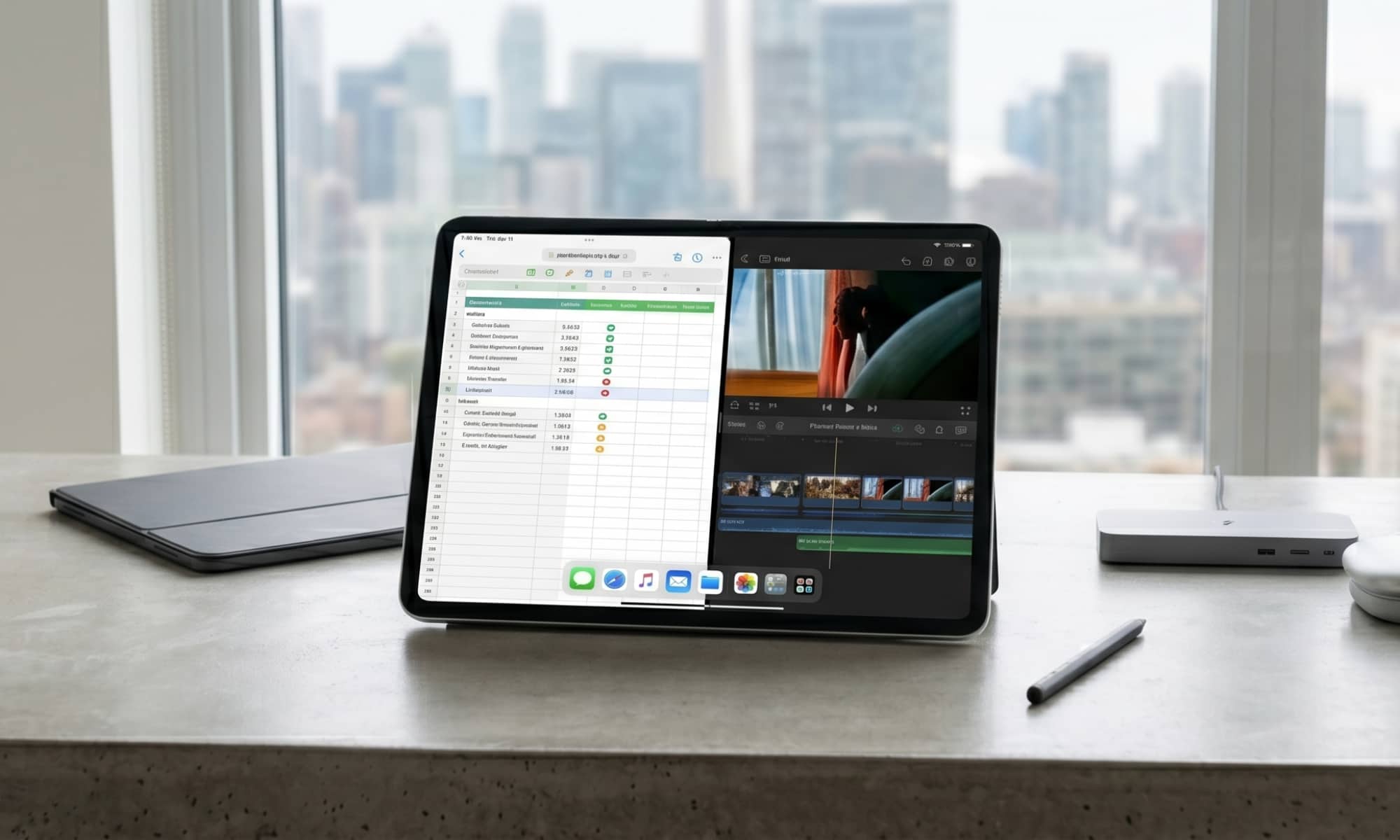
Meanwhile, another set of reports pointed to a folding iPad, but it was never clear if this was just another perspective on the same device. In late 2024, Bloomberg’s Mark Gurman said that Apple was looking to “beat the traditional form factors” of phones, laptops, and tablets with something different that “could become its next breakthrough device.” He described “a giant iPad that unfolds into the size of two iPad Pros side-by-side.”
Of course, if you do the math, that sounds suspiciously similar to the 18.8-inch screen that Young and Kuo had described earlier that year. However, Gurman said it would be more of a large-screened iPad than a touchscreen MacBook.
While it’s possible Apple intended to pursue two separate devices, it’s more likely that its own engineers and designers hadn’t yet figured out which direction to go in. The hardware could certainly go either way, and most of the development seemed to be focused on that side. It’s unclear if it ever determined which software platform it would run.
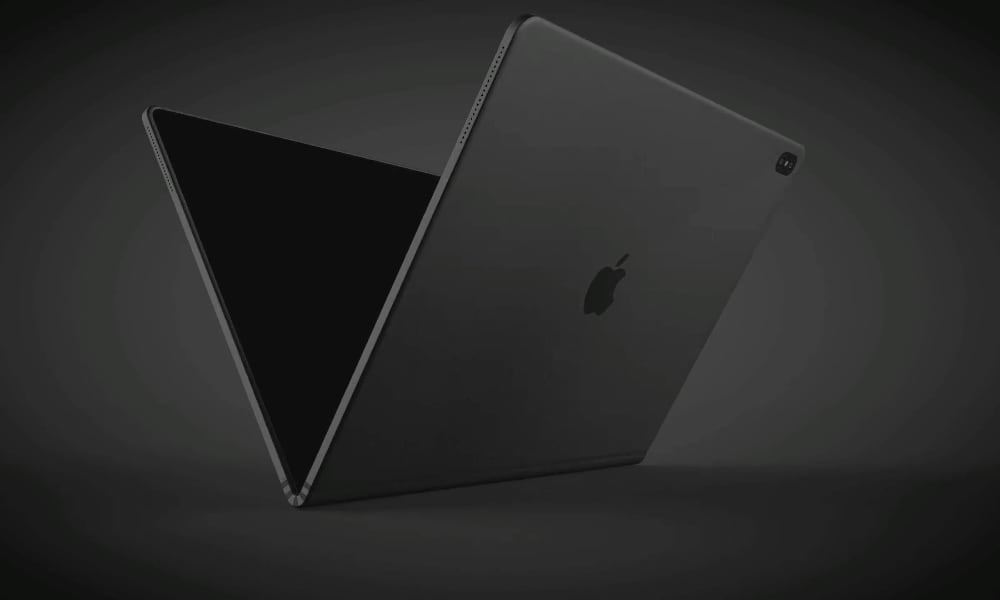
By last year, we began seeing reports that Apple was slowing down on the project. By October, Gurman was reporting on a price tag somewhere north of $3,000, and “development hurdles” that would push it back to 2028 at the earliest. By April of this year, Gurman suggested it might just be a “wacky experiment that doesn’t see the light of day,” despite repeatedly being a priority for John Ternus, Apple’s former senior vice president of hardware engineering who is now the company’s chief executive officer.
That makes a report this week all the more salient. Only two days after Ternus moved into the CEO’s office, Omdia published a research note outlining what it believes is Apple’s Mac and iPad roadmap — and it seems to confirm Gurman’s April prediction. “Product plans for 16.1-inch to 18-inch foldable MacBooks have been canceled,” the report notes.
While we wouldn’t normally put too much stake in a single analyst report, it does feel like the writing has been on the wall for this product for the past year or two. There’s little doubt that Apple was exploring this idea — Apple explores a lot of things that never turn into actual products — but the multiple reports of the challenges it was facing and the $3,000+ starting price likely made it a non-starter, especially since that was the prediction before “RAMageddon” began driving normal Mac prices into the stratosphere.
This would likely have made it another niche product, akin to the Vision Pro, but at least Apple’s spatial computing headset breaks new ground to fit into a very unique spot. A large folding MacBook (or iPad) wouldn’t do much more than a standard iPad Pro beyond offering a larger screen. That’s useful, but it’s debatable whether it’s “$3K useful.”
[The information provided in this article has NOT been confirmed by Apple and may be speculation. Provided details may not be factual. Take all rumors, tech or otherwise, with a grain of salt.]