Is Apple Giving Up on the Vision Pro?
Toggle Dark Mode
As 2025 drew to a close, a new report suggests that Apple has throttled back on the Vision Pro, but it’s not clear whether this is partly a routine adjustment or a harbinger of something more serious.
According to the Financial Times, Apple has scaled back both its manufacturing of the pricey headset as well as its marketing efforts, in what some analysts are calling a “rare failure to draw consumers to a new device.”

“The company’s Chinese manufacturing partner Luxshare halted production of its “spatial computing” device at the start of last year,” the Times’ Michael Acton notes, citing data from market research group International Data Corporation (IDC). Although Apple doesn’t provide unit sales numbers for any of its products, analysts estimate the company shipped 390,000 units in 2024.
However, that’s now old news, and whether 390,000 units is a good sales figure or a bad one depends entirely on who you talk to.
While it’s obviously small potatoes compared to the hundreds of millions of iPhones that Apple sells each year, many insiders didn’t expect Apple’s first foray into spatial computing to do any better than it did. In January 2021, over two years before Apple unveiled the Vision Pro, Bloomberg’s Mark Gurman said it wouldn’t be designed for the masses, adding that he’d heard from sources within Apple that it wasn’t expecting to sell more than one headset per day at each retail store.
With around 500 retail stores globally, that works out to around 180,000 units per year. After the Vision Pro was officially announced in June 2023, some analysts claimed that Apple was preparing to manufacture as many as 800,000 units to sell in 2024 before scaling that down to around 400,000. When that happened is a matter of some debate; the Financial Times claimed Apple cut production in the summer of 2023, while well-known supply chain analyst Ming-Chi Kuo said it make the call in April 2024 when it cancelled plans for a new model in 2025 after disappointing first-quarter sales of the original.
Regardless of when it happened, it’s fair to say that Apple quickly realized that the Vision Pro wasn’t going to be a hot seller, and if it truly sold 390,000 units in 2024 (remembering that this is just an IDC estimate), then it basically met expectations.
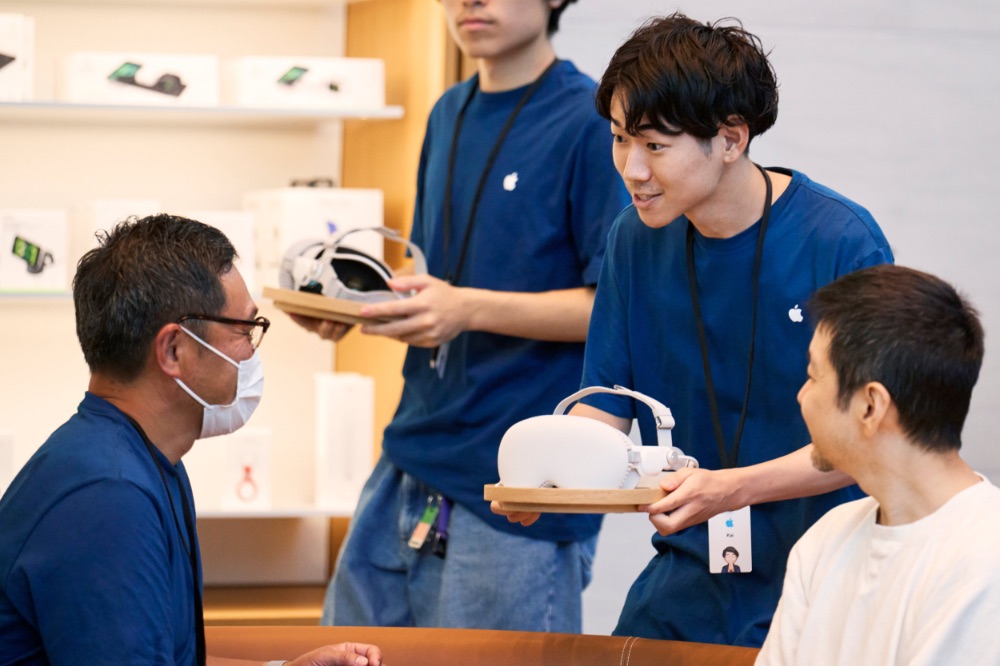
The Vision Pro is still only available in 13 countries, and most of those also came later in the year. By all accounts, Apple sold fewer than 100,000 units in the first quarter of 2024 when it went on sale exclusively in the United States. Following a staggered global rollout beginning with China, Japan, and Singapore and later expanding to Australia, Canada, France, Germany, and the UK, the overall sales reached close to the 400,000 mark, with half of those still coming from US customers. That split isn’t too surprising, considering Apple’s strong retail presence in the US combined with how complicated it is to order a Vision Pro online.
When Luxshare shut down Vision Pro production, some believed it was a sign the device had failed, but it’s also possible Apple had merely made all the units it intended to sell. In other words, it had built up sufficient inventory to meet projected demand — something that’s not too hard to do when you’re only selling a few thousand units a month. However, Apple’s partners fired those lines back up in late 2025.
The Vision Pro in 2025
Interestingly, IDC doesn’t offer any guesstimates for overall 2025 unit sales, saying only that it believes about 45,000 units shipped in the last quarter of 2025. While the Times notes this is the “crucial Christmas sales period,” that doesn’t seem to be too relevant in this case, as the $3,500 headset isn’t exactly a stocking stuffer — or even a consumer device, for that matter.
Early adopter enthusiasm aside, not everything Apple makes has to be a mass-market device. The Vision Pro has been finding its true home in niche industries, where the spatial computing experience has practical, tangible applications. We’ve seen reports of its value in medical applications like surgery and radiology, pilot training, and interior design.
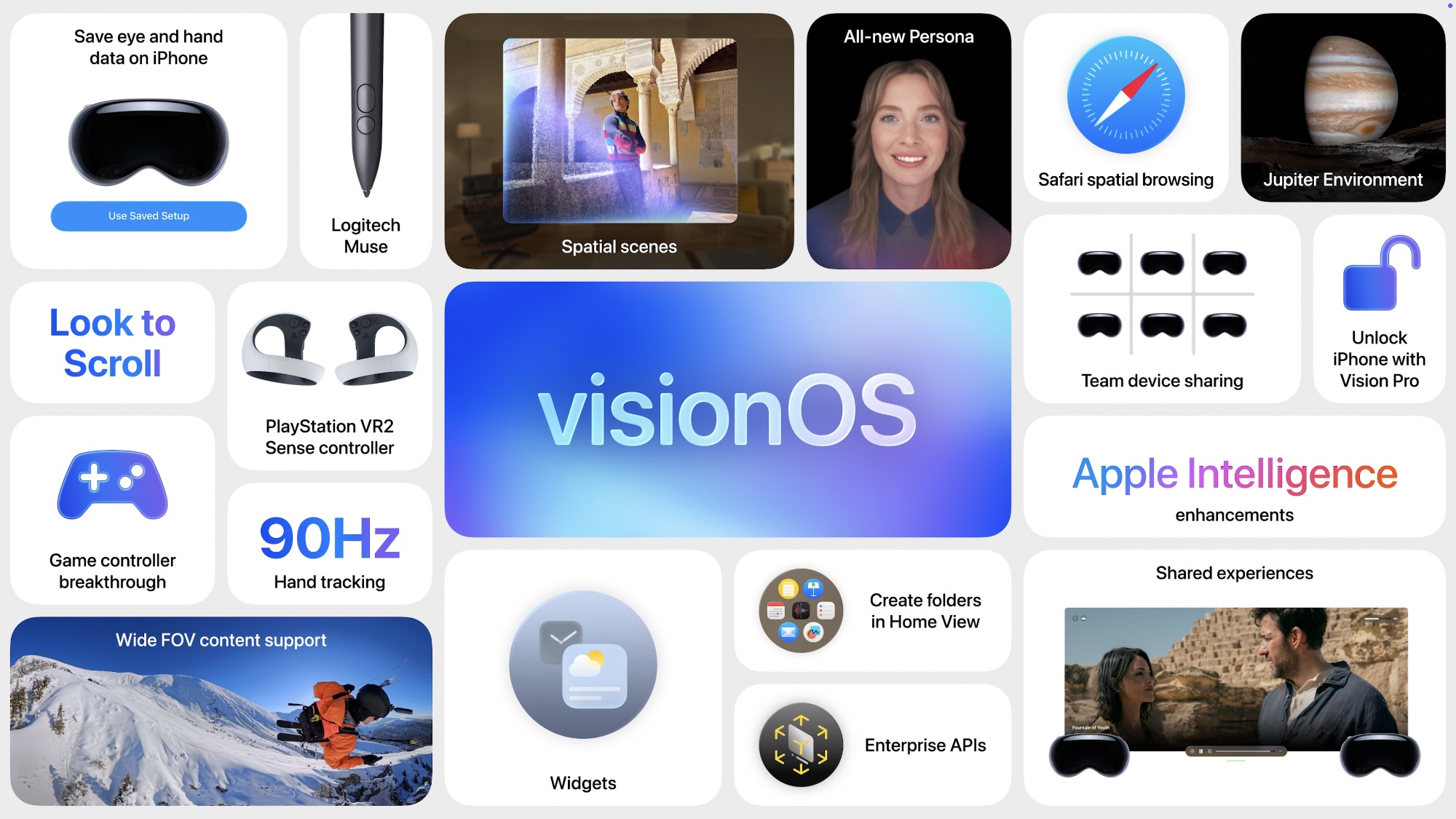
In October, Apple updated the Vision Pro with an M5 chip, but left the design otherwise unchanged. While many panned that new version for not truly addressing the elephant in the room — how heavy the device is to wear for extended periods of time — Apple did add a new Dual Knit Band as a tacit admission that weight and comfort were problems with its original design. However, the more significant change was the leap to the latest silicon, but that’s much more valuable in driving those high-end business use cases than delivering anything that end users are likely to care much about. Recent visionOS features like enterprise device management (MDM) support further this notion.
While some analysts may be reading too much into the production pipeline, the Times also notes that Apple has scaled back its marketing efforts, citing data from market intelligence group Sensor Tower that shows Apple has reduced its digital ad spending by more than 95 percent in the US and UK. However, it’s hard to say whether this marketing scale back may have also been in the cards from the start.
The Vision Pro was announced and released with the intention of making a very big splash, with the kind of marketing budget that requires. However, it always felt like more of a proof of concept — a demonstration of what Apple can accomplish — than a product that most folks need today. Looking back, it seems inevitable that Apple would scale back its marketing budget once those first impressions had been made, since it was more about promoting the idea of the Vision Pro than merely moving inventory.
While it’s common for companies to offer concept videos and vaporware products, Apple’s style is to create tangible solutions that people can pick up and use — and even buy and take home if they really want to. While the original iPhone and Apple Watch were more mainstream products by their very nature, they were also very much early proof of concept devices, and not nearly as well-received as their successors.
Apple’s spatial computing strategy is undoubtedly on a similar track. The M5 Vision Pro is at best a stopgap product to deliver modern-day specs, but multiple reports say that Apple is exploring both a true second-generation pro model and a lighter and more affordable “Vision Air” that could capture more of the mainstream consumer market. Still, that may be a few years off as some sources suggest Apple has put it on the back burner while it pivots to smart glasses to keep abreast of current consumer trends.
Today, Apple’s Vision Pro stands on the pioneering edge of a new technology. It remains to be seen whether that spawns a digital revolution into the next generation of computing or turns out to be a passing fad, but it’s far too early to judge where the first-generation Vision Pro will ultimately lead us.