The Little Engine That Could: MacBook Neo Benchmarks Are Here

Toggle Dark Mode
Apple’s most groundbreaking product of early 2026 isn’t a flagship powerhouse, but rather a modest entry-level MacBook that redefines what a budget laptop can do.
Unveiled last among a week that was filled with other product announcements, the MacBook Neo is remarkable not so much for its raw performance overall but for a tacit demonstration of how capable Apple’s iPhone silicon actually is.
That’s because it’s powered by an A18 Pro — essentially the same chip used in the 2024 iPhone 16 Pro and iPhone 16 Pro Max models, but with one less GPU. While that’s led some to dismiss the MacBook Neo as an expensive toy, let’s not forget that this chip’s predecessor, the A17 Pro, brought PS5-level AAA console games to the iPhone, including Resident Evil Village and Assassin’s Creed Mirage — games that are well beyond the capabilities of the average $600 laptop.
The bottom line is that the A18 Pro chip is a serious powerhouse, and now the first MacBook Neo benchmarks have arrived to back this up.
Single-Core Speed That Rivals the M4
In terms of raw performance, Apple’s 2024 iPhone silicon compares very favorably to Apple’s M-series chips — and in single-core performance it can even hold its own against the M4 that was released that same year.
That last part isn’t surprising, as the A18 Pro and M4 were fabricated using the same 3-nanometer (3 nm) production process, and likely have identical performance cores; the M4 just has more of them, which lets it pull well ahead in multi-core performance.
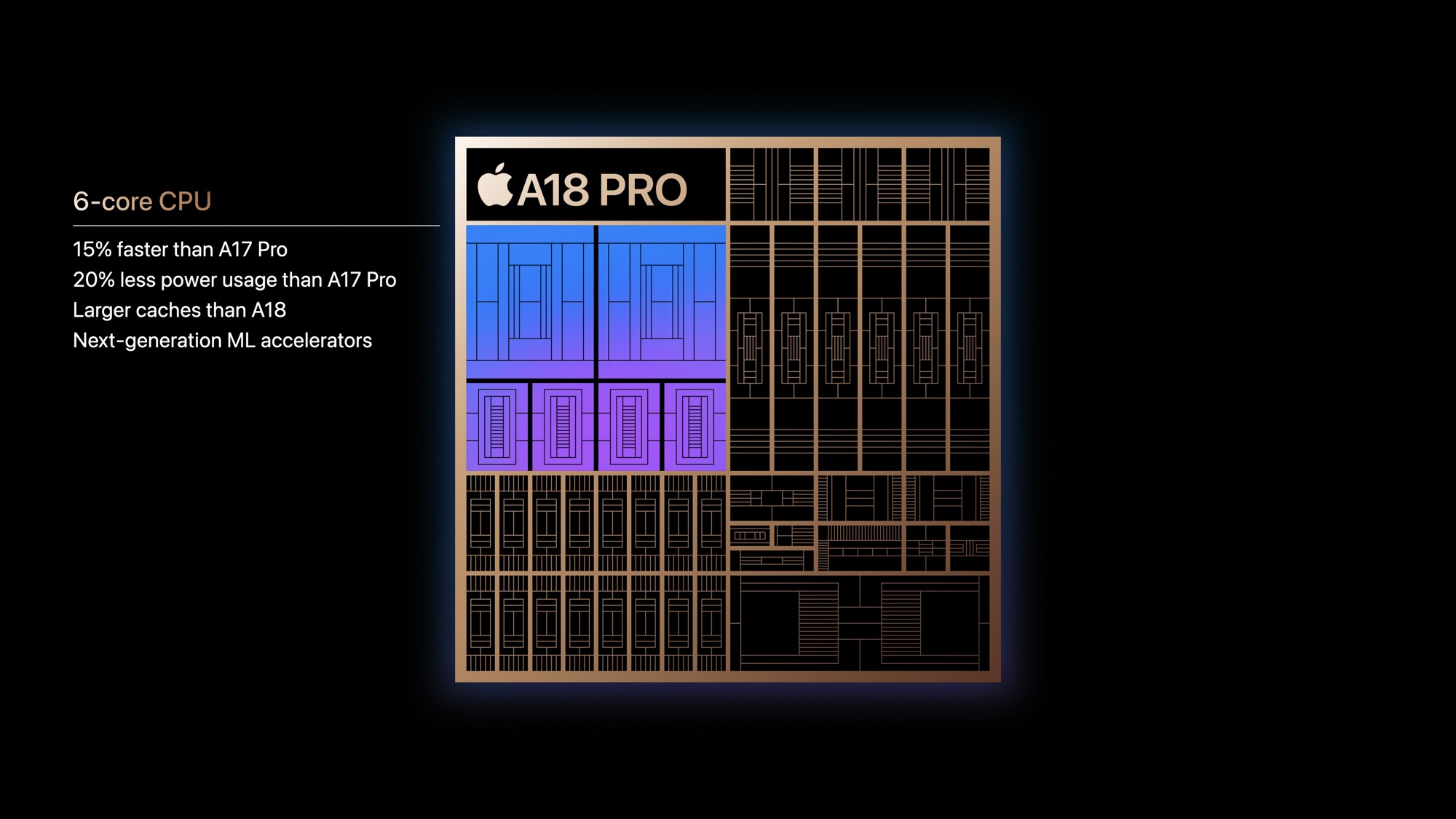
Specifically, the A18 Pro has a six-core CPU made up of two performance cores and four efficiency cores, while the M4 has up to 10, four of which are performance cores.
That’s always been a “core” advantage of Apple’s M-series chips (pun only slightly intended), which is why the A18 Pro falls back into the earlier M1/M2 generation in multi-core performance. Both of those were eight-core chips, but while their four performance cores were individually slower than those of the A18 Pro and M4, the fact that they had twice as many gives them the multi-core advantage.
Still, the MacBook Neo pulls slightly ahead of the M1 in multi-core performance, edging toward the M2.
| Model | Single Core (CPU) | Multi-Core (CPU) | Metal (GPU) |
|---|---|---|---|
| MacBook Neo (A18 Pro) | 3,530 | 8,635 | 31,178 |
| M1 MacBook Air | 2,347 | 8,342 | 30,461 / 33,150** |
| M2 MacBook Air | 2,587 | 9,669 | 42,196 / 46,298** |
| M3 iMac* | 3,041 | 11,674 | 47,732 |
| M4 MacBook Air | 3,708 | 14,731 | 47,878 / 54,632** |
* Average benchmark scores not published for M3 MacBook Air
** Binned and standard GPU core configurations
To be clear, it’s the single-core performance that will be the most relevant to the MacBook Neo’s target audience, since the additional cores are rarely engaged for things like web browsing, writing, streaming video, or even everyday photo and video editing.
A Stealth Gaming Powerhouse
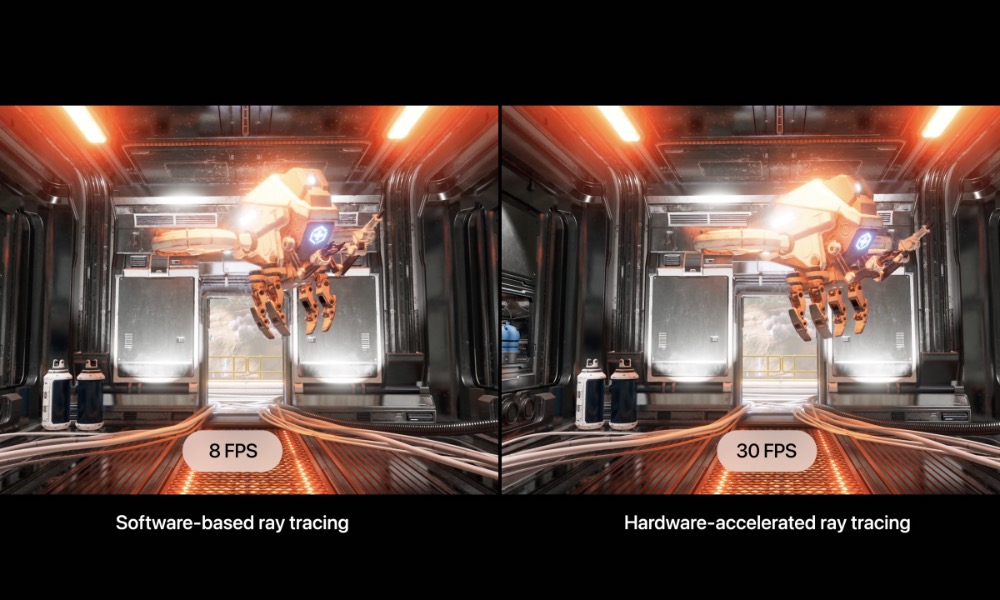
Things are a bit more nuanced on the GPU side. The Metal scores above put the MacBook Neo in the same ballpark as the M1, but it also offers something the older chip doesn’t: hardware ray tracing, mesh shading, and dynamic caching.
That will almost certainly give the MacBook Neo a leg up in gaming performance, which can make better use of this dedicated hardware for calculating light, shadows, and reflections, plus real-time GPU memory allocation for complex 3D scenes. These capabilities didn’t come to Apple’s Mac chips until the M3 in late 2023, just after the A17 Pro arrived to turn the iPhone 15 Pro into a serious gaming device.
The A18 Pro also incorporates the media engines that were the exclusive domain of the M1 Pro, and only later came to Apple’s base M3 chip. This most notably includes a hardware AV1 decoder to let it stream YouTube and Netflix without breaking a sweat.
Still, the MacBook Neo won’t be able to hold a candle to an M2 MacBook Air for heavy lifting tasks like 3D rendering and complex video exports. Its five GPU cores can’t compete with the 10 cores in the M2, not to mention the ability of the M-series silicon to handle sustained workloads; the A18 Pro is more likely to begin throttling performance on long 4K video exports, although it should be more than adequate for throwing together Instagram clips in iMovie.
Where the ‘Budget’ Label Shows
If anything, it’s not the raw chip performance that will hamper the MacBook Neo for more serious creative tasks, but rather the other hardware limitations. For example, the A18 Pro is more than capable of handling complex edits in Photoshop or Pixelmator, but the missing True Tone display and sRGB gamut simply won’t cut it for anyone doing serious photo editing who cares about color accuracy. It also lacks a backlit keyboard, which could make it less desirable for students hunkering down for late-night study sessions.
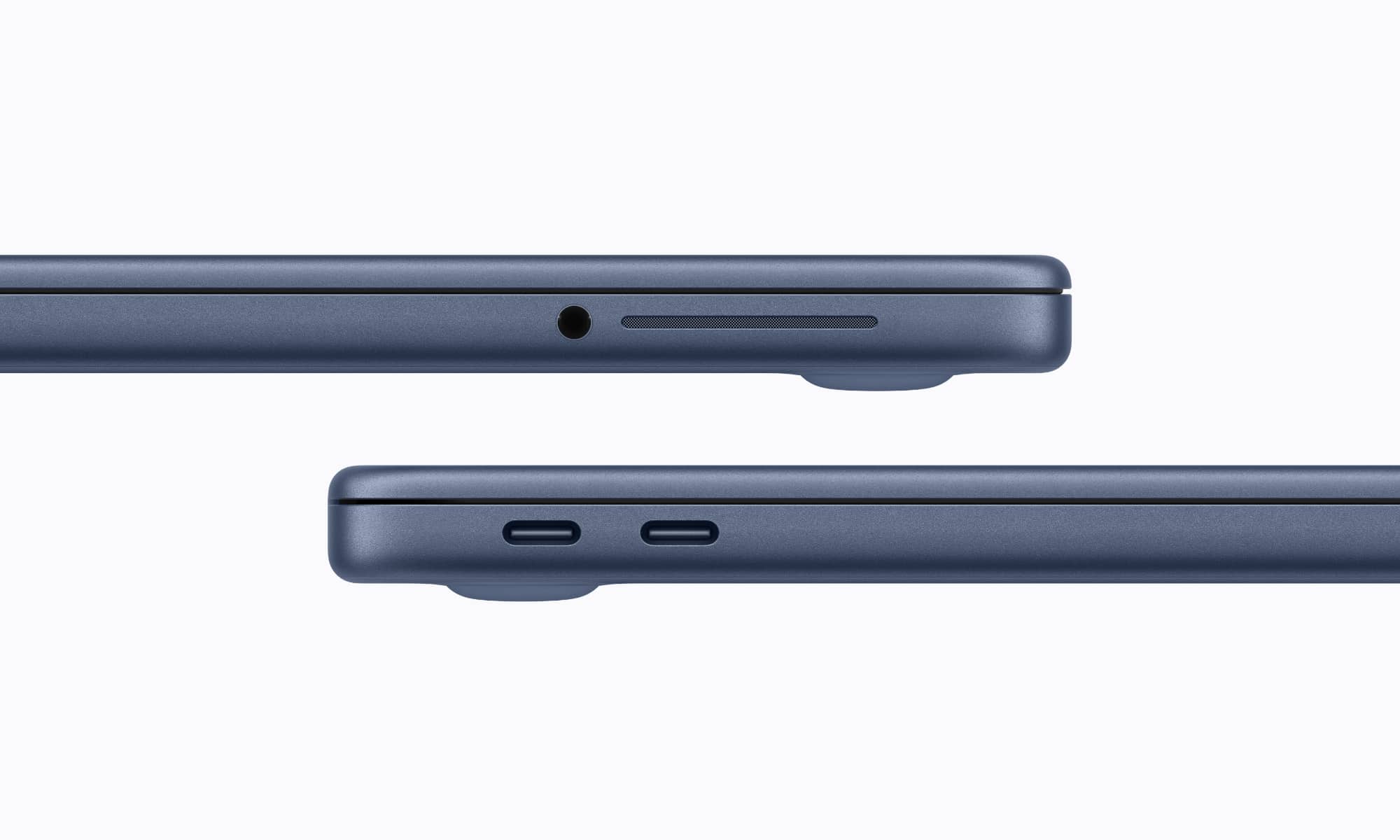
It also only has a single USB 3 port (the other one is USB 2 — a retro tribute to 2005), compared to the two Thunderbolt ports that have been standard on every other MacBook for at least six years. Still, the 10 GB/s bandwidth of USB-C is nothing to scoff at — it’s more than enough for the vast majority of consumer and even prosumer storage devices.
Of course, the real comparison for the MacBook Neo isn’t a modern MacBook Air that’s nearly twice the price, but rather the plethora of Windows-based budget laptops. The original M1 chip left Intel in the dust, and that gap hasn’t narrowed in the past six years — especially on the low end, where manufacturers aren’t exactly using high-performance chips. Further, while the 8 GB of memory may seem a bit paltry, it’s the latest LPDDR5X memory, and it’s unified — baked right into the chip — which is why Apple silicon Macs have always been able to do far more with less RAM than their Intel counterparts.
Apple has already promised that the MacBook Neo is 50 percent faster for “everyday tasks” than the bestselling PC with the latest Intel Core Ultra 5, and up to 3x faster for AI and 2x faster for photo editing. On top of that, you’re getting an elegant and solid aluminum build that outshines most of the plasticky budget laptops, and a much more affordable way for iPhone users to dive fully into the Apple ecosystem.