OpenAI Beats Apple to the Punch with ‘ChatGPT Health’
Toggle Dark Mode
Rumors are that Apple may soon be launching its own AI-powered “Health+” service, but for now, it seems that ChatGPT has beaten the iPhone maker to the punch. Following hints last month that ChatGPT would soon gain Apple Health integration, OpenAI has now officially unveiled the feature as part of its new ChatGPT Health initiative.
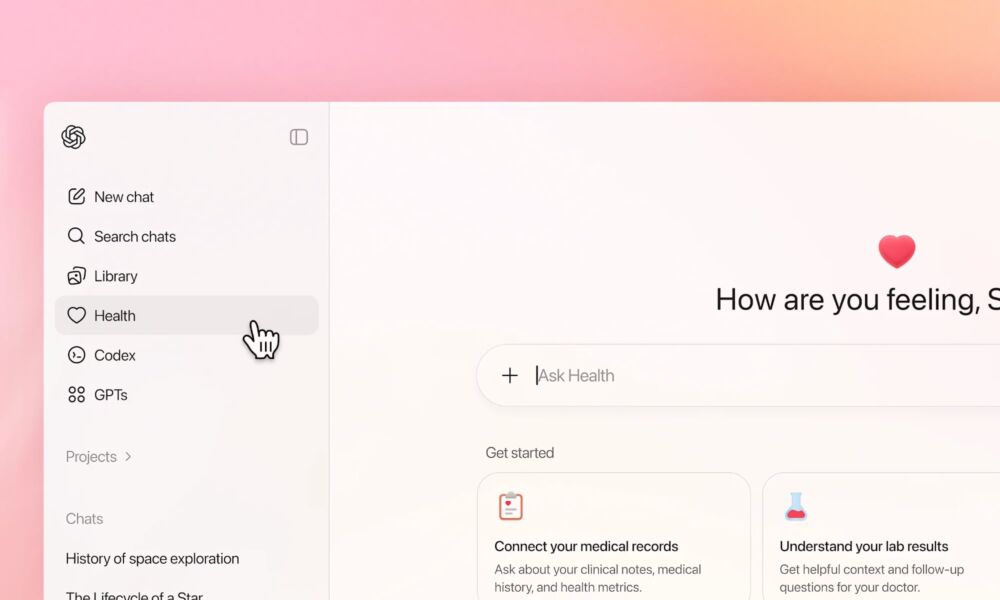
As the name suggests, this is a health-focused version of the popular chatbot that aims to let users more freely ask questions in a dedicated space with some built-in guardrails to protect your sensitive data. What happens in ChatGPT Health stays in ChatGPT Health.

Specifically, conversations in the Health space are not used to train OpenAI’s models, and the everyday ChatGPT bot will even suggest moving conversations into the partitioned Health space if you begin talking about sensitive health-related topics.
It’s worth noting that the reverse isn’t necessarily true. While nothing in ChatGPT Health ever leaves that secure zone, OpenAI notes that ChatGPT may use context from your everyday chats to make a health conversation more relevant. This could include things like lifestyle changes, a recent move, or anything else that it thinks might inform your health.
OpenAI notes that ChatGPT Health was “developed in close collaboration with physicians around the world to provide clear and useful health information” — more than 260 physicians who have practices in 60 countries in multiple specialties. From this group, OpenAI collected feedback on “model outputs over 600,000 times across 30 areas of focus,” to ensure that Health responds with questions that are helpful rather than potentially harmful, and knows how to prioritize safety and when to encourage you to go and see a doctor.
This physician-led approach is built directly into the model that powers Health, which is evaluated against clinical standards using HealthBench?, an assessment framework we created with input from our network of practicing physicians. Rather than relying on exam-style questions or generic accuracy checks, HealthBench evaluates responses using physician-written rubrics that reflect how clinicians judge quality in practice—prioritizing safety, clarity, appropriate escalation of care, and respect for individual context.
OpenAI
Pulling in Health Data
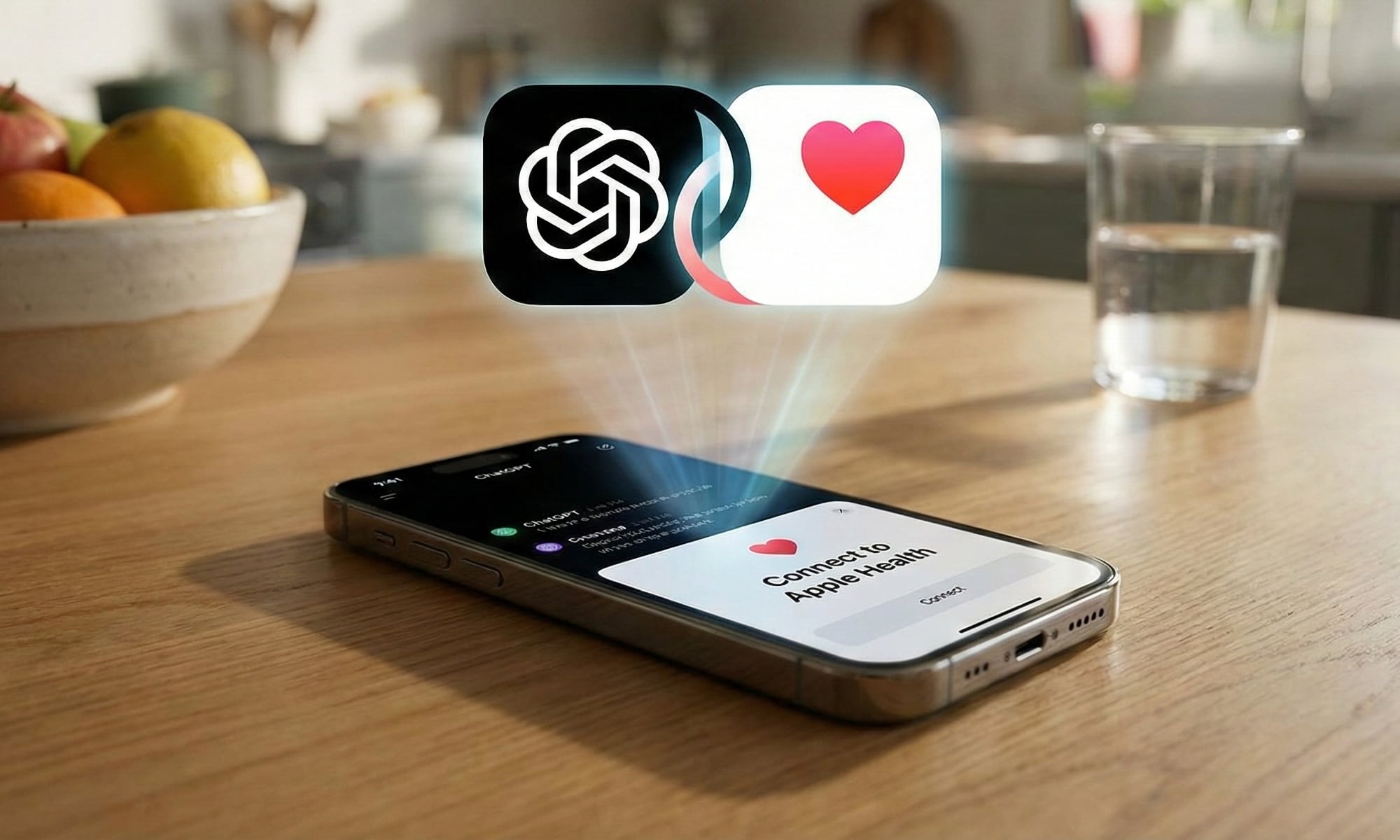
Key to making ChatGPT Health work isn’t just the ability to chat about your health and get generic questions answers. OpenAI has designed it to pull in all your health data and medical records from just about any connected service — including Apple Health.
While we won’t blame you for being wary about feeding all of your health data into an AI — I’m not about to pull the trigger on this anytime soon — the company is doing its best to guarantee this data will be handled with the utmost discretion — and, like your Health chats, it won’t be used for AI training.
The good news is that ChatGPT won’t get access to your Apple Health data unless you explicitly allow it.
Despite Apple’s partnership with OpenAI to extend Apple Intelligence, the ChatGPT app plays by the same rules as any other third-party iOS app. That means it has to request access to your Health data through Apple’s standard permission APIs, like all health-related apps.
This also means you can be selective about these permissions — giving ChatGPT access to only heart rate or nutrition information, for instance — and you can turn it off at any time in the iPhone or iPad Settings app under Privacy & Security > Health.
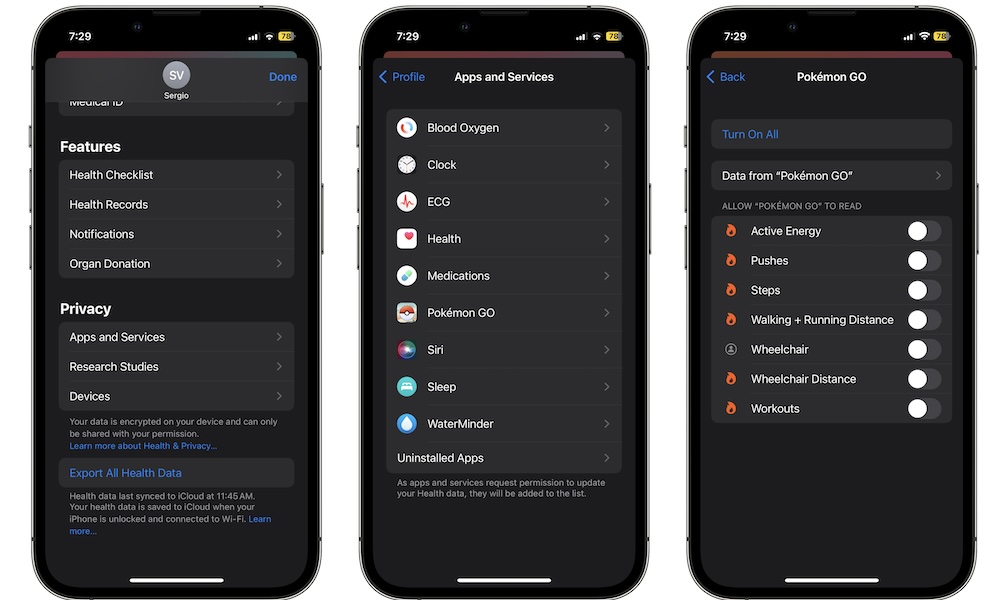
For example, you could use ChatGPT Health for things like fitness tracking to help advise on better workout regiments, without giving it access to more sensitive personal data you may keep in the Health app, such as medications, menstrual cycles, and sexual activity.
Further, although Apple has its own Medical Records integrations, ChatGPT Health won’t use these, as that’s not something Apple lets any third-party app touch. Instead, OpenAI has partnered with b.well to connect medical records from trusted US healthcare providers. That’s a company with an established track record for data security and privacy, and OpenAI wouldn’t be able to tie into that network unless it also meets those standards.
Other apps and services supported by ChatGPT Health include Function, MyFItnessPal, Weight Watchers, AlTrails, Instacart, and Peloton. These collectively help in areas such as providing insights on lab tests, nutrition ideas and advice, personalized meal plans and recipes — with shopping lists — and help in finding your next hike or suggesting workouts and meditations.
ChatGPT Health has yet to roll out to general availability. Instead, it’s rolling out slowly to a small group of early users. For now, you’ll need to sign up on the waitlist, but it’s open to users on any plan, from ChatGPT Free to Pro, and even the new “Go” tier, except those in the European Economic Area, Switzerland, and the United Kingdom. Medical record integrations and some apps are limited to the US.