The End of Prefab Macs? Apple Overhauls Online Store as M5 Pro MacBook Pro Looms
Toggle Dark Mode
Although last week’s debut of Apple Creator Studio wasn’t accompanied by a much-anticipated refresh of Apple’s flagship MacBook Pro models, there’s little doubt that these M5 Pro and M5 Max versions are still on the way. Now, it seems that Apple is doing a bit of house-cleaning to prepare for their arrival.
Over the weekend, French site Consomac spotted a significant change to how Apple sells Macs on its online store. Gone is the list of standard preset configurations for MacBooks, iPads, and more. Instead, buying a Mac is now an “a la carte” experience that more closely resembles purchasing an iPhone or iPad.

For example, hitting the “Buy” button on a MacBook Air now takes you straight to a page asking you to choose your size — effectively identical in concept to the process of buying an iPhone. “From” prices are shown for the base configurations, but instead of picking an off-the-shelf model, you’re required to walk through the entire process of choosing color, display (if applicable), chip, memory, SSD, power adapter, and other options.
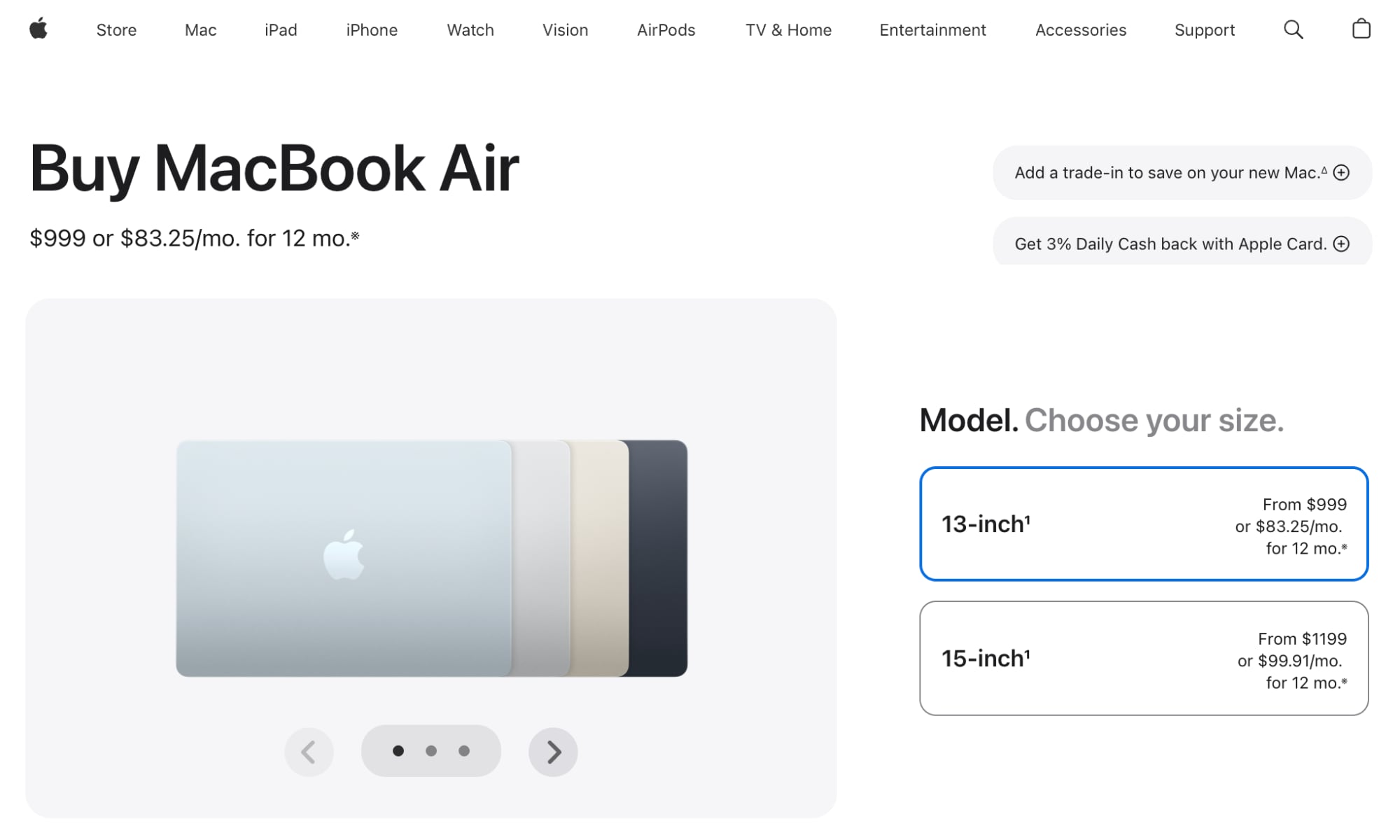
The list of options are effectively the same as the previous “configure-to-order” screens, with the main difference being the new layout and the fact that all buyers are forced to at least scroll through the whole process. Selections for size, color, and chip are mandatory, while RAM, SSD storage, power adapter, and keyboard will default to base configurations.
However, you do still need to specifically decline the option to buy Final Cut Pro and Logic Pro licenses — which feels like an odd artifact considering Apple’s recent pivot toward Creator Studio. While Apple still sells these as outright purchases, we wouldn’t be surprised to see an “Add Apple Creator Studio Subscription” option here.
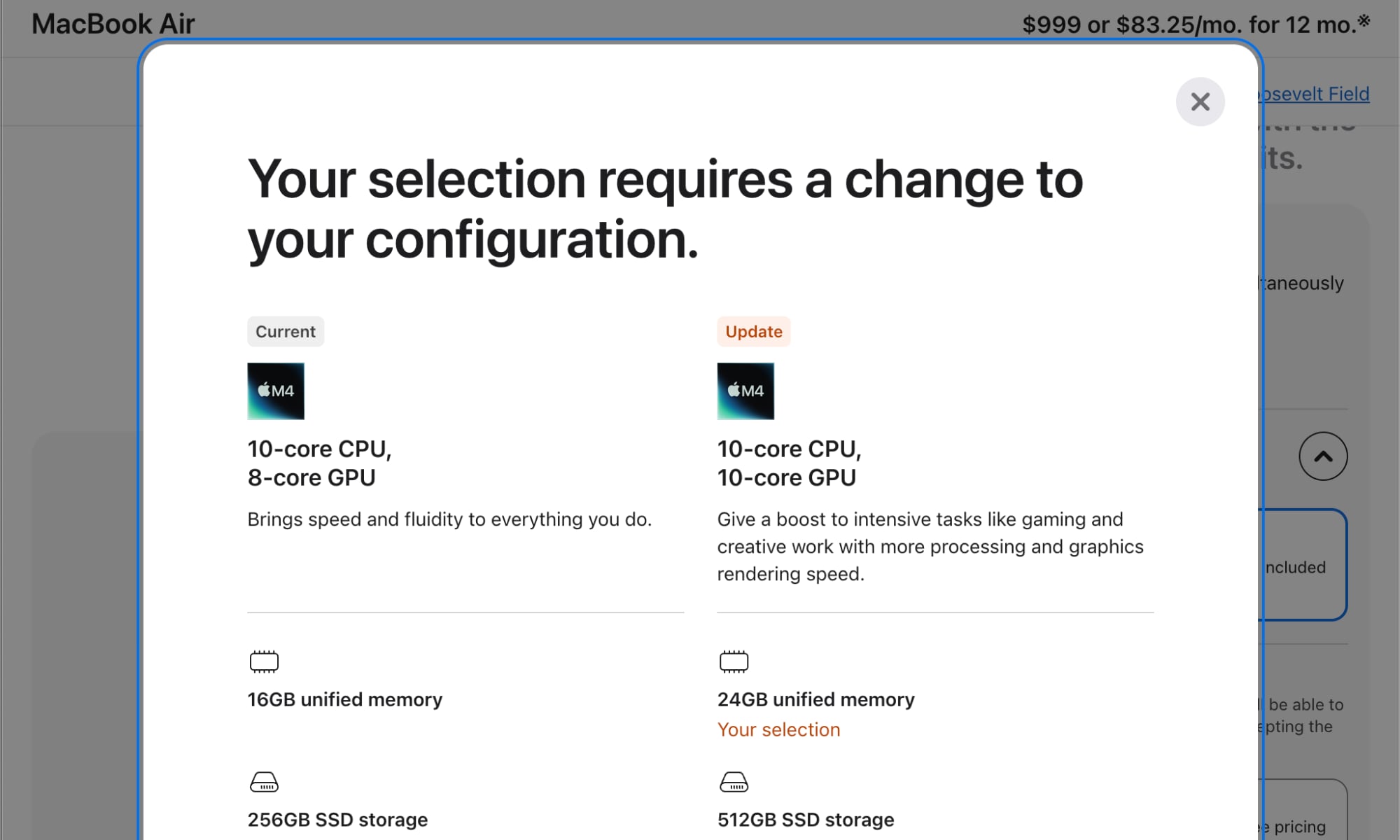
The new configuration pages appear to better designed to avoid forcing customers to figure out the often complicated combinations of RAM and chip configurations. For example, the previous store pages would “lock out” higher RAM configurations if you selected a basic M-series chip, while the new pages will simply prompt you to change the chip if you want more RAM — although some early users report the experience is still a bit jarring when the page forces a refresh.
There’s been some debate over the years as to how many online customers actually ordered prefab configurations. Still, Apple will undoubtedly still stock the usual set of standard configurations in warehouse and stores, and you can get a pretty good idea of what those are by playing with the configuration options and looking at the resulting delivery times.
M5 Pro and Beyond: The Next MacBook Pro Models
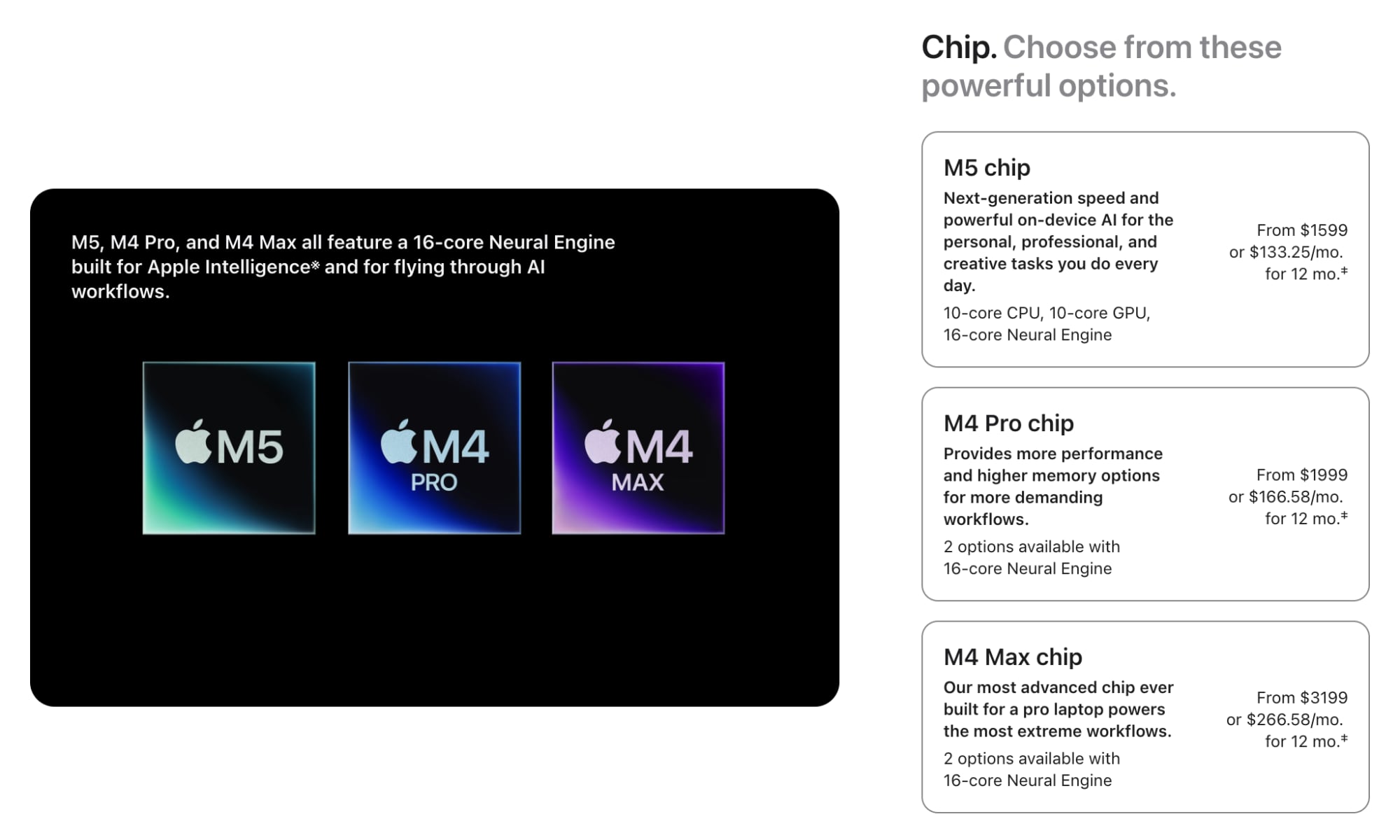
The timing of this change is interesting, particularly since it makes it even more obvious how much of an enigma the MacBook Pro is right now. As of today, purchasing a new 14-inch MacBook Pro will give you a choice of three possible chips across two different generations: the M5, which was refreshed in October, alongside the late 2024 M4 Pro and M4 Max models.
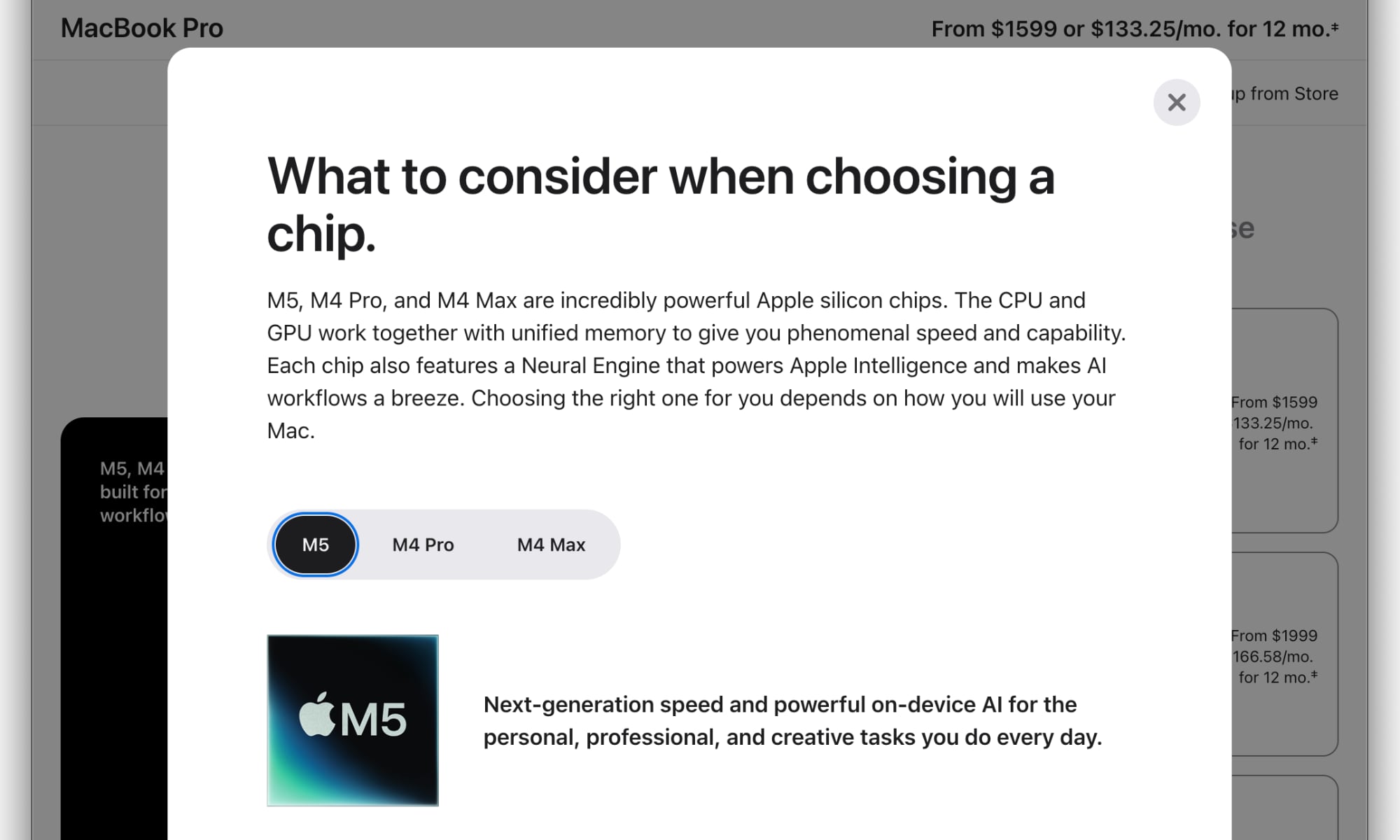
As odd as this seems, it will undoubtedly change in the next few weeks. A late-January release of the M5 Pro and M5 Max MacBook Pro models wouldn’t have been at all surprising, as their M2 Pro/Max ancestors also saw a January release in 2023, but just because that didn’t happen doesn’t mean they’re not still just around the corner.
In fact, while many believed that Apple would tie in their launch with Apple Creator Studio, there’s another milestone that makes even more sense: macOS 26.3.
That’s already in its third beta, which means we could see a release candidate (RC) build any day now, which would lead to a mid-February release. As Bloomberg’s Mark Gurman pointed out in his Power On newsletter yesterday, not only is that the scuttlebutt from his inside sources, but stock levels of those models appears to be dwindling in Apple’s online store, with shipping delays of some models stretching into February and March.
According to Gurman, inventory of the new M5 Pro/Max MacBook Pro models is already sitting in warehouses waiting for Apple to pull the trigger. This suggests they could have macOS 26.3 pre-installed on them — at least a pre-release “factory” build — in which case Apple doesn’t want to let them out until that version has been released to the rest of the world.