Apple’s Core Memory Suppliers Sued Over Alleged Price-Fixing Conspiracy
Toggle Dark Mode
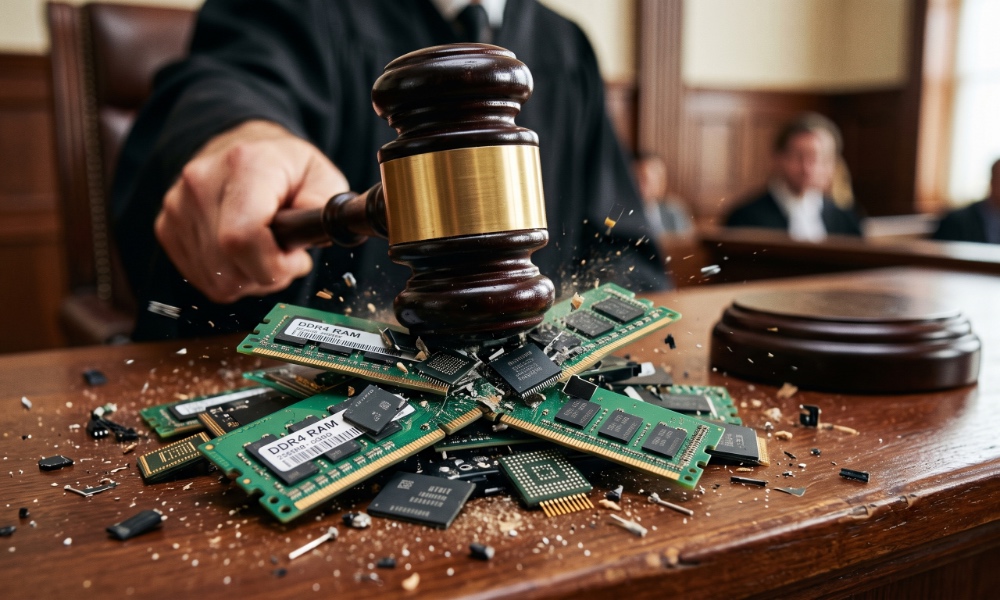
A class-action lawsuit has been filed in California against Apple memory suppliers Samsung Electronics, SK hynix and Micron, alleging that the trio have conspired to drive up prices. Filed Thursday in the US District Court for the Northern District of California, the plaintiffs, which include over a dozen individuals and small companies, allege that the three DRAM suppliers coordinated production cuts to collude on price fixing.
According to the filing, the production cuts resulted in reduced supplies of mainstream DRAM, including DDR3 and DDR4, inflating prices across the RAM market. One of the companies named in the lawsuit, Micron, denied the claims and said it will defend itself in court, reports Investor’s Business Daily.

The lawsuit, “Garciaguirre et al v. Samsung Electronics Co., Ltd. et al,” seeks to “recover for — and stop — concerted anticompetitive behavior by three oligopolists in the market for dynamic random-access memory. Since 2022, these firms have fixed supply and prices for DRAM, engaging in conduct that makes no economic sense absent collusion and that has driven up the price of conventional DRAM (sometimes called commodity DRAM) approximately 700% in a four-year period.”
While Apple isn’t directly involved in the lawsuit, the three named companies supply memory used across Apple’s entire device lineup. These rising costs contributed to Apple’s decision to make unprecedented price hikes last week that saw every Mac and iPad the company sells marked up between $100 to $1,300. In an interview warning of the impending increases, Apple CEO Tim Cook said the rising price of RAM and storage chips had become too much for the company to continue absorbing. Court filings also argue the conspiracy to cut DRAM production contributed to those higher costs.
The plaintiffs’ complaint centers on the production and price of DRAM, which is used across the electronics industry for smartphones, tablets, personal computers, servers, and other devices. Micron, Samsung, and SK hynix basically control the global DRAM market, meaning they hold tremendous influence over global memory supply.
A recent report from Counterpoint Research said Samsung held a 38% share of global DRAM revenue during the first quarter of 2026, with SK hynix taking a 29% piece of the action, followed by Micron with a 22% share. Plaintiffs point to that domination as a central piece of their lawsuit, as a more competitive market for a commodity like DRAM would traditionally spur at least one supplier to expand production to benefit from rising prices. Instead, the complaint alleges, the three companies instead shifted their production to high-bandwidth memory (HBM), which AI companies are willing to pay much higher prices for.

While shifting your production capacity to another, more profitable product isn’t illegal on its own, the lawsuit claims Samsung, SK hynix and Micron colluded to make such production decisions, rather than reaching those identical decisions independently. Antitrust laws prohibit competitors from conspiring to make decisions like the move to HBM.
Plaintiffs argue coordinated supply restrictions among the three companies offer a valid explanation for the skyrocketing memory costs. The companies for their part maintain they merely responded to the same market conditions, independently.
If this case survives the early legal challenges it will almost certainly face, court-ordered discovery will be an important part of the lawsuit. The court will want to see documents from all three companies, including emails, meeting minutes, and other internal records that could show whether the trio conspired to make production cuts, or whether they acted independently.
It is certain that electronic device makers like Apple, Samsung, Dell, and others will be closely watching this lawsuit, as well as others likely to follow. As noted above, Apple blamed the recent price hikes on the rising price of components.
Apple is still looking for other ways to deal with the increased cost of memory. Earlier this week, the company asked the Trump administration to allow the purchase of memory chips from a Chinese company that’s been blacklisted by the Pentagon. The supplier, CXMT, is believed to have connections to the People’s Liberation Army.
This isn’t the first time memory supplies have been caught fixing DRAM prices. In the 2000s, Samsung and Hynix both pled guilty to a price-fixing conspiracy that was investigated by the US Department of Justice, with Samsung agreeing to pay a $300 million criminal fine, and Hynix agreeing to pay a $185 million criminal fine. Several executives connected to the admitted conspiracy even received prison sentences.