Apple’s Latest iPhone Study Could Be the Missing Piece for Its AI Health Coach
Toggle Dark Mode
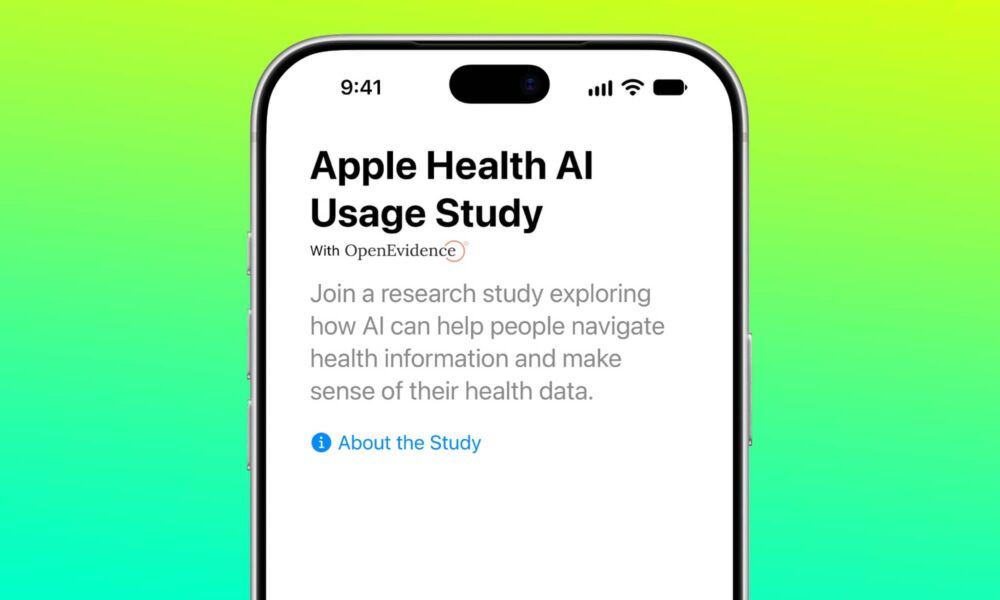
Apple has just announced the launch of a new research study intended to explore how people interact with conversational health AI tools. The Apple Health AI Usage Study will provide participants with a dedicated iPhone app to help researchers evaluate response quality, user comprehension, everyday health habits, and what ultimately builds trust, shaping future health AI experiences for both Apple and the broader industry.
The study — which will be US-only and will be conducted in collaboration with AI company OpenEvidence — will examine how users understand and evaluate AI-generated health information, what makes users trust the AI-based information, and whether or not it helps them prepare for upcoming medical appointments.

“At Apple, we believe responsible innovation starts with scientific rigor and clinical grounding. Health is deeply personal, and conducting a dedicated research study is the most thoughtful way to understand how people engage with, comprehend, and evaluate health AI in everyday life,” said Sumbul Desai, M.D., Apple’s vice president of Health and Fitness. “Insights from this study will help advance the broader scientific conversation and ensure that as technology evolves, we continue building trusted tools that genuinely support people wherever they are on their health journey.”
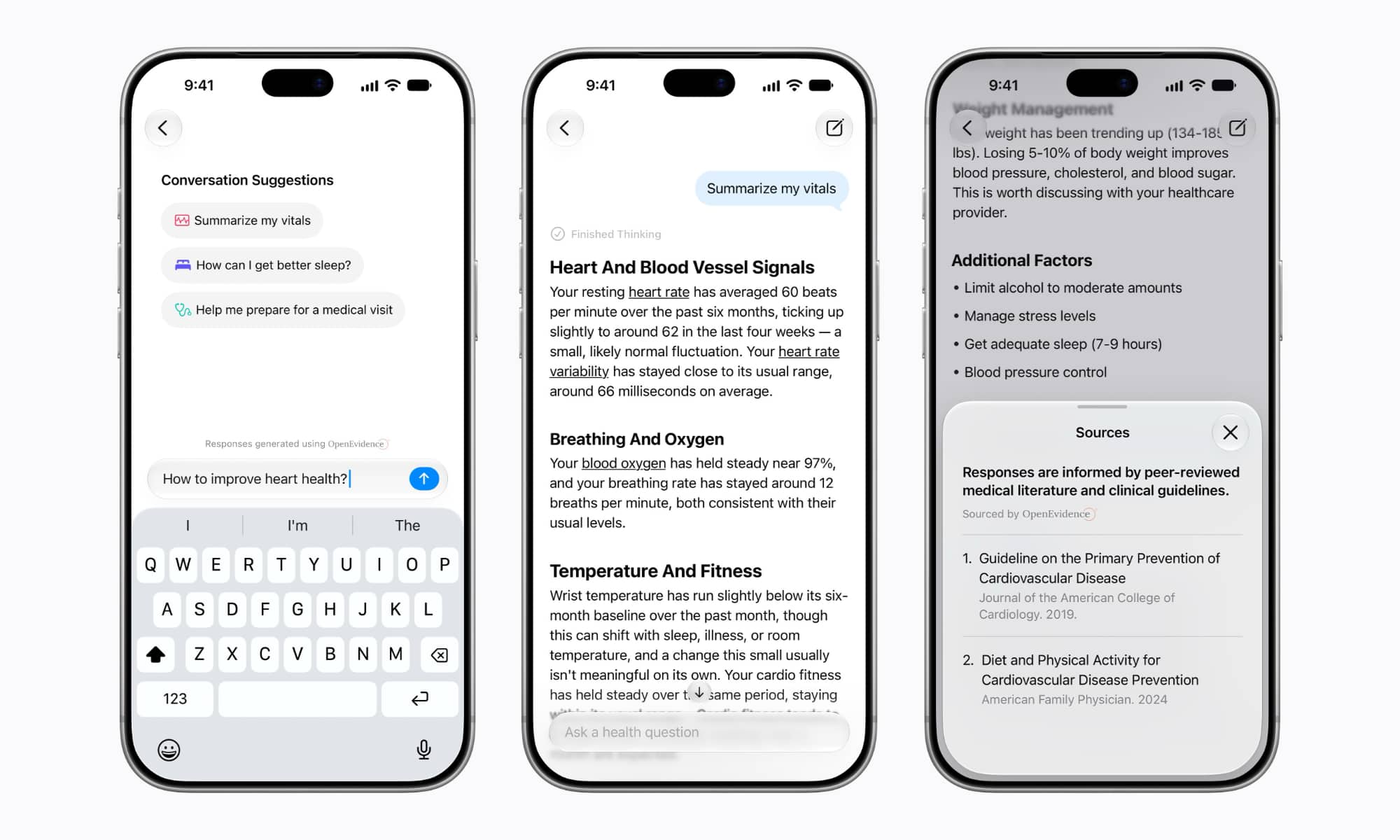
Participants will be able to ask the study app everyday health questions; explore complex medical information communicated with approachable language; and see linked, peer-reviewed clinical citations that ground each response.
Apple
Apple notes that responses in the study will be generated from authoritative sources such as The New England Journal of Medicine, the Journal of the American Medical Association (JAMA), and Nature.
Participants can choose to share several types of health data, including resting heart rate, sleep, activity, and lab results via HealthKit, allowing researchers to determine whether the incorporation of personal health information makes answers more relevant and easier for users to understand.
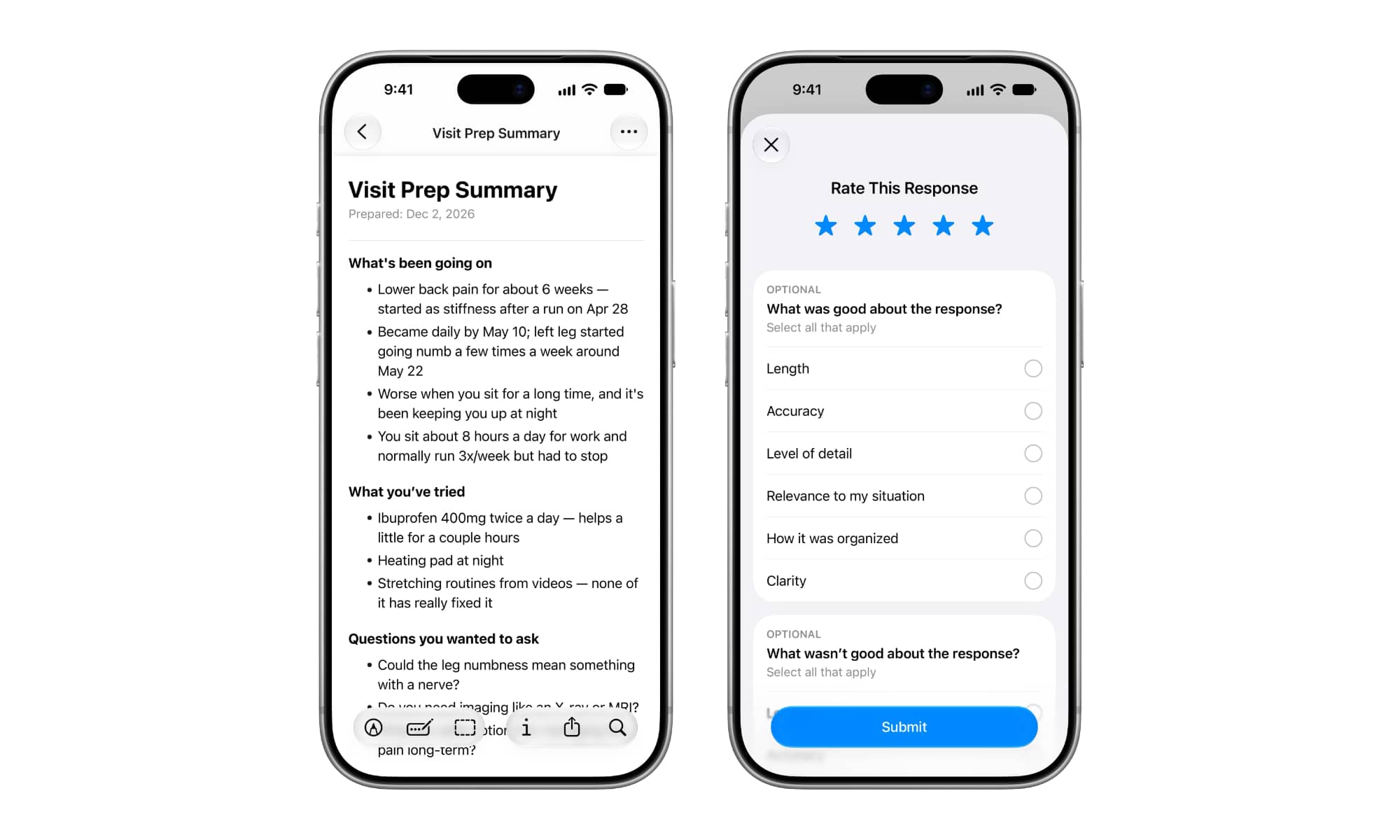
Research collected by the app could help Apple develop more context around health data to support its long-rumored AI health coaching service, which was reportedly aimed at helping users get a better understanding of symptoms and conditions and creating personalized exercise and meal plans.
While Apple has reportedly shelved the project for now, it’s hard to imagine that it’s given up on it entirely. Most likely the company has just taken a step back to ensure it has all the data it needs to get it right the first time.
Users will complete occasional surveys about their experience. For privacy’s sake, all answers to the questions will be processed to remove all identifying information before reaching OpenEvidence. Then, all question-and-response data is deleted within 24 hours. Apple says study data will not be used to train AI models, and the sharing of data such as metrics from Apple Health will be entirely under the user’s control.
It shouldn’t come as a surprise that health tools powered by large AI language models can provide incomplete or unclear answers — an issue that Apple fully acknowledges in this study. The research app has been built with guardrails to avoid providing participants with dubious guidance, directing them to the proper human resources instead, such as a healthcare provider or counselor. As with everything else in Apple’s Health ecosystem, nothing here is designed to offer clinical diagnoses or serve as a substitute for seeing a human professional.
“Patients and clinicians are both turning to AI, but the tools they use are being built and tested in separate worlds,” said Robert M. Wachter, M.D., UCSF’s professor and chair of the Department of Medicine. “When patients and doctors draw on versions of the same trustworthy tools, patients arrive prepared, conversations improve, and next steps happen seamlessly. Connecting these tools, and rigorously studying what works, is how we’ll get there.”
Apple is welcoming up to 200,000 eligible US residents aged 21 and older to participate in the study. The only other requirement is that you must be using an Apple Intelligence-enabled iPhone — that’s an iPhone 15 Pro, iPhone 16, or newer model — with iOS 26 or later. You can join by downloading the Apple Health AI Study App from the App Store.