Is Canada the Next Proving Ground for a More Open App Store?
Toggle Dark Mode
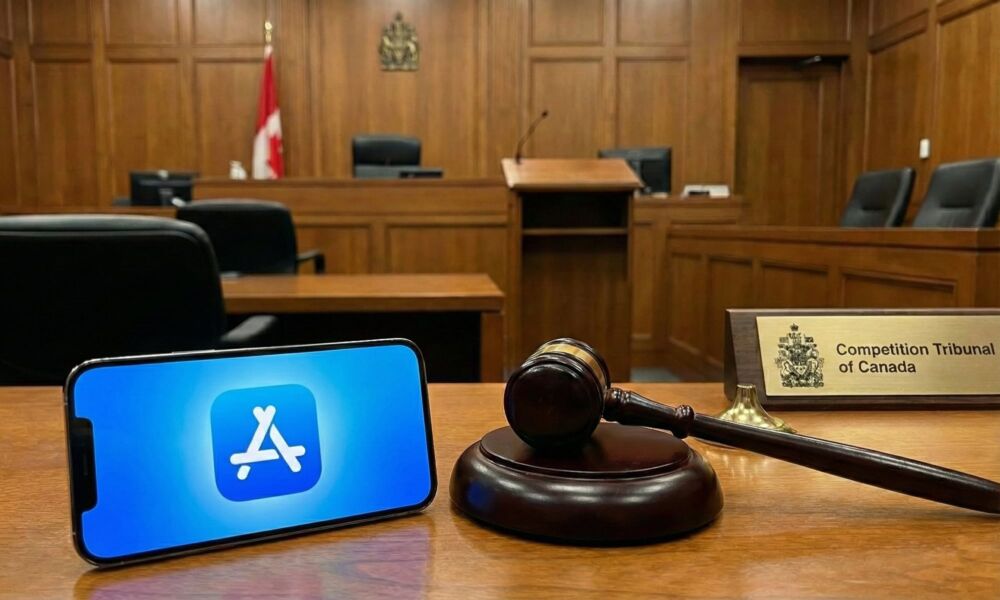
Apple’s next antitrust battlefront could end up being in the Great White North, as a public interest group prepares to bring a case against Apple under Canada’s Competition Act.
Well-known Canadian journalist Peter Nowak, writing on his Do Not Pass Go Substack, shares that the Samuelson-Glushko Canadian Internet Policy and Public Interest Clinic (CIPPIC), an Ottawa-based consumer advocacy group, filed a complaint with the Competition Tribunal last month accusing Apple of stifling competition.
While Apple validly touts the benefits of its so-called “walled garden” for keeping users safe and the experience seamless, CIPPIC is joining other public interest advocates and regulators around the world in arguing that those walls have become high enough to keep out healthy competition.
A Growing Global Chorus
“Apple’s abuse of dominance results in harm to competition in Canada, including by reducing quality and innovation among developers, and by increasing prices and reducing choices for consumers,” the Dec. 18 filing says. It’s a familiar refrain that we’ve been hearing from Europe to Japan.

Even the US Justice Department has had an ongoing case since 2024 looking into Apple’s alleged anticompetitive behavior, although that one goes well beyond the App Store, covering messaging apps, smartwatches, and Apple Pay. In the UK, a massive £15 billion class-action case over the “Apple Tax” is now moving toward a critical hearing in February to determine how much Apple will be required to pay in damages.
CIPPIC operates as Canada’s only public interest technology clinic, operating out of the University of Ottawa’s Faculty of Law. However, the issue of Apple’s market dominance isn’t a new concern for the non-profit — it’s just that until recently, Canadian laws didn’t allow outside parties to get involved.
“This has been an issue that CIPPIC has been concerned with for years,” CIPPIC general counsel David Fewer told Nowak. “As soon as the government changed the legislation to allow for public interest claims to come forward on abuse of dominance, as soon as this was something that became available to us, we decided to go forward on it.”
Storming the Garden Walls

To be clear, the CIPPIC filing is merely an application to the Competition Tribunal, asking for permission to argue the case in the hope of bringing about change in Apple’s policies through government regulation. Its two chief concerns are ones that have come up elsewhere: Apple’s requirement that all iPhone and iPad apps be distributed through its App Store, that all purchases must use Apple’s payment system, and the company’s anti-steering demands that prohibit developers from even talking about alternative payment methods for things like subscriptions.
CIPPIC also seeks to turn this into a class action encompassing “all Developers in Canada who paid commissions to Apple and all Canadian iOS Users who made purchases in the Canadian App Store,” and asking that Apple pay relief equal to the benefits it derived from its anti-competitive conduct of forcing developers to use the App Store and its own in-app payments system. These aren’t monetary “damages,” per se, as they have no bearing on losses suffered by the claimants, but are instead focused on the profit Apple made from its anti-competitive behavior.
Apple has not yet filed a response to CIPPIC’s application, and has not responded to a request for comment from either Nowak or iDrop News at the time of publication. However, the northern front is simply the latest on which Apple is fighting this battle, and its already shown more willingness to capitulate in countries like Japan and, more recently, Brazil, in the face of government legislation.

Of course, things aren’t even close to reaching that point in Canada. There’s not even a guarantee the Competition Tribunal will grant CIPPIC’s request to bring the case forward. It’s also been tough for the non-profit group to get Canadian developers to speak out, out of fear of repercussions from Apple.
“We spoke to several Canadian app developers, who agreed wholeheartedly with the proposed application, but were understandably reluctant to provide evidence,” Jean-Marc Leclerc, a lawyer representing CIPPIC in its filing, told Nowak. Instead, they relied on a UK-based audiobook developer, xigxag, which operates in several markets, including Canada. Kelly Fairbrother, the company’s co-founder and chief executive, “has been vocal in her criticism of App Store practices in the U.K., which are equally applicable to the Canadian app store (indeed worldwide),” Leclerc added.
Canada as the New Proving Ground

The CIPPIC application is only the second to take advantage of a new Canadian law that opens the door for third parties to get involved. Until last year, only the government could challenge these rules, last year’s “Digital Marketplace Modernization” act now allows ordinary citizens to bring public interest antitrust cases to the Competition Tribunal.
The first case was filed as soon as the new laws came into effect in June, when Toronto-based indie game developer Alexander Martin challenged Google’s market dominance in a case that also overlaps with Apple. As Do Not Pass Go reported in October, Martin is taking both Google and Apple to court, not over any app distribution issues, but rather the multi-billion search deal between the two companies — and how it impacts independent game developers.
“In the rapidly evolving digital marketplace, independent game developers face challenges in gaining visibility and attracting players. The overwhelming reliance on Google’s general search engine, which dominates the general search engine market, places developers at the mercy of Google’s algorithm, dictating the visibility of their games to potential players,” Martin’s court filing reads.
Since the original application was filed, the case has gone back and forth with Google and Apple filing counterarguments encouraging the Tribunal to dismiss the case. We fully expect to Apple to make a similar petition to the Competition Tribunal on CIPPIC’s application, which has been formally certified by the Tribunal, placing the ball in Apple’s court.
Legal and policy advocates are watching closely to see how this plays out, as these first two cases have become the litmus test for defining what “public interest” means in Canadian antitrust law, and will serve as a strong indicator as to whether the Canadian government’s new law has any teeth, as the legislation only opens the door to allowing these applications; the Competition Tribunal can still slam it shut by refusing to hear them.
While Martin’s case focuses on the Search deal, and CIPPIC’s focuses on App Distribution, both are relying on the same newly-minted legal pathway. If the Tribunal grants leave to either, it will effectively signal that the public interest is now a valid gate-opener for private citizens to challenge the world’s largest companies, potentially bringing Canada’s digital rules more in line with the shifts already cemented in London, Tokyo, and Brussels.