iOS 27 Will Let Two iPhones Share One Phone Number
Toggle Dark Mode
While it’s arguably a bit of a niche use case, Apple is introducing a new “iPhone Handoff” feature in iOS 27 that will allow users to switch between two iPhones while sharing a single phone number between both of them.
Although this feature was apparently named briefly on a slide during the WWDC 2026 keynote that listed hundreds of new iOS 27 features, Apple has yet to explicitly announce it. However, MacRumors recently shared a post in which one of its forum members describes the feature, complete with a video demonstration created using two simulated devices in Apple’s Xcode development suite.

How iPhone Handoff Works
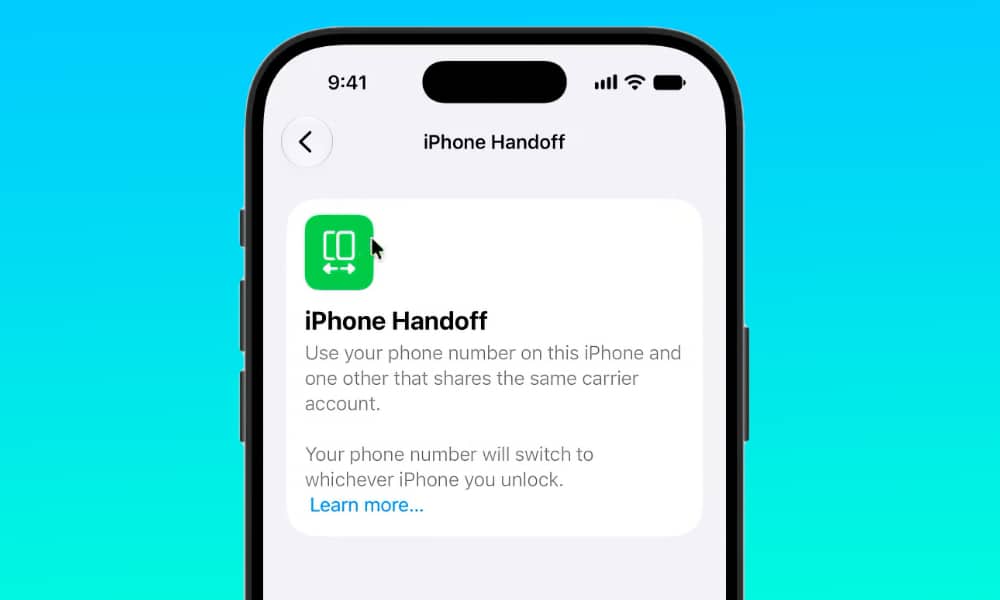
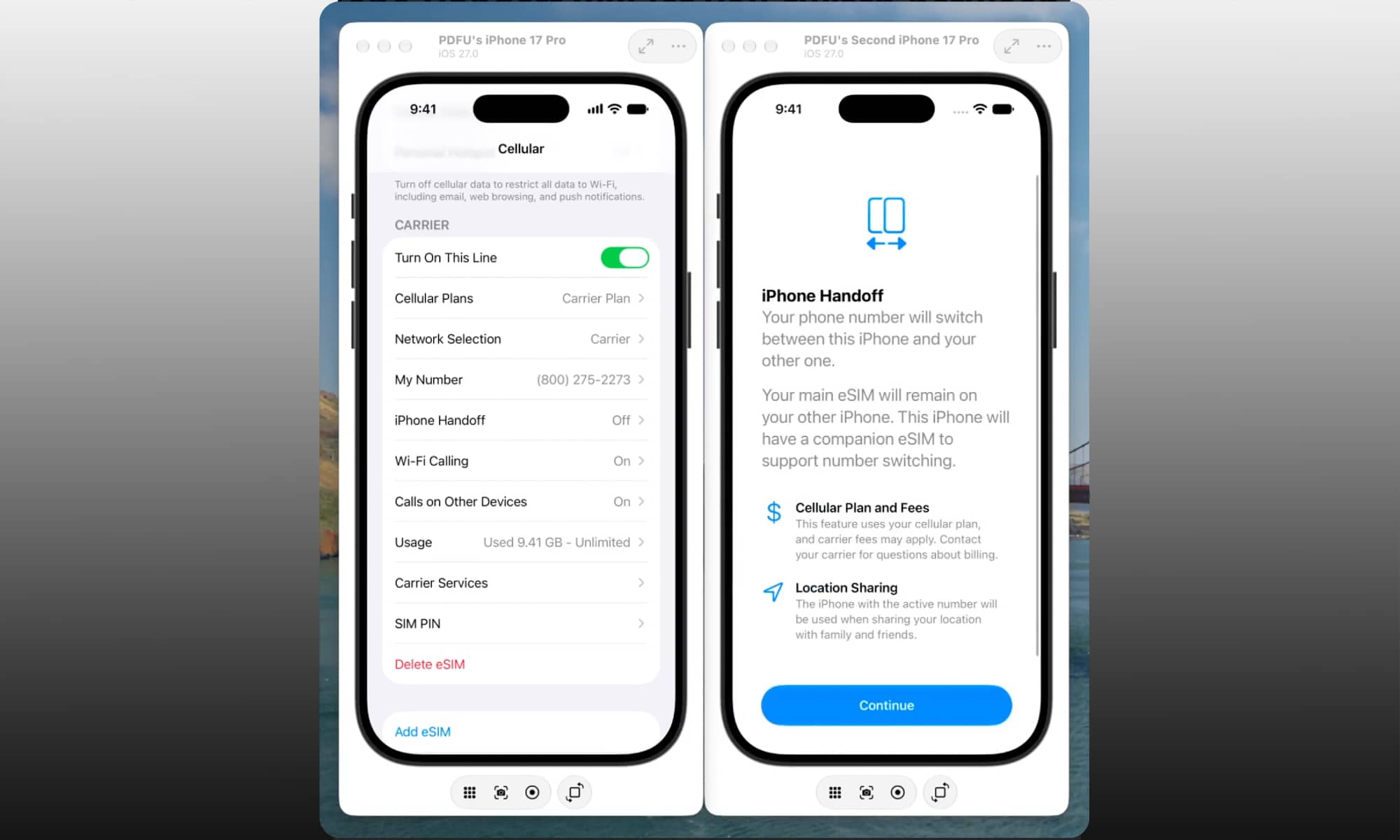
When available, a new “iPhone Handoff” option will appear in Settings > Cellular, directly below “My Number” for each line that supports it. Selecting that shows a screen briefly explaining how the feature works without any additional options other than a “Learn More” link to a non-existent support document (which is quite common during iOS beta cycles, as Apple doesn’t publish these until after the final release).
Use your phone number on this iPhone and one other that shares the same carrier account. Your phone number will switch to whichever iPhone you unlock.
As the description implies, the feature doesn’t actually allow two iPhones to share a single phone number simultaneously. Instead, it will be active on whichever iPhone you’re using at the time, and dormant on the other. It also requires both phones to be on the same carrier, which makes sense as you’re sharing the same number and hence the same account.
There’s no word on how this will work if you’ve provisioned a second line using another eSIM. Since the handoff feature is tied to a specific eSIM rather than the iPhone, it should be technically possible, but the automatic handoff may depend on how the other lines are set up in terms of which are primary and secondary.
MacRumors also notes that “all cellular settings are managed on the main iPhone, and location sharing is based on whichever iPhone is actively using the phone number.”
Under the hood, the “companion” iPhone will be provisioned with its own eSIM, complete with its own IMEI and ICCID, so it’s the phone number itself that will be floating between two eSIMs whenever you unlock a device. This should offer a more seamless transition under the hood than transferring the eSIM itself (which many carriers already allow users to do manually via their web portals).
This also means the feature requires carrier support, which currently appears to be limited to T-Mobile (US) and Deutsche Telekom, although that could certainly change by the time iOS 27 is released to the public next month. However, while the option shows up for iOS 27 beta testers on T-Mobile, it’s reportedly refusing registrations right now, suggesting the carrier isn’t yet ready to flip the switch on the backend.
However, the method appears to be similar to how cellular Apple Watch models work. In fact, the Apple Watch was the first Apple device to adopt an eSIM in 2017, since there obviously wasn’t much room for a physical SIM card in the wearable. For the first few years, cellular Apple Watch models had to share the number from a paired iPhone; it wasn’t until Apple debuted Family Setup in 2020 that it became possible to provision an Apple Watch with its own phone number.
This suggests that carriers that already support the cellular Apple Watch may have an easier time adopting iPhone Handoff, as it seems to be built on the same principles. We’ll have to wait and see what happens.