Your iPhone Is More Than a Pretty App Launcher | 4 Features to Start Using Now

Toggle Dark Mode
Most people use their iPhone like it’s just a nice-looking app launcher. Tap an app, scroll your feed, reply to a few messages, repeat the whole process. And to be fair, that works; the iPhone is very good at being a simple phone.
But the real iPhone advantage shows up when you start using the built-in features that sit underneath the surface. These are the tools that make the iPhone feel like it’s helping you instead of constantly distracting you. They cut down interruptions, remove tiny annoyances, and turn common tasks into one-tap actions.
The best part is you don’t need to download anything or learn a complicated system. You just need to set these features up once and let them do their thing in the background.
Focus Modes
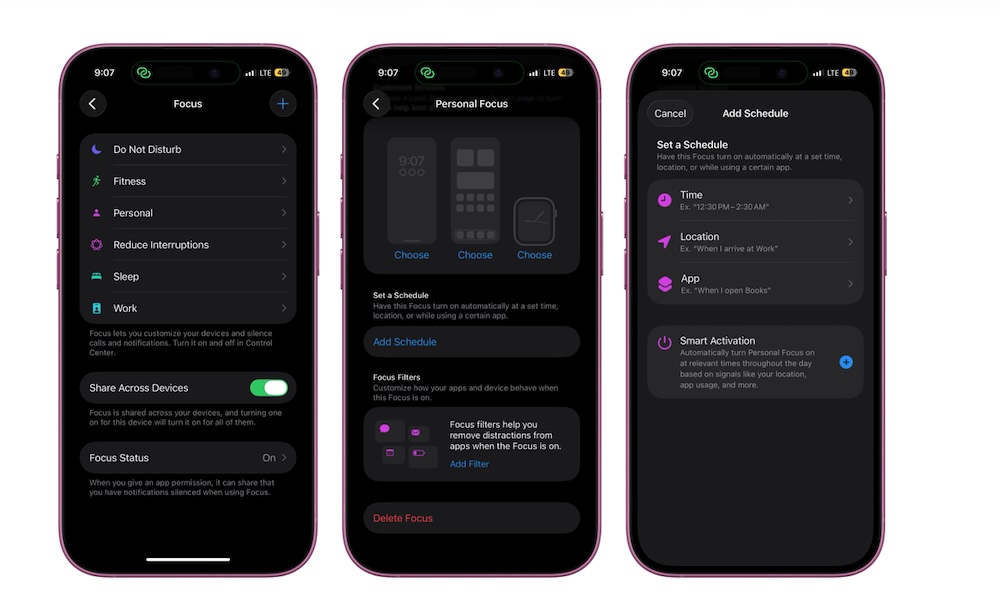
Notifications are not the problem — constant, unfiltered notifications are.
When everything can interrupt you, your iPhone ends up treating a random shopping app the same way it treats your partner, your boss, or a family emergency. Focus Modes fix that by letting you decide what gets through based on what you’re doing. Work, personal time, sleep, driving, gym, writing, studying, or whatever else your life actually looks like.
The reason Focus feels so powerful once it clicks is that it doesn’t require you to be paying attention to it all day. You’re not constantly toggling Do Not Disturb, turning off ringtones, or getting rid of notifications that you don’t need right now. Instead, you can set it up so your phone changes its behavior depending on time, location, or the apps you open. And because you can allow specific people and apps, you’re not going completely offline. You’re just cutting the noise while you need to be productive or want some me time.
To get started, pick one Focus you’ll use every day, like Work or Sleep, and tweak it until it feels calm. Once that works, copy the pattern for the rest of your routine.
Here’s how to set up a new Focus mode:
- Open the Settings app.
- Scroll down and tap on Focus.
- Tap Work (or choose another Focus you’ll actually use), or tap the + button to create a custom one. If so, follow the steps on your screen to create your new Focus mode.
- Tap People and allow only the contacts that truly matter during that Focus mode.
- Tap Apps and allow only the apps that you need.
- Tap Options and adjust things like whether you want Focus to dim your Lock Screen or hide notification badges.
- Scroll down and tap Add Schedule and choose a trigger like Time, Location, or App.
Once you’ve lived with Focus for a few days, you’ll start noticing something weird: you feel less tempted to check your phone, even when it’s right next to you.
Live Text
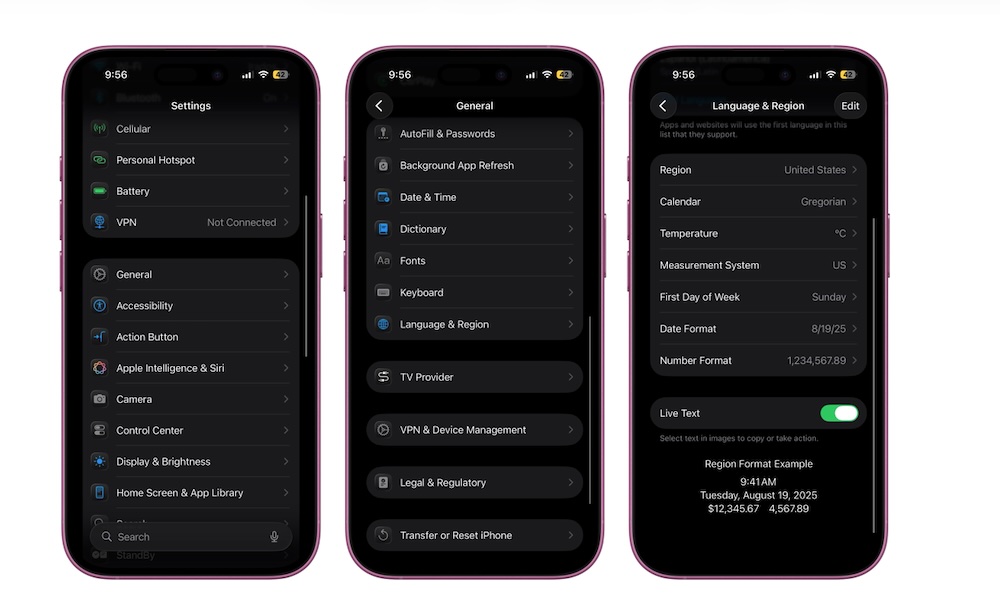
Live Text is one of those iPhone features that sounds like a small convenience until you start using it, and then you wonder where it’s been all your life.
Your iPhone can recognize text in photos, screenshots, and even through your camera view, letting you interact with it as if it were digital text.
That means you can copy and paste a Wi-Fi password from a sticker, translate a menu, grab a tracking number from a receipt, call a phone number on a sign, or open a website printed on a poster.
This feature is a daily time-saver because it gets rid of the most annoying task: retyping, which is slow, prone to errors, and the kind of thing you put off because it feels annoying. Live Text turns it into a quick tap, and you’re done.
It’s also sneakily useful for those of us who are still studying. You basically turn screenshots into notes. You can quickly take a picture of someone else’s notes and add it to your own without any issues.
Live Text should be turned on by default on your iPhone, but you can make sure it is by going to Settings > General > Language & Region. From there, scroll down and turn on Live Text.
After that’s done, you can try it out for yourself. Open the Camera app and point your iPhone at some text until it shows the text detection icon near the bottom right corner of your screen (in portrait) or top right corner (in landscape).
Select the text and copy it, translate it, or use it to look something up.
- Tap the text detection icon.
- Select the text you want.
- Choose what you want to do: Copy, Select All, Translate, Look Up, or tap a detected phone number or website to act on it.
You can do the same thing for pictures you already took. Simply open the Photos app and go to the picture or screenshot you want, press and hold a word, and your iPhone will highlight it. Grab the handles to select the piece of text you want, or tap on Select All. From there, you can copy it or use Apple Intelligence or the Look Up feature if you want.
This feature will change the way you handle text wherever you go. It might take a while to get used to it, but once you master it, you won’t want to live without it.
Pro Tip: If you have an iPhone 16 or newer model with the Camera Control, you can press and hold to quickly bring up the visual intelligence camera view. In addition to identifying and looking up objects in the world around you, this also lets you quickly copy and paste Live Text or do other things like translate it, call a phone number, visit a website, send an email, or create a calendar event, depending on what’s contained in the text.
StandBy
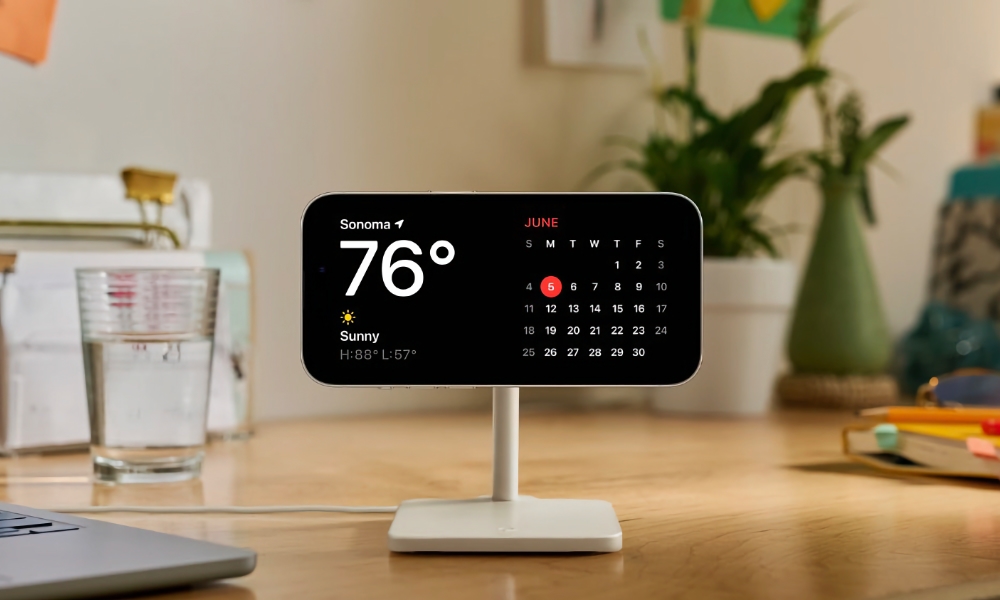
StandBy is one of the most underrated iPhone features because not many people actually use it. However, it’s really cool, and it changes what your phone does when you’re not actively using it.
Instead of your iPhone being a black rectangle on your desk or nightstand, StandBy turns it into a smart display while it’s charging and sitting in landscape orientation. You get glanceable widgets, clocks, and photos, and it feels like the iPhone is finally earning its spot on your desk while you’re working, cooking, or getting ready for bed.
There are many widgets to choose from. For instance, you can glance at the weather, calendar, or reminders. There are even some third-party widgets that work with StandBy, too. And you can customize the type of clock you see.
It’s also a great way to use an old iPhone. You can turn it into a clean bedside clock, build a desk setup that shows your calendar and timers, or use it as a photo frame when you’re charging in the living room.
StandBy should be turned on by default on your iPhone, but here’s how you can make sure:
- Open the Settings app.
- Scroll down and tap on StandBy.
- Turn StandBy on.
- Now, plug your iPhone into its power source (it can be wired or wireless).
- Place it on either of its sides in landscape orientation and keep it still.
- If StandBy doesn’t appear, press the Side button once.
- Swipe left or right to switch between different widgets, or swipe up or down to change the clock.
You can further customize your experience and what you see by pressing and holding on widgets or clock styles when StandBy is active.
‘Check In’ to Apple Messages
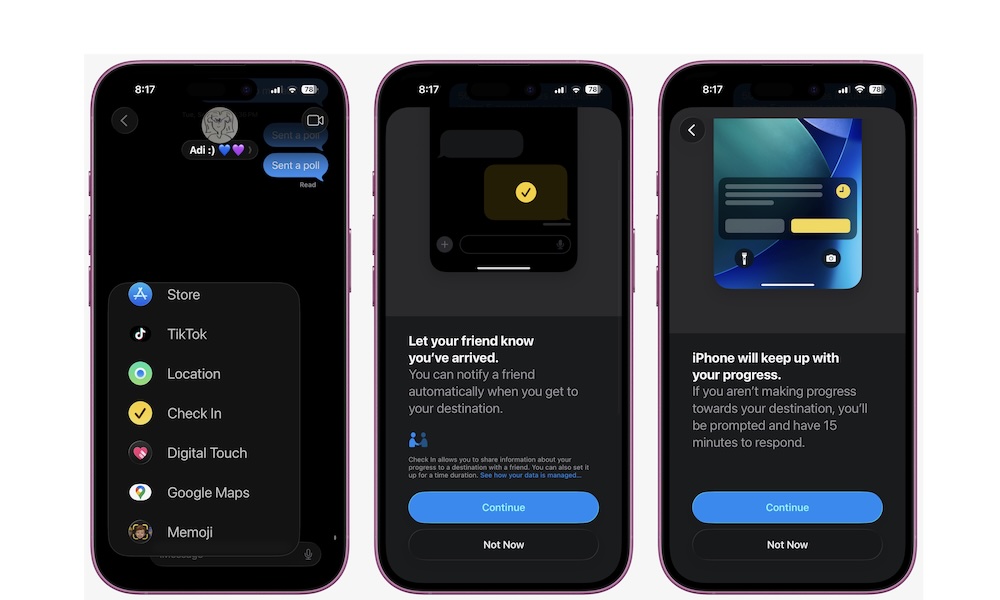
Check In is a safety feature that is surprisingly more useful than you first thought once you start using it. Picture this: you’re heading home, meeting someone, or traveling, and you tell your friends or loved ones, “I’ll text you when I get there.” Then you forget to do it because life happens, or your phone dies. Or maybe you get distracted. Or, knock on wood, something does go wrong, and you’re not able to update anyone.
Check In fixes this issue by automatically notifying a trusted person when you arrive. And if you don’t complete the Check In, it can share helpful information depending on how you set it up.
When you turn this feature on, you no longer need to constantly update someone. Instead, you’re just using a built-in tool that’s already sitting inside Messages.
Here’s how to start a Check In with someone:
- Open the Messages app.
- Open a conversation with a trusted person.
- Tap the + button next to the message field.
- Tap Check In.
- Follow the instructions on your screen to choose a time-based or destination-based Check In.
- Send it, then go about your day. Messages will handle the update when you arrive.
Take Your iPhone Experience to Another Level
If your iPhone has ever felt distracting, noisy, or weirdly tiring, it’s usually not because you need more apps. It’s because you haven’t told your iPhone how you want it to behave. Focus modes give you control over interruptions. Live Text saves you from constant re-typing. StandBy makes your phone useful even when you’re not holding it. Check In adds a safety layer that works in the background.
Set these up once, tweak them however you like, and your iPhone will become a more powerful tool than ever before.