iPhone Duo Backordered Until January? Apple Just Ordered Millions More
Toggle Dark Mode
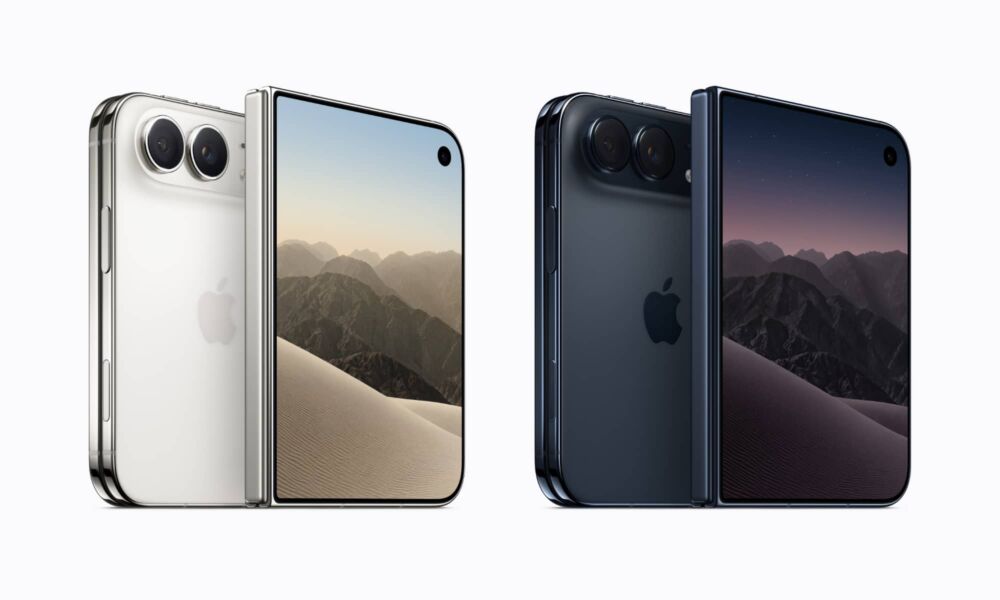
If you’re still staring down a January 2027 delivery date for your iPhone Duo, there’s an indication that may soon change for the better. Apple has reportedly ordered up a few million more iPhone Duo units from its supply chain to meet what it’s been calling “extraordinary” demand for the new foldable.
The iPhone Duo went up for preorder last Friday at 8:00 a.m. ET with initial stock selling out in seconds and delivery dates shifting into 2027 for the most popular models. By 8:30 a.m., even the most expensive 2 TB configuration was showing a delivery date of January 25. While there’s an off chance you might still be able to snag one in an Apple Store tomorrow, even those stock levels are limited enough that you’ll want to line up early.

While Apple is being cagey as always about the balance between supply and demand — it naturally wants folks to simply believe the iPhone Duo is insanely popular — multiple reports over the past several months have suggested that Apple’s suppliers have been running at less than peak efficiency in churning them out.
Earlier this year, most analysts said Apple had ordered between 7 and 8 million iPhone Duo units for sale in 2026, while summer reports suggested Apple had upped that to 10 million. However, it seems Apple has had trouble achieving those yields, placing the target back around 6 to 8 million as of late September (for comparison, Apple is believed to have ordered up to 30 million units each of the iPhone 18 Pro and iPhone 18 Pro Max).
According to China’s Jiemian News in September, Apple’s suppliers were still having problems reaching yields of more than 60% due to the company’s high quality standards. Sources at the time suggested that Apple might have to relax those standards to improve yields.
The supply chain is now waiting for Apple to make a decision on whether to relax the quality requirements. If the quality requirements are relaxed, it will be possible to move towards mass production more quickly.
Jiemian News
In this case, “yields” refers to how many devices come off the line meeting Apple’s standards for quality. Those that don’t are effectively scrapped rather than put into boxes and shipped out for sale. Yield numbers for an iPhone Pro typically sit above 90%, with the iPhone 18 Pro and iPhone 18 Pro Max reportedly running at 93%. That makes 60% pretty abysmal, but it’s also not surprising for a device that relies on complex hinge mechanisms and foldable OLED panels.

It’s unclear whether Apple has made that call, or if suppliers have simply managed to overcome whatever issues were slowing them down, but DigiTimes now reports that Foxconn and component manufacturers have been told to increase production to 14 million devices, up from the previous level of 9.7 million.
Still, these orders are reportedly for the next 12-month period, not simply through the end of 2026, so it’s unclear when this will take effect. A dubious mid-October report from China’s STCN suggested Apple had already increased 2026 orders for the iPhone Duo by 30% — pushing the number back up to 10 million.
However, that report also oddly states that Apple has had to cut iPhone 18 Pro manufacturing to produce more iPhone Duo units, which doesn’t make much sense unless it’s a result of specific component shortages, such as the A20 Pro chips that are common to all three models.
It’s also worth keeping in mind that DigiTimes is making its estimates based on component orders, not necessarily finished devices. Since components come from a variety of suppliers — making exact numbers tough to nail down — Apple may simply be stockpiling parts in anticipation of solving its yield problems, rather than signaling that the bottleneck is already fixed.