Squeezing the Fruit: Taction Demands Millions More in $5.7B Apple Fight
Toggle Dark Mode
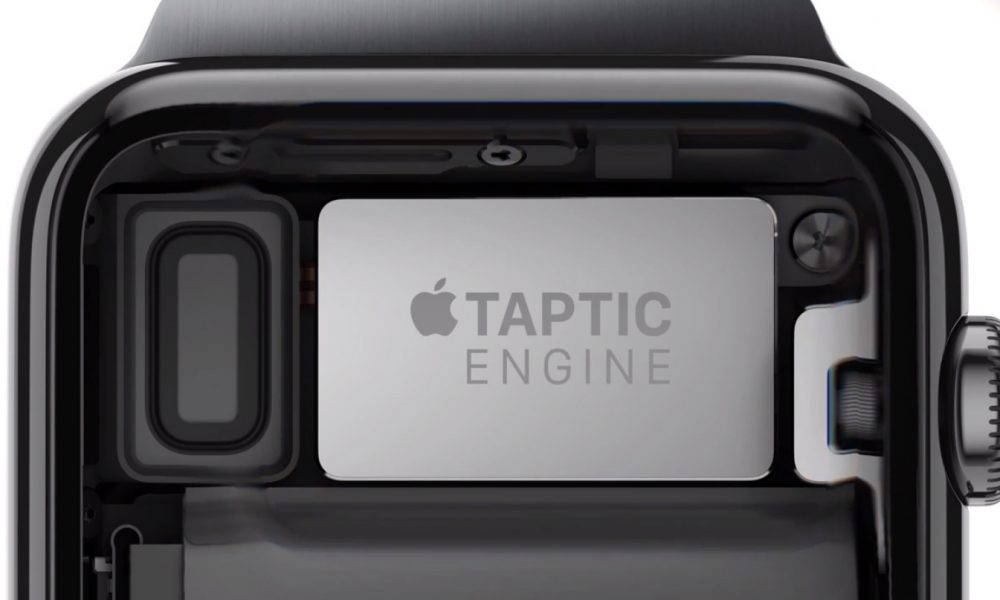
Last month, Apple was ordered to pay $5.7 billion in damages to San Diego-based firm Taction Technology after a jury found the Taptic Engine that Apple has long used in the Apple Watch and iPhone infringed two of the plaintiff’s patents.
Taction Technology is not your run-of-the-mill “patent troll” that you often see in cases like this. Patent trolls are companies that buy up cheap patents in bulk and scan them for any concepts that may exist in well-known technology produced by large companies. The patent trolls then file lawsuits in hopes of forcing a large settlement from the companies.
In this case, Taction Technology develops technology used in premium headphones such as the Corsair HS60 Haptic stereo gaming headset. The headphones use what Taction calls the “Taction Transporter” to deliver “bass that you can feel.”
During the development of the “Taction Transporter,” the company filed two patents, U.S. Patent No. 10,659,885 and 10,820,117, both of which describe “systems and methods for generating damped electromagnetically actuated planar motion for audio-frequency vibrations.”
Now, even as Apple is challenging the $5.7 billion jury verdict, Taction is hoping to squeeze a bit more juice from the tainted fruit by adding in additional damages for iPhone and Apple Watch sales in 2026, plus prejudgment interest.
Reuters reports that Taction has asked a federal judge for hundreds of millions more in payment from Apple, arguing that the awarded damages only cover sales from 2021 to March 2026, and that the six months between then and the judgment should also be included.
Taction has asked for prejudgment interest to be paid at California’s 7% statutory rate. As noted by MacTrast, the interest on $5.7 billion would be an incredible figure on top of the already large sum, adding hundreds of millions of dollars to Apple’s final tab.
Taction says its argument for interest is valid, as “the size of the jury’s award is no reason to withhold interest.”
As you might expect in a legal dealing like this, Apple plans to appeal and has already challenged the jury’s verdict, saying it was made without any materials to accurately determine the damages payable.
Plus, Apple contends that the logic of the case and the alleged infringement are contradictory, so it’s petitioning to have the verdict overturned.
Apple actually began developing its Taptic Engine long before Taction Technology even existed. Taction was founded in 2017 by Dr. Silmon James Biggs, who developed the technology and has several scholarly articles to his name.
After deliberating for two days to come to a decision, the seven jurors in the trial found that Apple hadn’t willfully infringed Taction’s patents while redesigning its Taptic Engine, but perhaps had instead inadvertently developed technologies that were similar enough to the plaintiff’s to be considered an infringement.
While cases of this type are built on the belief that one of the parties deliberately and knowingly infringed the other party’s patents — and even possibly stole trade secrets — sometimes two engineering teams can arrive at the same idea. In that case, whoever gets to the patent office first gets the legal spoils.
However, in its lawsuit, Taction asserted that Apple willfully infringed on its patents by reverse-engineering the technology found in two of its now-defunct Kannon headsets. The plaintiff presented both ordering and shipping receipts as evidence.
The $5.7 billion verdict is the largest amount Apple has ever been ordered to pay — dwarfing even the 2019 $4.5 billion Qualcomm settlement. However, that amount is almost certain to go down once the dust settles. Even if Apple doesn’t successfully appeal the award, the amounts involved could be reduced, or as often happens in cases like this, the two companies could reach a less expensive out-of-court settlement.