Apple Explains Why It Pulled ICEBlock, but Capitol Hill Isn’t Buying It
 Rafael Henrique / Adobe Stock
Toggle Dark Mode
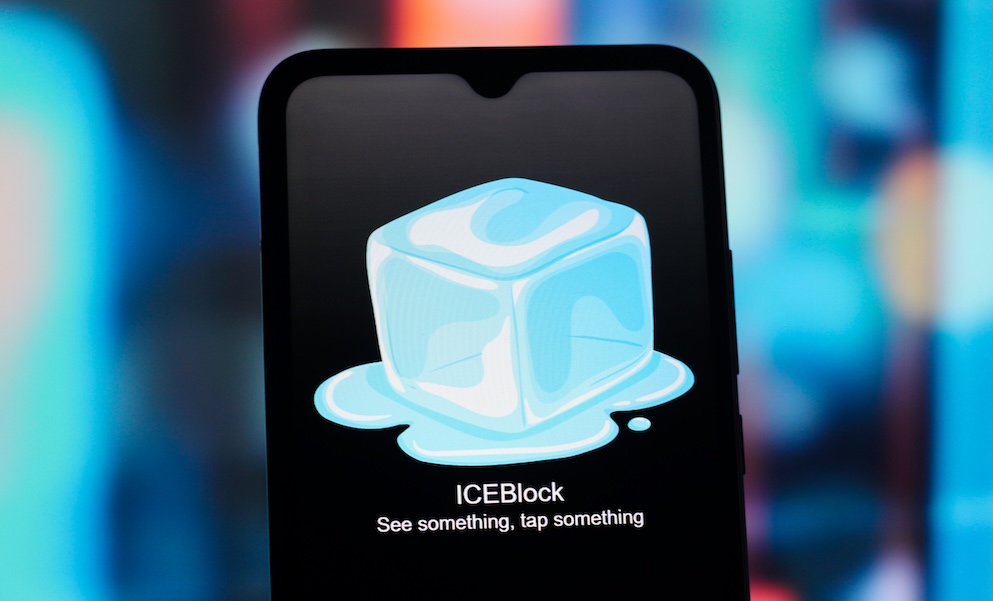
Nearly a year after ICEBlock controversially vanished from the App Store, we’re finally getting Apple’s side of the story. Unsurprisingly, Capitol Hill is immediately pushing back.
Apple removed ICEBlock from the App Store in October 2025, leading Rep. Jamie Raskin to open an investigation into the Justice Department’s apparent role in the apps being pulled from both the App Store and the Google Play Store. Now, CNN is reporting on a previously unknown letter that Apple sent Raskin in July, in which the company laid out its reasoning.
‘A Significant Risk of Harm’
In the letter, Apple explained that its decision to remove ICEBlock and similar apps was made primarily to protect agent safety, after the Trump administration expressed concerns that led Apple to conclude the app was “creating safety risks” following a fatal shooting at a Dallas ICE office that left two detainees dead.
Writing on behalf of Apple, Timothy Powderly, Senior Director of Government Affairs, noted that then-Attorney General Pam Bondi raised serious concerns with Apple that ICEBlock threatened the safety of federal officers.
Powderly explained that Apple determined ICE tracking apps provided “precise location information about ICE officers (and as a result, other individuals who may be in proximity to ICE agents, such as protestors or detainees), thus providing a potential roadmap for targeted violence and creating a significant risk of harm,” in violation of its guidelines.
Apple’s letter also revealed the app wasn’t rubber-stamped with approval from the beginning. Apple stated it approved ICEBlock in April 2025 only after its developer, Joshua Aaron, resolved “certain user privacy concerns” flagged during the app’s review.
When Apple ultimately pulled ICEBlock and several similar apps, it cited App Review Guideline 1.1.1, telling developers that information from law enforcement showed the apps’ purposes were to share officers’ locations in a way that could be used to harm them.
Information provided to Apple by law enforcement shows that your app violates Guideline 1.1.1 because its purpose is to provide location information about law enforcement officers that can be used to harm such officers individually or as a group.
Raskin Isn’t Convinced
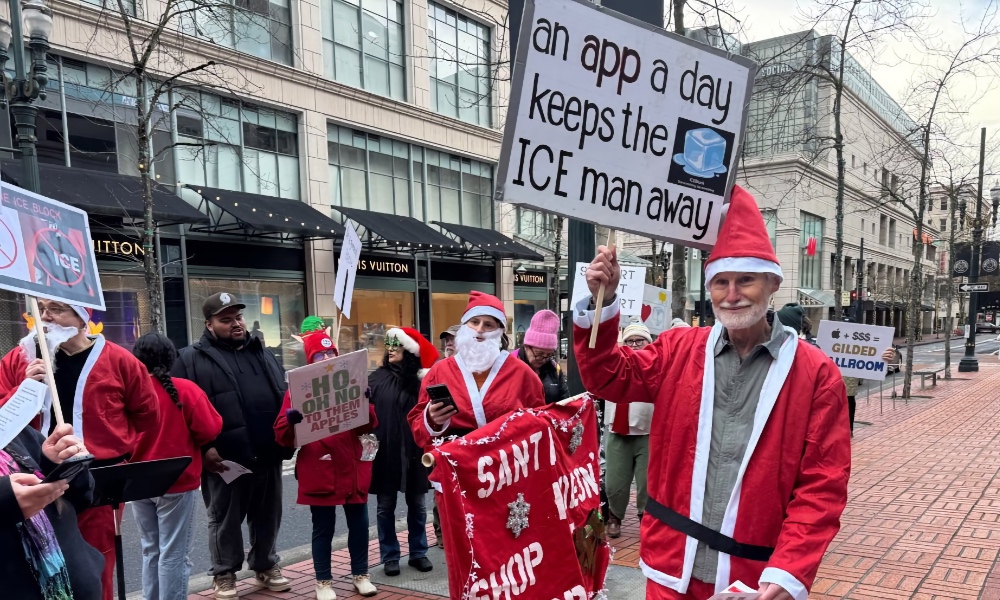
Rep. Jamie Raskin, the top Democrat on the House Judiciary Committee, isn’t convinced. He argued that even if the shooter searched for ICE tracking apps, he didn’t need one to find a government building at a fixed location, and that the shooter got the address from an app (presumably Apple Maps) that ships standard on Apple devices.
Raskin also pointed out that other apps on Apple’s App Store allow users to share police locations in real time. Raskin is now asking Apple to hand over a full list of apps it removed after the Justice Department raised concerns, and to conduct an independent review of those decisions.
The Legal Fight Continues
Meanwhile, the developer of ICEBlock is taking his own swing. Aaron sued Trump administration officials in December, alleging they abused their power and violated his free speech rights by pressuring Apple to remove the app. He says the claim that ICEBlock was built to harm officers is false. Justice Department officials, including Bondi, have moved to dismiss, denying they were directly responsible for the removal.
Raskin’s firm stance could create a major challenge for Apple’s new CEO, John Ternus, who would surely much rather keep the focus on Apple’s new products and Siri AI than an intense and divisive political issue. Then again, maybe that’s why Tim Cook is still being very well compensated to serve as Apple’s first-ever executive chairman.
The Department of Homeland Security continues to insist that assaults, vehicle attacks, and death threats are on the rise against ICE agents, and stands by its claim that ICE tracking apps pose a danger to agents. Apple’s not out of the woods on this issue just yet.