GM Throws it in Reverse: CarPlay Stays in 2027 Gas Pickups
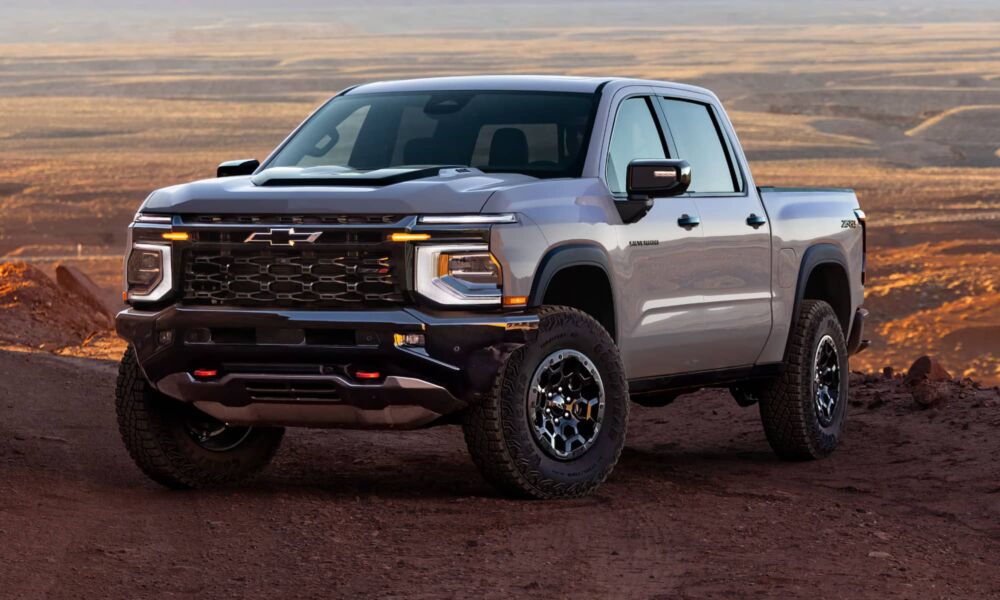 2027 Chevy Silverado [GM]
Toggle Dark Mode
A little over three years ago, GM began a crusade to eliminate CarPlay from its vehicles, but now the automaker appears to be at least partially reversing course.
GM’s plan was initially focused on electric vehicles, phasing out support for both CarPlay and Android Auto in favor of its own custom-built Google infotainment system, and it kicked that off later the same year with its 2024 Chevrolet Blazer. Over the past two years, no GM EV has included CarPlay support — and it remains open to question if that stance will change anytime soon.
The automaker upped the stakes last year when it to eventually phase CarPlay out of its gasoline-powered vehicles as well. CEO Mary Barra said at the time that wasn’t necessarily going to happen overnight, as the company was deliberately prioritizing its EVs, but it planned to eventually make the change to its own custom infotainment system “across the portfolio.”
However, it appears that GM may have had a change of heart. A new report from Bloomberg’s David Welch reveals that GM is already making plans to integrate CarPlay into its 2027 Chevrolet Silverado and GMC Sierra trucks:
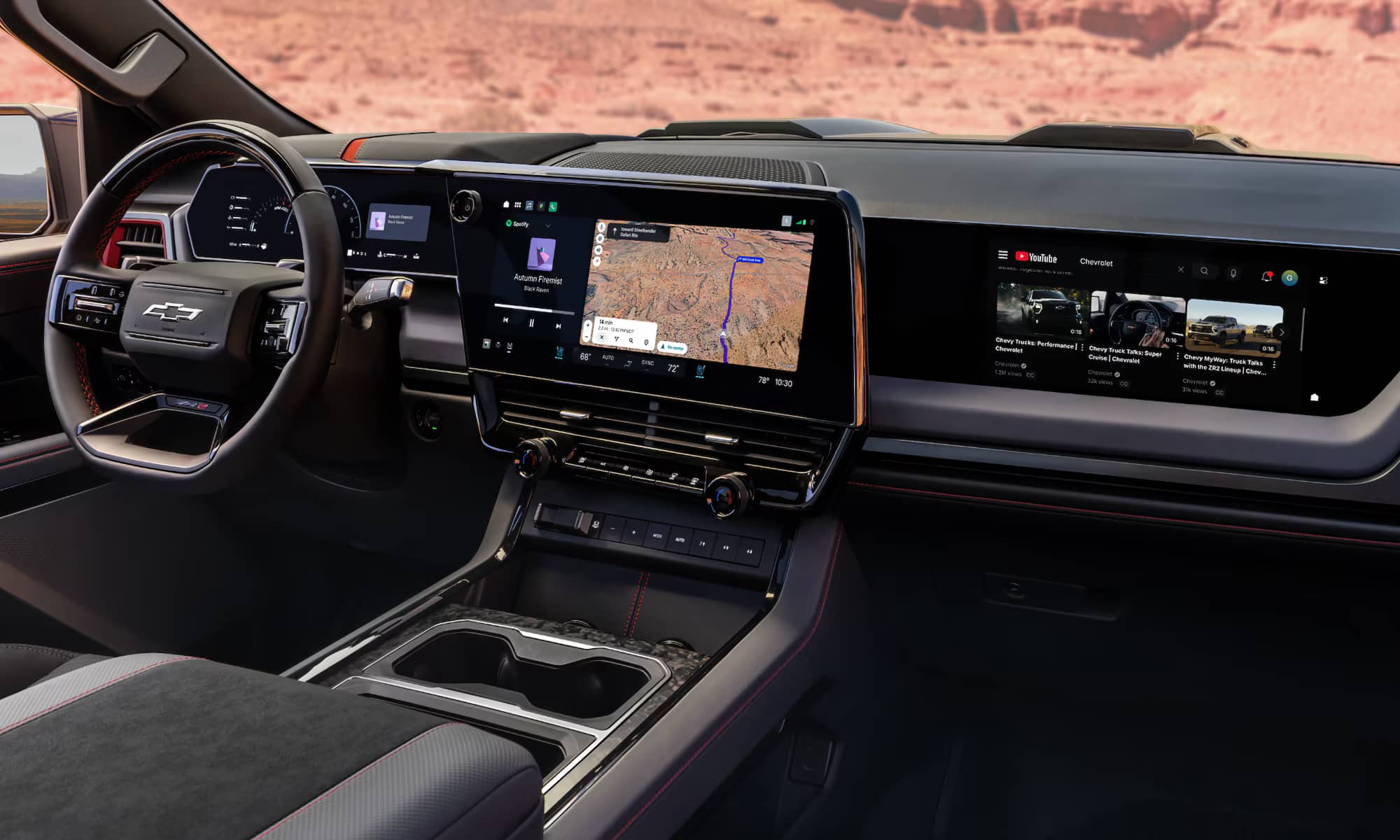
The vehicles will come with 60 inches of screen space, including a screen for the front-seat passenger to view video content. GM plans to roll the new system out in future models.
Although Welch doesn’t go into details, he notes that GM and Apple “jointly developed” a “new CarPlay user interface.” That’s led some to hope that GM might actually be adopting CarPlay Ultra, but we wouldn’t bet on that just yet.
According to an interview with Bloomberg, Michael Wahlstrom, GM’s executive director of connected apps and services, said GM worked with Apple and Google “to develop a new split screen that includes the projection experience right next to the native experience.”
That may be all this collaboration is about, as going to CarPlay Ultra would not only be a remarkable reversal for the automaker, but also a big step forward for Apple’s more deeply integrated next-generation CarPlay experience, which has thus far been confined to Aston Martin. It’s also expected to debut on at least one Hyundai or Kia model by the end of this year, according to Bloomberg’s Mark Gurman, but we’ve heard very little about that since he made those comments in February.
While there was definitely a hue and cry from GM customers about the loss of CarPlay, one of GM’s reasons for abandoning it in favor of its own custom system was more seamless integrations with vehicle gauges and controls. At the time, it said it wanted to build a system that “will be more tightly integrated with other vehicle systems such as GM’s Super Cruise driver assistant.”
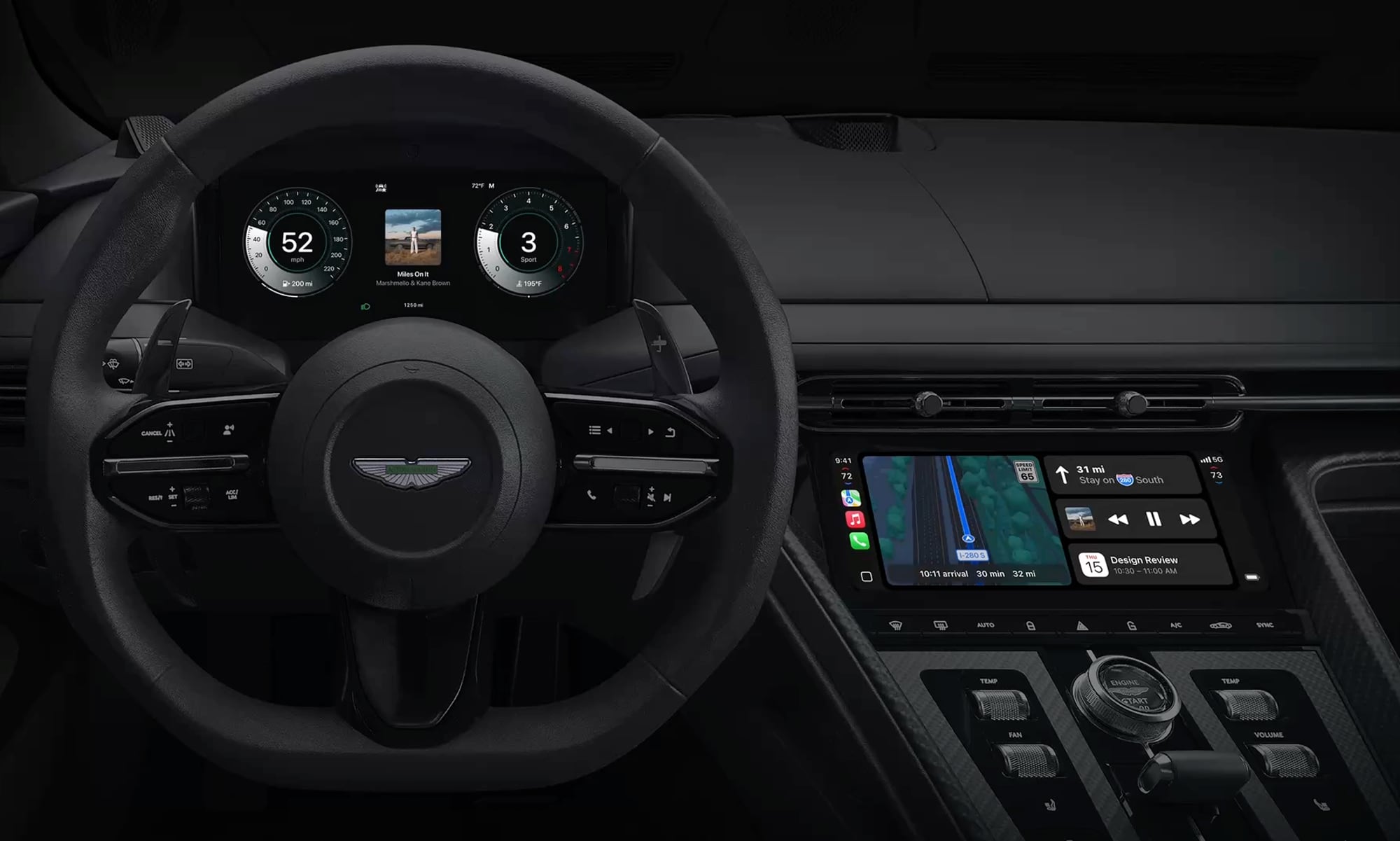
CarPlay Ultra could provide that integration, but if GM is insisting that its own native experience stay visible alongside CarPlay on the 60-inch screen, it’s unlikely to have any interest in letting Apple take over the full dashboard, which is essentially what CarPlay Ultra is all about.
Integration also wasn’t the company’s only reason. While a GM executive laughably tried to point to “safety reasons,” claiming stability issues with CarPlay and Android Auto connections force users to pick up their phones and take their eyes off the road, most analysts believe that GM was also looking for a new revenue stream that could come from pushing owners into a subscription model for its own services.
After all, GM won’t have much success charging for its navigation system and other infotainment features if drivers can simply plug in their iPhone and do everything through CarPlay for free. Blocking CarPlay would give GM owners no other choice, but it’s also likely that GM has looked at the scathingly bad PR it’s gotten from its plans and realized that the subscription revenue it might get from loyal GM customers won’t make up for the loss in sales of actual vehicles as potential buyers move to brands that still support CarPlay.
Wahlstrom didn’t comment on whether CarPlay is coming back to GM’s electric vehicles, which suggests we probably shouldn’t hold our breath. In December, GM added a native Apple Music app to several Cadillac and Chevy models, later expanding it to Buick and GMC in March, as an accommodation for vehicles that lack direct CarPlay support.