The Foldable iPhone Is Still Coming Next Week — But Good Luck Buying One
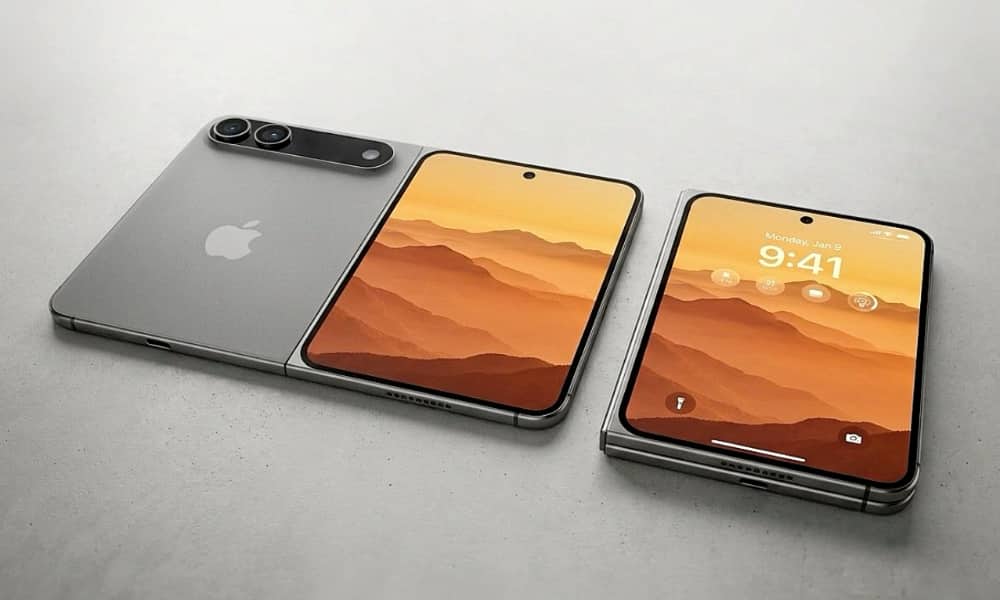 'iPhone Fold' Concept Image [Demon's Tech / YouTube]
Toggle Dark Mode
While every corner of the rumor mill agrees that Apple will be unveiling a foldable iPhone next Wednesday, not everyone is in agreement on how easy it will be to get your hands on one. In fact, availability has been one of the most hotly debated among the rumors surrounding the flagship foldable.
As far back as December, analysts were predicting supply chain shortages that could lead to delays. Back then, some pondered if the foldable — the so-called “iPhone Fold” or “iPhone Ultra” depending on which camp you’re in — would even make its expected September 2026 debut. However, as the months wore on, the consensus seemed to land on a September announcement, with the possibility of a delayed release date, similar to what Apple did with the iPhone X in 2017.
More recently, the common belief is that Apple will open pre-orders at the same time as the iPhone 18 Pro and iPhone 18 Pro Max, but customers may simply face longer shipping times.
In the spring, supply chain analysts reported that Apple had ordered between 7 and 8 million units for sale in 2026, although by July that number had been bumped up to 10 million. While that sounds like a lot, it’s less than 10% of the total volume of iPhone models Apple typically manufactures during this same timeframe.
Even so, most believed that the foldable, which is conservatively expected to have a starting price north of $2,100, wouldn’t be in high demand, so the numbers were likely in line with Apple’s sales expectations.
At the time, it was believed Apple would have as many as a million units staged in warehouses by September, which would be enough to open pre-orders right away (or “very soon after,” as Bloomberg’s Mark Gurman put it), but it would still leave anyone who wasn’t ready to hit the “Buy” button the nanosecond pre-orders opened facing wait times of four to six weeks or more.
Over the summer, mixed reports suggested Apple had faced some manufacturing challenges that had mostly been resolved. However, a new report today from Nikkei Asia indicates that production is running at only a “few hundred” units a day.
The bottleneck is reportedly due to Apple’s extremely high standards, which seemingly required an extra trial run in August before final mass production could be greenlit. That reportedly pushed back commercial production by “weeks.”
The Cupertino, California-based tech giant has previously encountered some snags in the engineering and test production processes for the foldable iPhones this year, as it has much more stringent quality and durability standards than rival smartphone makers, including testing under more extreme conditions, requiring significantly more folding cycles, and demanding greater screen flatness.
Nikkei Asia
“Apple has very high quality requirements and added an extra trial run in August ahead of actual production. However, production is ramping up slowly, with output currently at only a few hundred units a day in late August. That initial volume could be challenging to meet market demand,” one supply chain manager with knowledge of the matter told Nikkei Asia.
While it doesn’t appear that Apple has yet fallen behind, it’s at a critical juncture. Unless whatever issues are slowing down production can be resolved, it could fall short of its target to produce 8–10 million foldable iPhones, which would leave customers waiting. Industry insiders told Nikkei that Apple should be producing tens of thousands of phones each day by now, not just a few hundred.
We have yet to hear any additional reports on how this may impact Apple’s plans. The company is still widely expected to unveil the foldable iPhone during next week’s “Surprise and Shine” event, but it once again raises the question as to when pre-orders will actually open. Apple has plenty of room to play with that date, so it may not even have finalized it yet. Some reports have also suggested Apple may launch the foldable iPhone exclusively in the US to help manage supply and demand.
However, this wouldn’t be the first time the company announced a new product weeks or months ahead of its availability. In 2017, the iPhone X debuted alongside the iPhone 8 and iPhone 8 Plus on September 12, but didn’t go up for pre-order until October 27, arriving in stores on November 3. COVID-related supply-chain issues created a similar situation with the iPhone 12 in 2020; Apple didn’t even hold its iPhone event until October 13 — the first time since 2011 the event wasn’t held in September — and the iPhone 12 Pro Max and iPhone 12 mini didn’t go up for pre-order until November 6, with availability on November 13.
Delays have run even longer for products in entirely new categories. The original iPhone took six months from Steve Jobs’ January 2007 announcement before landing in stores at the end of June, while the first Apple Watch was unveiled in September 2014 but didn’t go on sale until April 2015.
[The information provided in this article has NOT been confirmed by Apple and may be speculation. Provided details may not be factual. Take all rumors, tech or otherwise, with a grain of salt.]