Apple’s Foldable iPhone Might Be a US Exclusive (For Now)
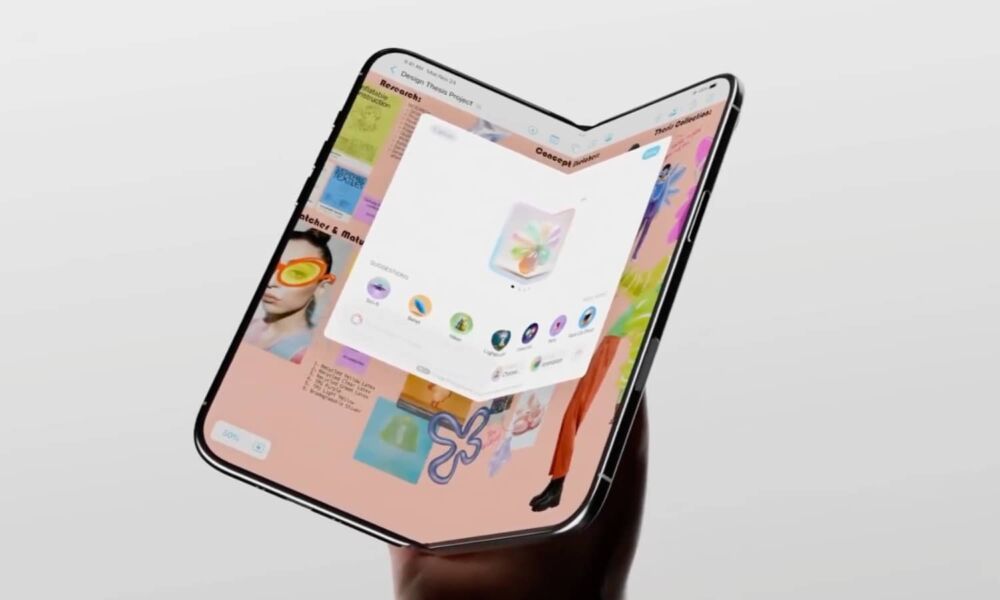 'iPhone Fold' Concept Image [Demon's Tech / YouTube]
Toggle Dark Mode
Although every rumor agrees that this will be the year that Apple introduces its first foldable iPhone, there’s a pretty big split on precisely when the so-called “iPhone Fold” or “iPhone Ultra” will actually land on store shelves.
For the most part, leakers and analysts agree that the foldable iPhone will be unveiled during Apple’s September event, but reports of production challenges have led to the belief that we could see an iPhone X-like delay, where Apple announces the device in September, but delays pre-orders until later — possibly even into November.
Regardless of when it actually launches, it’s likely to be in short supply. Analysts have been predicting since last year that demand for the new device may outpace supply — despite the fact that this is likely to have a price tag well above the $2,000 mark. This could lead to longer than usual wait times for those who aren’t sitting on top of the “Buy” button whenever pre-orders actually do open.
However, a new report suggests that the supply may be limited enough for Apple to revert to an approach it hasn’t taken with an iPhone in years: limiting the device’s initial launch to the United States.
The latest rumor comes from an unknown Chinese supply chain source who spoke with Australia’s Channel News. That makes it far from definitive at this point, but it also wouldn’t be too surprising.
While Apple hasn’t limited an iPhone rollout this significantly in well over 15 years, it does stagger its iPhone releases. It’s usually just not that obvious, as it’s usually the smaller and more obscure markets that see the later releases.
Still, the foldable may bear the name “iPhone,” but it’s really an entirely new product for Apple — and an ambitious one at that. There’s a much more recent precedent for a US-only release, and it’s one we saw with a similarly leading-edge product.
When Apple unveiled the Vision Pro during its 2023 Worldwide Developers Conference, it didn’t even provide a precise release date beyond “early next year.” However, it did make it clear that it would be launching solely in the US, with other countries to follow “later next year.”
True to its word, the Vision Pro went on sale on February 2, 2024, exclusively in the United States. That was followed by China, Japan, and Singapore in June, and then Canada, the UK, Australia, France, and Germany in July.
So, it’s not at all surprising to hear that the foldable iPhone could see a similar fate, especially if reports of production problems are even partially accurate. While some leakers and analysts suggest that most of these issues have now been resolved, that doesn’t mean Apple isn’t still behind schedule. Apple is now said to be asking its suppliers to produce 10 million units by the end of 2026, which is an increase from the 7–8 million that analysts had previously reported, but there’s no clear word on what the demand will be like.
By contrast, Apple reportedly sold nearly 250 million iPhones in 2025. Of course, that mixture includes all flavors of iPhone, from the budget iPhone 16e to the flagship iPhone 16 Pro Max and the iPhone 17 Pro Max that succeeded it in the final quarter. But it’s still a staggering number that leaves us questioning whether 10 million foldable iPhones will be enough.
Channel News also notes that Apple is not even expected to reveal pricing for the foldable iPhone during its September event, which it’s also pegging as September 8 — a date that conflicts both with Mark Gurman’s educated guess and Apple’s convention of avoiding events on the Tuesday following Labor Day. While that’s not set in stone, it still seems more likely that Apple will hold its event on Wednesday, September 9, and open pre-orders on Saturday, September 12, shifting that from the usual Friday to avoid September 11, much as it did in 2015 for the iPhone 6s models.
[The information provided in this article has NOT been confirmed by Apple and may be speculation. Provided details may not be factual. Take all rumors, tech or otherwise, with a grain of salt.]