The End of AI Fakes? How iOS 27 May Prove Your iPhone Photos Are Real
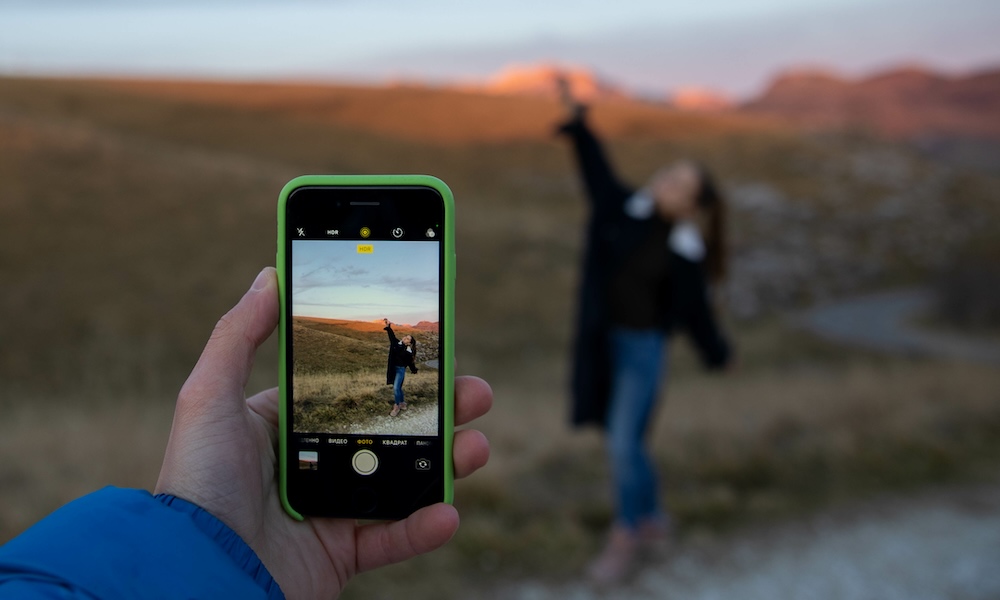 igor / Adobe Stock
Toggle Dark Mode
New code found in the latest iOS 27 beta hints that Apple may be taking a step beyond EXIF data with a solution that can irrefutably identify photos taken with an iPhone camera.
While Apple has long followed the industry standard of embedding a device model name into the metadata for every photo taken with an iPhone camera, that’s little more than a descriptive text field that’s helpful for organizing your photo library — and it’s trivial to remove or overwrite that data.
That hasn’t really been a serious issue until recently, as few people really needed definitive proof that a given image was captured by photons of light traveling through a lens onto a digital camera sensor, and even fewer necessarily cared which specific camera was used for this — at least not in a way that had to be non-repudiable.

Sadly, the rise of AI has changed the landscape. While photo retouching isn’t a new issue by any stretch of the imagination, technology continues to make it easier to accomplish. What once may have required hours or days in a darkroom was reduced to minutes or hours by tools like Photoshop, and now Gemini, ChatGPT, and the gang have reduced it to seconds. Now, nearly anyone can create a very authentic-looking image with nothing more than a couple of sentences.
The only saving grace is that the reputable AI companies have developed ways of embedding their own watermarks into AI-generated images, such as Google’s SynthID — and Apple is doing the same with Image Playground in iOS 27, now that it can generate photorealistic images. However, there are no real standards out there requiring AI companies to do this, and plenty of tools exist from those that aren’t nearly as responsible.
So, it seems like Apple is working on a solution that tackles the problem from the other side. Rather than relying on generative AI tools to watermark “fake” images, the iPhone could soon offer an option to digitally stamp images taken with the iPhone camera to provide proof of both reality and origin.
The folks at 9to5Mac found code in this week’s iOS 27 developer beta that identifies a new “Apple Reference Image” — an opt-in feature that will not only verify that a photo is legitimate, but identify the specific iPhone camera hardware that captured it. It’s unclear if it will be possible to map this back to an individual iPhone, but it will definitely identify the model by the unique hardware identifiers of the camera sensors.
Apple appears to be going the extra mile here to guarantee that the photo has not been faked in any way by using its Private Cloud Compute AI models. This isn’t just stamping a photo, but rather authenticating its provenance via Apple Intelligence.
According to MacRumors, when the Reference Image mode is enabled, “the raw image, sensor signatures, capture time frame, and the unique hardware identifiers of the sensor” are sent to Apple’s PCC servers, which analyze the data to confirm the photo was captured by the camera. If authenticated, the photo is assigned a unique ID and returned to the user’s device.
Apple also appears to receive some data from the PCC process — “sensor data, a hash, and the assessment results” according to MacRumors — but not the raw photo itself. It’s unclear what role this stage plays in authentication, but the findings seem to indicate that Apple can “retroactively revoke a sensor’s past authentications” if it determines the camera sensor has been compromised.
Since this feature is off by default, the implication is that Apple doesn’t expect everyone to need this level of authentication, which seems reasonable as the majority of iPhone users are taking casual photos of family and friends. However, it’s easy to imagine situations where pro photographers and journalists may want a way of certifying their original images haven’t been modified.
As with most beta code findings, there’s no guarantee this feature will arrive at all, much less in iOS 27.0. Apple may be laying the groundwork to add it in a future iOS 27 point release, but it could also just as easily delay it until iOS 28 or scrap it entirely.