iPhone Upgrades Hit a Three-Year High as Android Users Continue to Jump Ship
Toggle Dark Mode
New data from Consumer Intelligence Research Partners (CIRP) shows that an estimated 87% of US iPhone buyers during the March quarter were already iPhone owners — the highest in the three years the report has covered, beating out 2025’s 84% and 2024’s 85%.
Apple is also doing a reasonably good job of convincing the Google faithful to switch to an iPhone. The March quarter showed 12% of iPhone sales came from Android owners, down from 14% in 2025 and 13% in 2024. Meanwhile, 1% of iPhone customers were first-time smartphone buyers, either because it was their first cell phone ever, or they switched up from a basic feature phone.
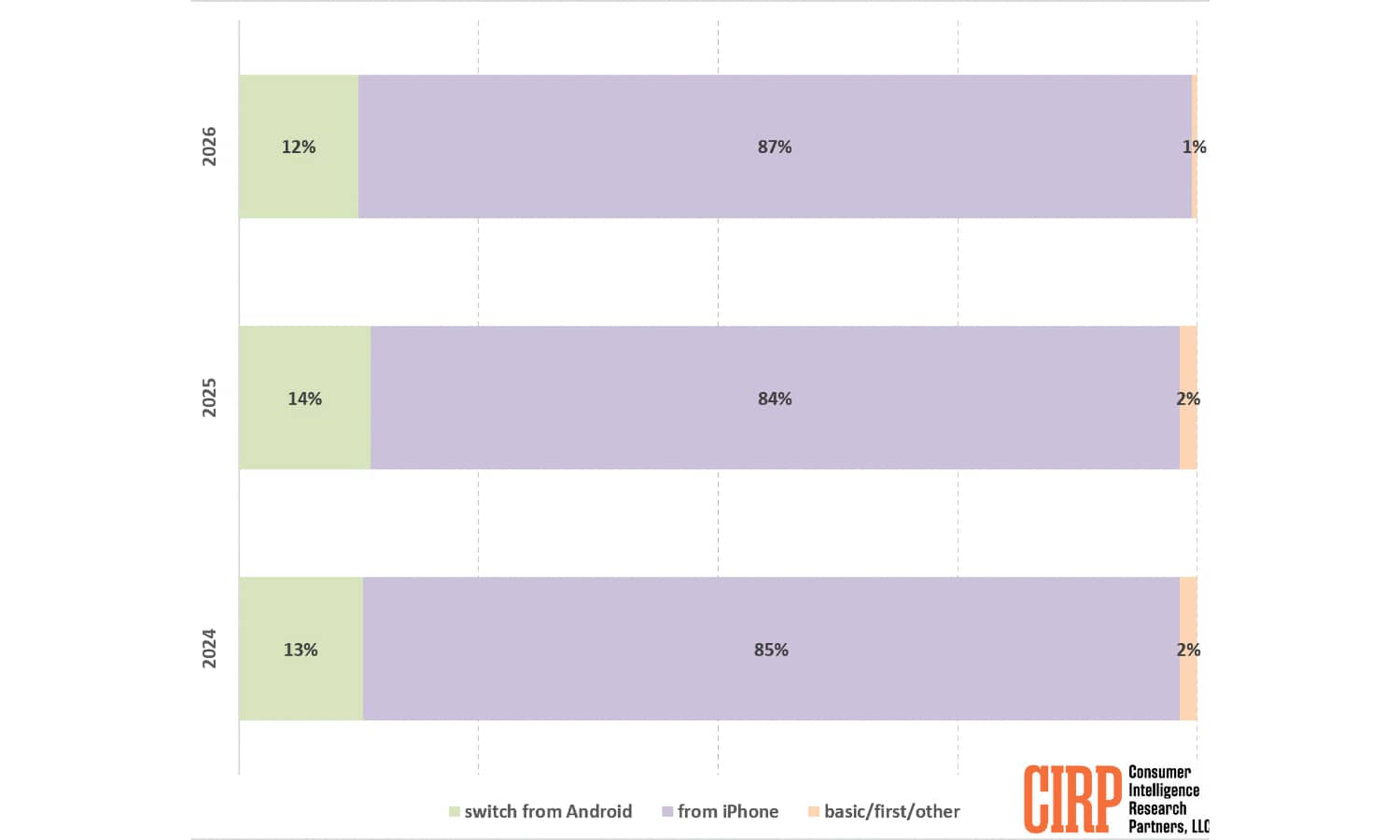
These trends indicate that for both platforms, the larger opportunity comes from companies keeping their existing users happy and convincing them to buy a newer version of the smartphone they already use.
One of the reasons users on either side are reluctant to switch platforms is the years of using certain apps, storing data, and purchasing accessories that may be linked to just one platform or another. Users that opt to stay on the same platform when it comes time for a new smartphone find it much easier to move their data — which can include passwords, photos, messages, apps, and much more — to a new model that works on their current platform.
However, it’s also worth noting that CIRP’s numbers are based on platform, not hardware vendor; unlike the iPhone, loyal Android fans still have multiple smartphone brands to choose from.
The 12% of Android users Apple was able to lure to its iPhone platform was a meaningful amount of new customers, as Apple enjoyed record iPhone revenue in the US, with sales volume rising 1.3%, despite the overall market sliding by 5.7%.
This buyer composition illustrates why Apple doesn’t need to greatly increase the number of platform switchers to ensure the iPhone remains a going concern. Existing iPhone owners have grown comfortable with the iOS platform, its apps, and its accessories, bolstered by the halo effect of seamless integration with macOS and iPadOS. That means Apple and its hardware and software partners can confidently rely on years of device, app, service, and accessory sales.
Ultimately, the CIRP data illustrates that while Apple and Android smartphone makers are competing to attract that 1% of new buyers coming from a basic phone or who are buying their first phone, their main competition is for customers that already own a smartphone.
It is worth noting that while CIRP’s survey provides a solid temperature check on buyer trends, it only samples existing iPhone buyers rather than tracking the total number of users switching between platforms — and the firm keeps its exact sample sizes close to the chest.
Still, it’s not hard to infer fierce loyalty from Apple’s broad reach; the company announced on January 29, 2026, that its installed base had passed the 2.5 billion active devices mark worldwide. Although it didn’t break this down by device type or unique users, overall industry statistics suggest there are well over a billion iPhone owners out there.