Apple May Swipe Left on the M6 Pro to Fast-Track the Future
 Federico Orlandi
Toggle Dark Mode
A pair of new reports from Bloomberg’s Mark Gurman have just given us a one-two punch on what to expect for Apple’s Mac silicon over the next few months — and there are some interesting surprises packed in here.
Until now, the consensus had been that Apple would continue its trend of releasing three mainstream M-series chips each year, as it’s done since late 2021. Not all of those have arrived simultaneously, but they’ve always been part of a single generation.

For instance, the original M1 chip from late 2020 was followed by the M1 Pro and M1 Max a year later when Apple unveiled its redesigned 14-inch and 16-inch MacBook Pro models. The M2 family saw a similar gap before Apple surprised us by debuting the M3, M3 Pro, and M3 Max simultaneously on October 30, 2023 and then repeated that with the M4 series exactly one year later.
Apple split things up again last fall, debuting the M5 chip in a single new 14-inch MacBook Pro, iPad Pro, and upgraded Vision Pro while keeping us waiting until March for the M5 Pro and M5 Max versions.
Now, it turns out we may have an even longer wait for the M6 Pro and M6 Max. An infinite one, in fact, if Gurman’s information is accurate.
That’s because Bloomberg’s sources say that Apple plans to skip those higher-end chips entirely. Instead, a lone M6 will debut — likely later this year — for “entry-level Macs,” but higher-end models will remain on the M5 Pro and M5 Max until at least late 2027.
If Apple sticks with its usual Mac lineup, that means the M6 will go into the next-generation MacBook Air and likely a Mac mini and 24-inch iMac, since both of those have skipped the M5 generation so far.
The Touchable MacBook Pro
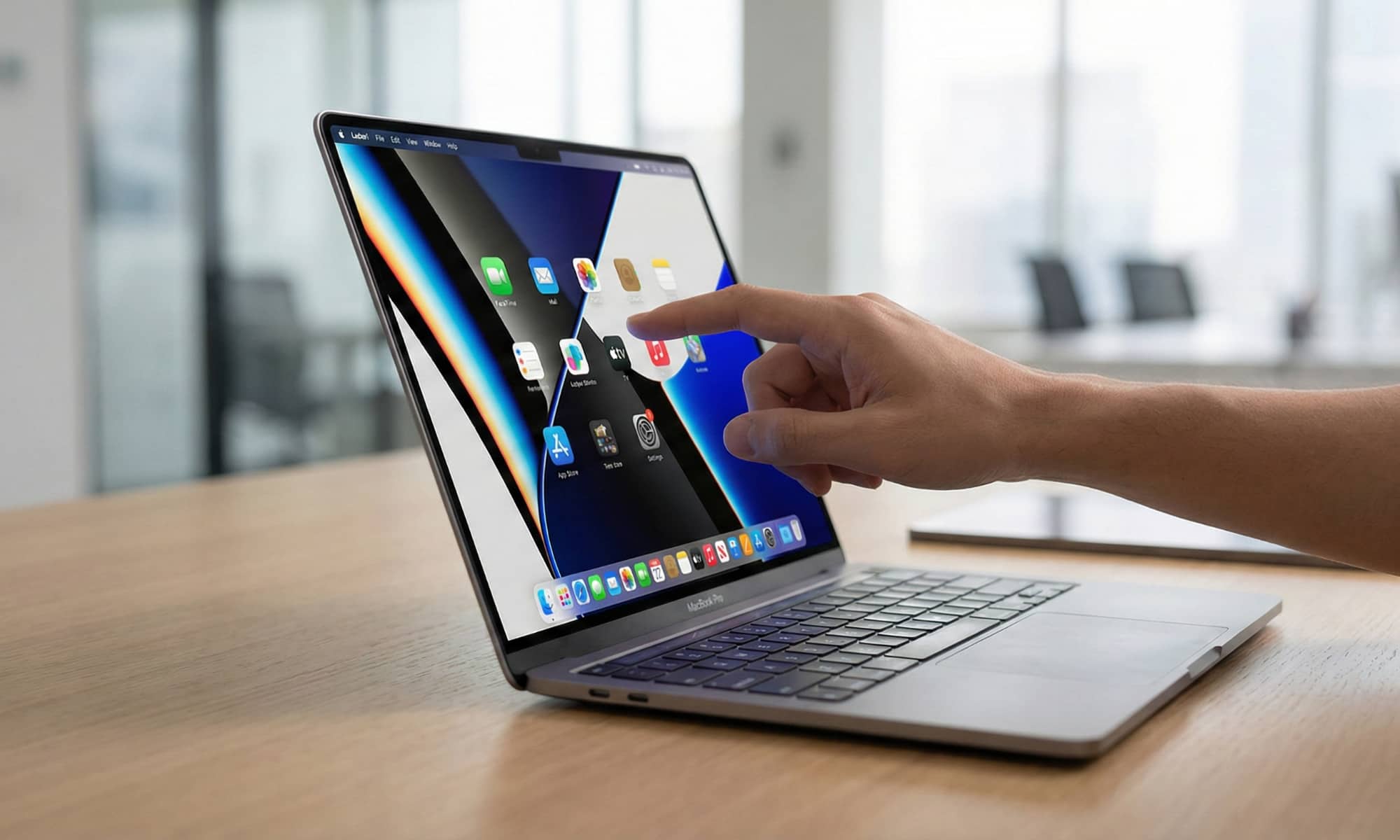
We’ll also likely see another base-model 14-inch MacBook powered by the M6 chip, but that leaves Apple’s flagship MacBook Pro models in an awkward spot. Will Apple really go 18 months or more without updating these? And what of the much-rumored touchscreen MacBook Pro, which was widely expected to be powered by the M6 chips later this year?
Well, it turns out Gurman has an answer for that, too — and it’s an even bigger curveball. Insiders say that Apple isn’t going to delay its plans for a redesigned MacBook — what some are calling the “MacBook Ultra” — it’s just going to use the existing M5 Pro and M5 Max chips to power it.
While we’re still not at all convinced of the “Ultra” moniker, the timing seems right. By refreshing the design and adding a major new feature, Apple can get away with leaving the same M5 Pro and M5 Max chips inside. Whether the entry-level M6 MacBook Pro would also join the touchscreen generation remains an open question — Gurman seems to think not — but either way it wouldn’t be the first time that entry-level model found itself in a weird spot next to its flashier siblings.
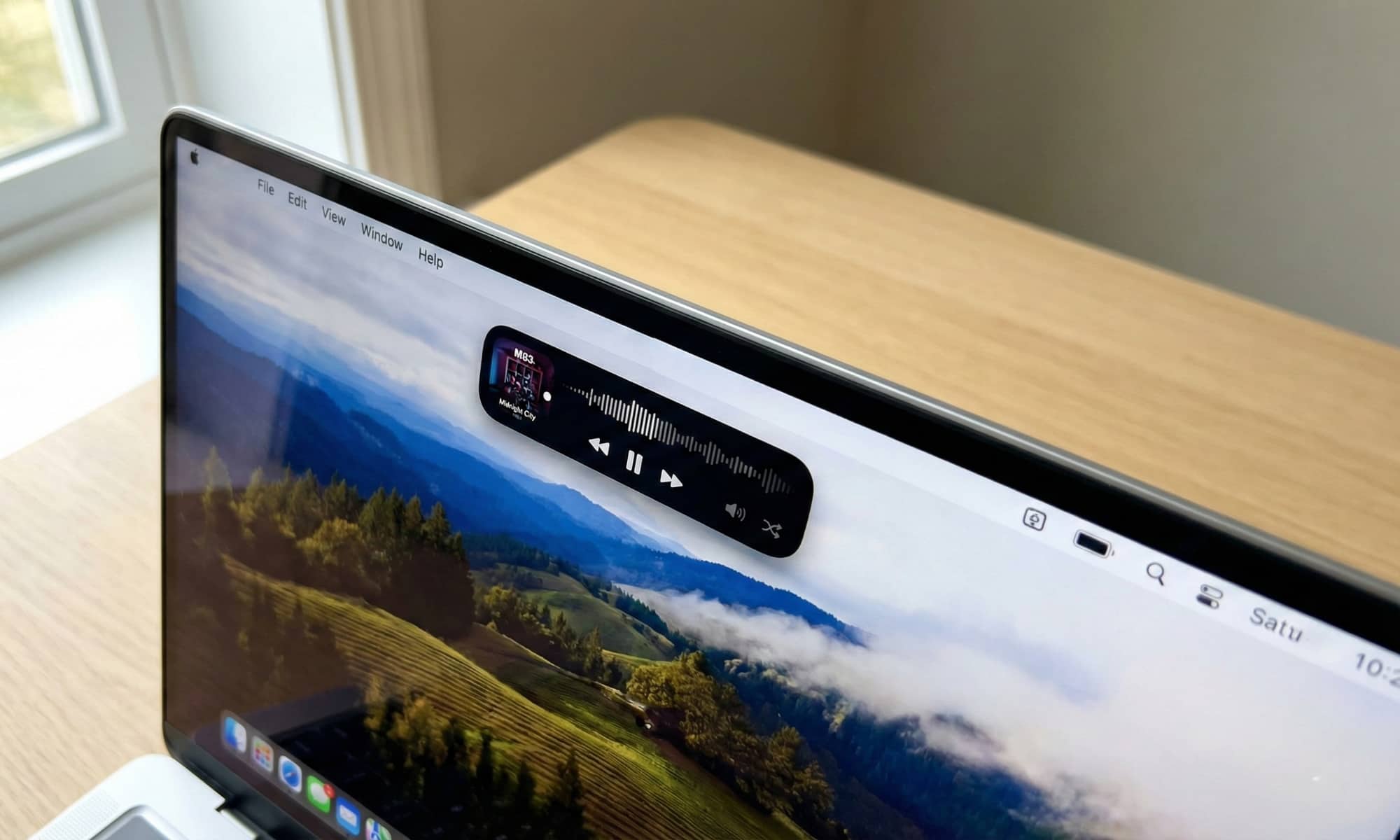
Gurman says the new MacBook models will be “positioned at the top of Apple’s lineup,” and are still expected to arrive between late this year and early next. That top-tier placement makes it understandable why some are leaning toward a moniker like “Ultra,” but Gurman isn’t speculating on Apple’s naming — probably because Apple itself hasn’t even landed on a final name yet.
The first touch-screen 14-inch and 16-inch models, code-named K114 and K116, will represent the biggest overhaul of Apple’s high-end laptops since the company began moving away from Intel Corp. chips in 2020. An Apple spokesperson declined to comment on the company’s plans.
Mark Gurman
It’s also not clear if the new touchscreen MacBooks would still be sold alongside the current models or serve as direct successors to them. If the latter is true, then Apple is just as likely to keep the name unchanged. At most, it might dub them something like “MacBook Pro with Touch” to distinguish them from the touchless entry-level MacBook Pro, as it did when it first released the “MacBook Pro with Touch Bar” a decade ago — a feature that was also exclusive to the higher-end models for three years.
Meanwhile, Apple still plans to debut an M5 Ultra this year, exclusively in a new Mac Studio (not a so-called “MacBook Ultra” — which is another reason to be skeptical of that rumored name).
Sources say the M5 Ultra will sport 36 CPU cores and 80 GPU cores, and possibly pack in up to 768 GB of RAM. That’s 50 percent more RAM than the 512 GB M3 Ultra Mac Studio (which was pulled off the market in April due to skyrocketing RAM costs), but still only half of the top-of-the-line Intel Mac Pro, which could handle a whopping 1.5 TB of RAM.
Apple had reportedly planned to have that Mac Studio out already, but rising chip prices forced the company to postpone its release.
The March to M7
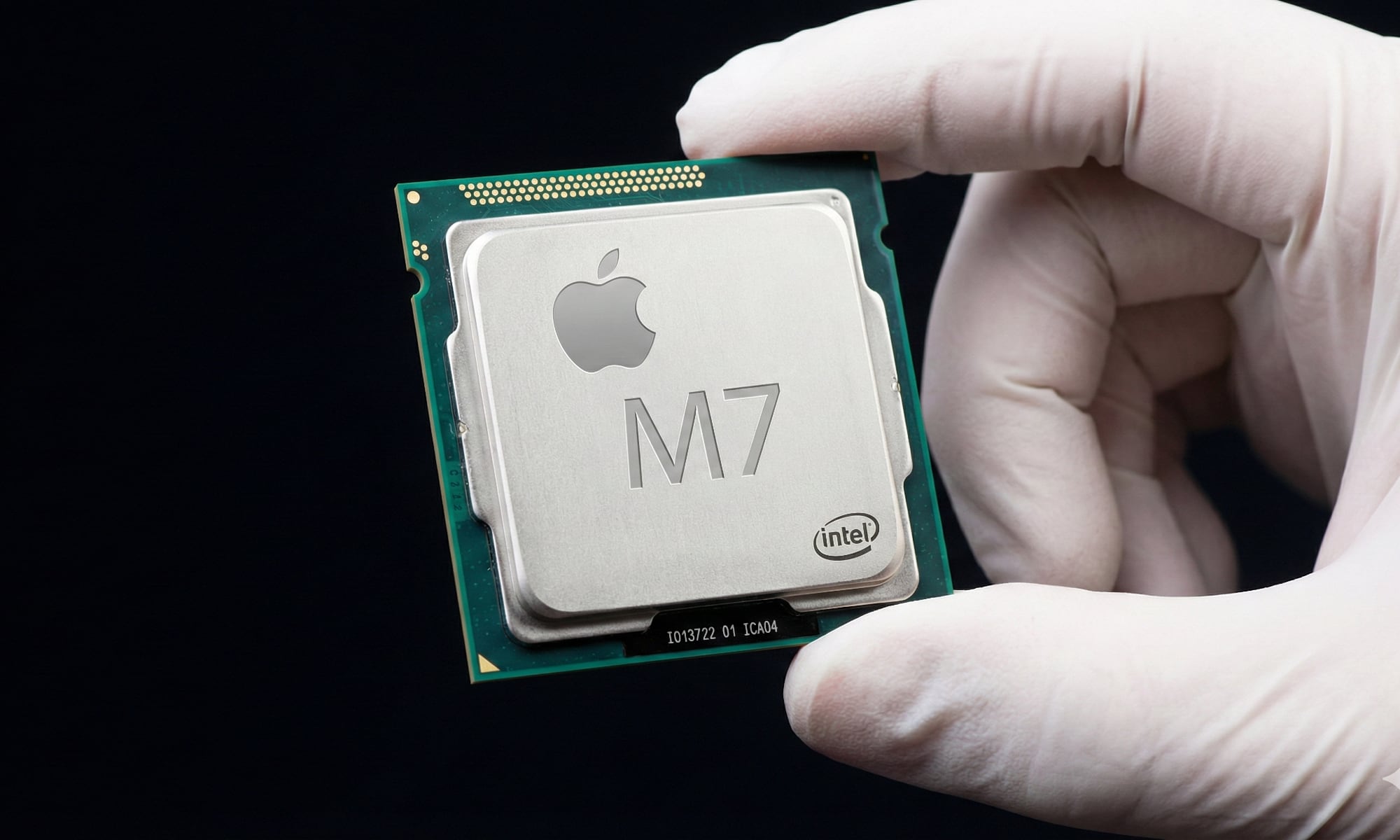
According to Gurman, Apple is skipping the higher-end M6 chips because it wants to focus all of its energy on the next-generation M7 family. A full slate of those flagship chips — the M7 Pro, M7 Max, and M7 Ultra — is said to already be in advanced testing under the codename “Andros.” The base M7, code-named “Delos,” is also in the works and slated to arrive early next year — only months after the M6 rolls out.
The current roadmap would see the M7 Pro and M7 Max follow that in late 2027, with the M7 Ultra arriving sometime in 2028. The goal of the new chips is to power even more advanced on-device AI models.
The M7 line is designed primarily around major advancements to on-device AI processing. The base version is slated to support about 240 gigabytes per second of memory bandwidth.
Mark Gurman
The new “Andros” chips are said to feature “vastly upgraded neural accelerators” and graphics improvements that will make Apple’s higher-end Macs AI powerhouses, both for consumer-facing Apple Intelligence features and AI hyperscaling applications.
[The information provided in this article has NOT been confirmed by Apple and may be speculation. Provided details may not be factual. Take all rumors, tech or otherwise, with a grain of salt.]