GM Offers an Apple Music Olive Branch to Buick and GMC Owners
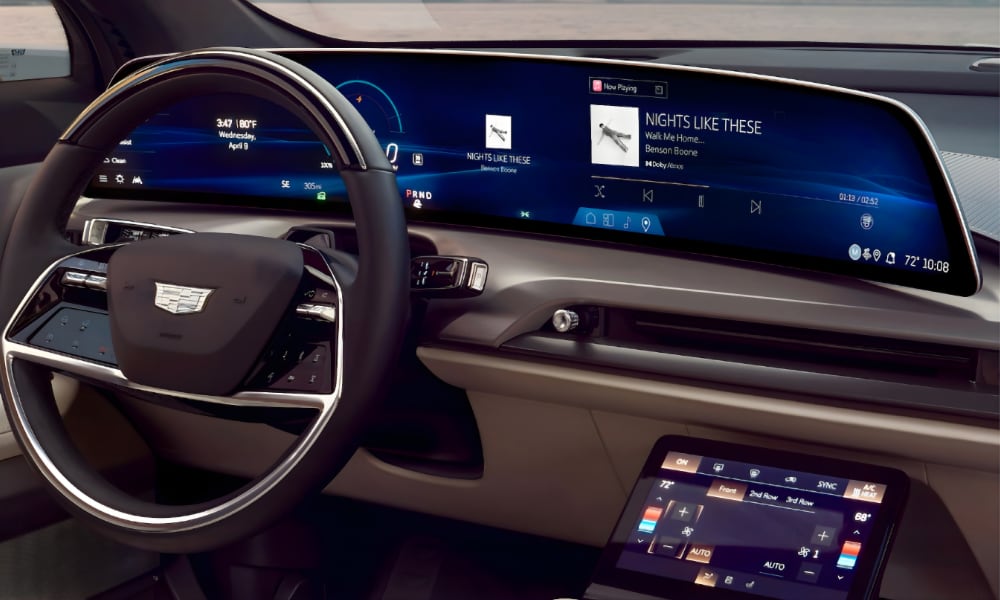 Apple Music on 2026 Cadillac VISTIQ [GM]
Toggle Dark Mode
In December, General Motors announced that it had begun rolling out a native, dedicated Apple Music app to select Cadillac and Chevrolet vehicles. Now, 9to5Mac has discovered the automaker is also expanding the app to select Buick and GMC vehicles.
The automaker hasn’t published a new press release, but rather included the note of expanded support and the full list of Buick and GMC vehicles adding the Apple Music app in an update to its original December announcement. Here’s the list:
Buick
- 2026 Enclave
- 2026 Envision
GMC
- 2025–2026 Acadia
- 2025–2026 Canyon
- 2025–2026 Sierra EV
- 2025–2026 Terrain
- 2025–2026 Yukon and Yukon XL
- 2026 HUMMER EV SUV and HUMMER EV Pickup
GM says the Apple Music app will begin appearing automatically on these cars starting this week. The company says this means that Apple Music will now be available across 1.2 million cars on the road today.
In December, GM also announced that it was making audio streaming a standard feature of its OnStar Basics service for all 2025 and newer cars. This means GM drivers can stream Apple Music, Spotify, and other streaming apps at no additional cost for eight years from their vehicle purchase. However, it should be noted that these still require an active data connection via OnStar once the “free” period ends, unlike CarPlay which uses your iPhone’s data.
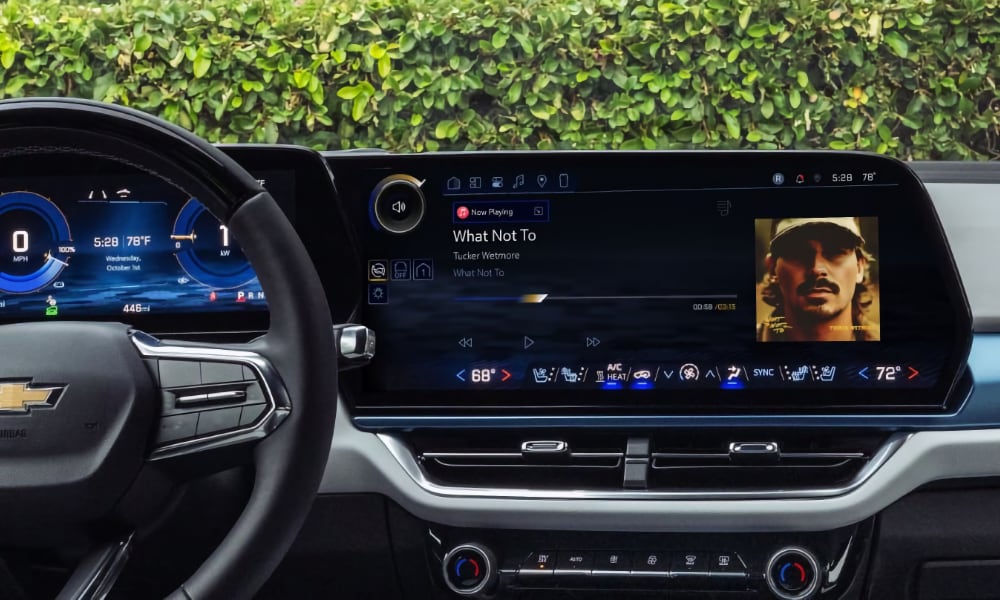
GM’s inclusion of an Apple Music app in its vehicles is likely a move on the auto giant’s part to lessen the sting of its decision three years ago that it would no longer offer Apple’s CarPlay in its new electric vehicles in favor of its own in-house developed infotainment system. GM later announced that it would “gradually” remove CarPlay from all of its future vehicles.
Many see GM’s move to remove CarPlay from its vehicles as a revenue-driven decision. By taking Apple out of the mix, the automaker has full control of the software used in its vehicles, allowing it to more easily develop subscription-related apps and services that it can charge for directly.
GM had said that it wanted to build an infotainment system that “will be more tightly integrated with other vehicle systems such as GM’s Super Cruise driver assistant,” which can also collect data on driving habits. This integration could potentially bring in an extra $20–25 billion in annual revenue by pushing GM vehicle owners to a subscription model for its services.
Unfortunately even if a GM-owning iPhone user has subscribed to every app or service GM offers, they’ll still be missing out on several CarPlay-only features, like Apple Maps or third-party apps.
In 2023, one GM executive claimed that the automaker’s new infotainment system was entirely about driver safety.
Tim Babbitt, GM’s head of product for infotainment, said at a press event that CarPlay and Android Auto are problems for safety because they encourage drivers to pick up their phones more often, resulting in driver distraction (Um, aren’t both systems designed to REDUCE the number of times you pick up your device?)
Babbitt did admit to MotorTrend that GM hasn’t even tested this theory in the lab, much less the real world, but says, “it has potential if customers go for it.” Yes, “go for it,” as in “you think they’ll go for it?”
Shortly thereafter, GM did a bit of damage control and walked back Babbitt’s comments after many in the industry found the automaker’s “safety” claim to be laughable. A GM spokesperson contacted the publication in an attempt to “clarify” his remarks, claiming that the company’s position was “misrepresented” and GM was reinforcing its “valued partnerships with Apple and Google and each company’s commitment to driver safety.”
Which is why we are where we are today.