
Apple Seeds iOS 26.4 Beta 2 with Encrypted RCS for Android
Toggle Dark Mode
Apple seems to be accelerating toward its next major point release. Only a week after releasing the first developer betas for iOS 26.4 and the rest, a second beta is now upon us.
Traditionally, early betas are more spread out, usually arriving two weeks apart, with the cycle shortening as they get refined enough to approach final release. While a one-week turnaround for a second beta is typically seen only during the home stretch of a release cycle, this more rapid release schedule likely reflects a narrower scope of iOS 26.4 now that the most ambitious Apple Intelligence features have been pushed back.

After months of reports that iOS 26.4 would be mark the appearance of the long-awaited “Siri 2.0,” Bloomberg’s Mark Gurman said that Apple was still experiencing delays in getting it ready for prime time in a report that was eerily similar to what he said around the same time last year.
So, it wasn’t a big surprise whenthe first iOS 26.4 beta arrived last week without the new Siri , but it also wasn’t all bad news, as Apple seems to be preparing to finally turn the key on another long-awaited feature — and today’s second beta moves that forward in a big way.
RCS Encryption
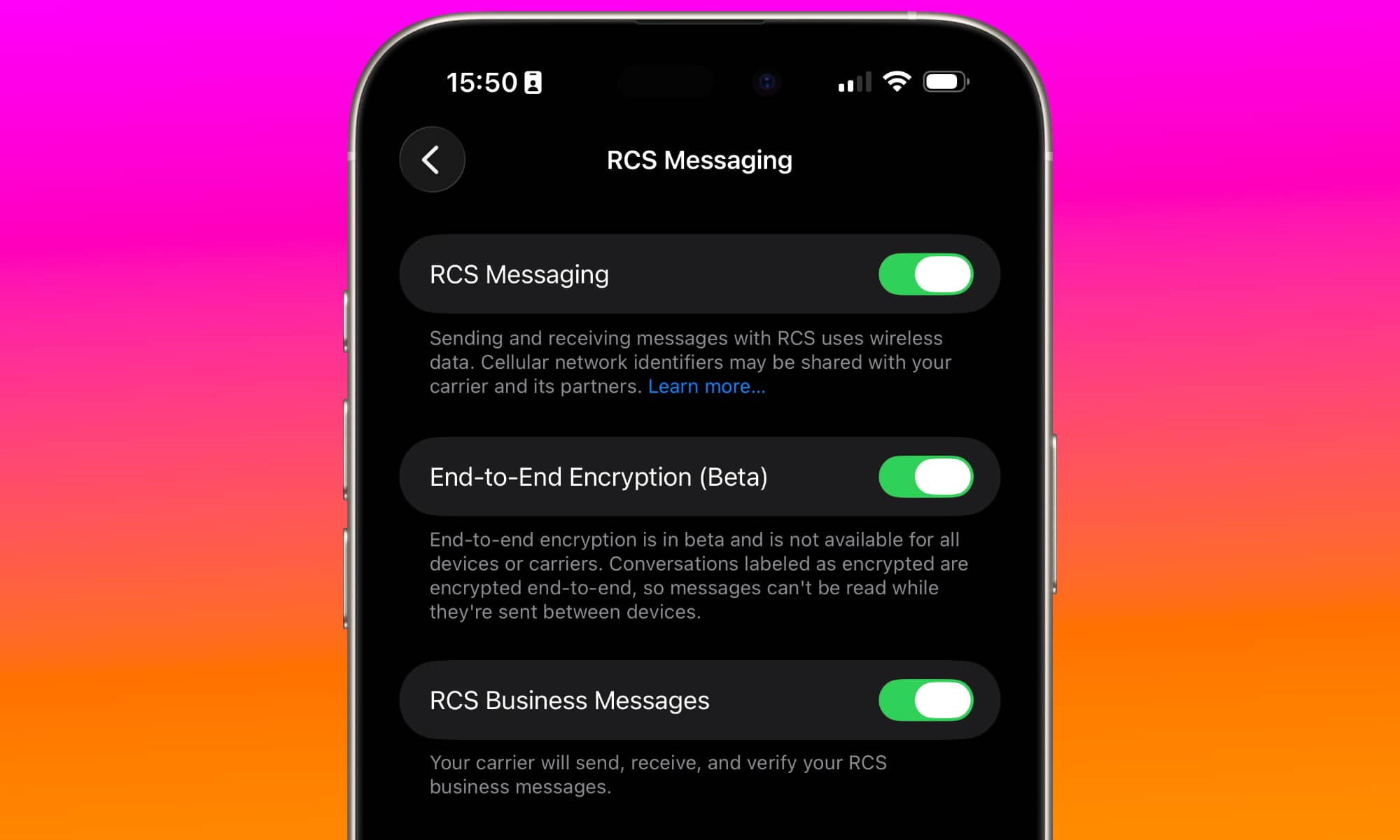
It’s been nearly a year since Apple promised end-to-end encryption for cross-platform RCS messaging, and it looks like it’s finally getting ready to deliver on that promise.
Evidence found in iOS 26.3 suggested it was already laying the groundwork, but last week’s developer beta of iOS 26.4 was the first user-facing indication that it’s actually coming soon. A new “End-to-End Encryption” toggle has appeared in the RCS Messaging settings, and while it’s conspicuously labeled with a “Beta” tag, it’s still nice to see some progress.
That said, Apple has made it abundantly clear that this is being turned on strictly for limited testing at this stage. The first beta was limited testing to iPhone-to-iPhone communications — a somewhat pointless scenario, since iMessage has been fully end-to-end encrypted since its inception in 2011. To test RCS E2EE, users had to have two iPhones running the iOS 26.4 beta with iMessage turned off so that messages would be forced to travel the RCS route.
Thankfully, the second iOS 26.4 beta has added a crucial missing component by enabling RCS encrypted messaging with Android devices — the place where it will be by far the most valuable. However, as with the first beta, Apple still explicitly states that this is only for testing, and it won’t be coming in the final release of iOS 26.4.
In this beta, RCS end-to-end encryption will become available for testing between Apple and Android devices. This feature is not shipping in this release and will be available to customers in future iOS, iPadOS, macOS, and watchOS 26 releases. End-to-end encryption is in beta and is not available for all devices or carriers. Conversations labeled as encrypted are encrypted end-to-end, so messages can’t be read while they’re sent between devices.
It’s also important to note that Apple still isn’t opening this up to all testers at once. Apple is rolling this out on the back-end, so don’t be surprised if you don’t see it yet. For instance, encrypted RCS chats will not show a lock icon to let users know when E2EE is active, and for consistency, several testers have reported that Apple has done the same for iMessage chats (which are always encrypted), but that hasn’t appeared for every tester yet.
Isn’t RCS Already Encrypted?
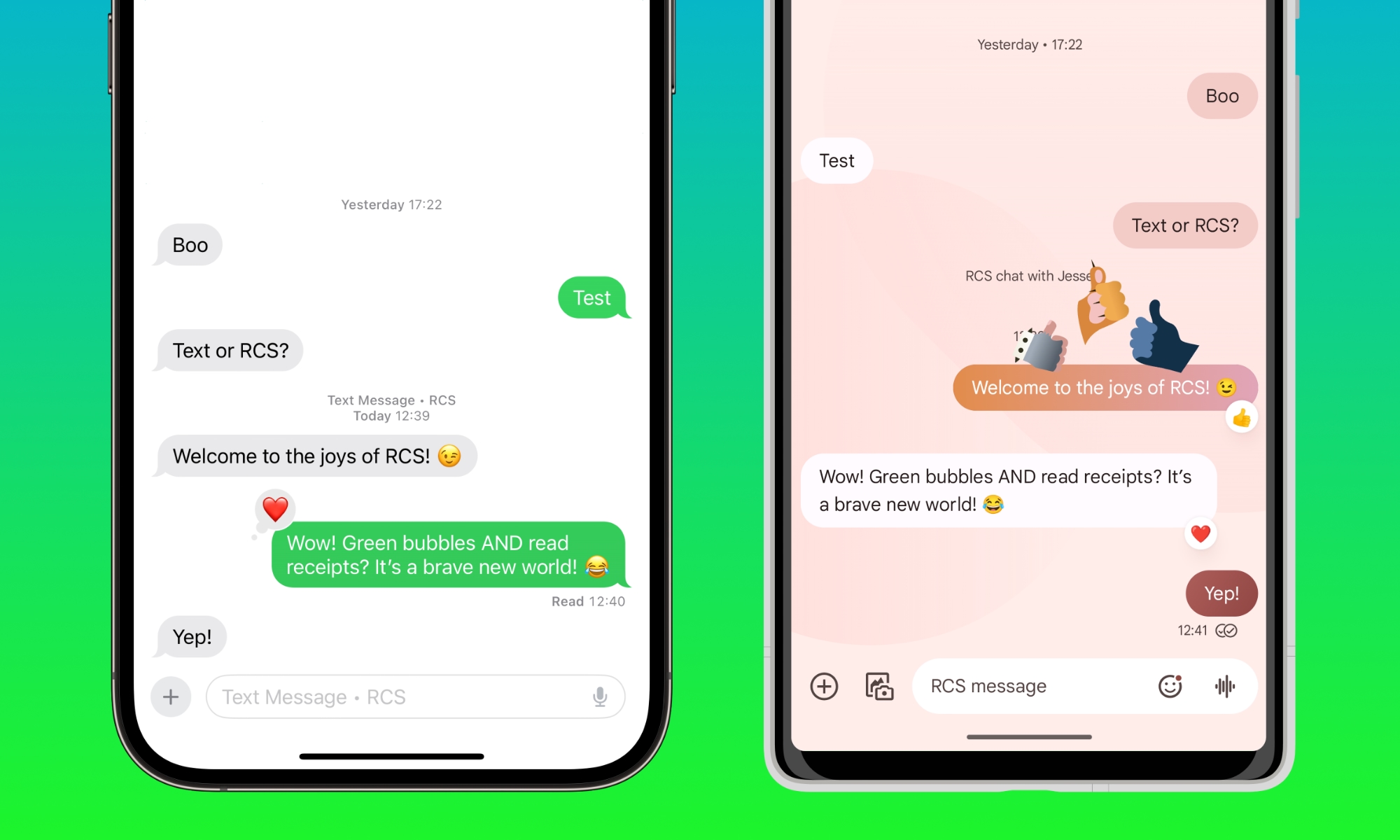
Apple’s adoption of RCS threw a monkey wrench into what was otherwise a relatively secure system. However, it did so not by breaking anything, but by demonstrating that RCS was secure in the way iMessage was: solely between Android devices.
RCS was initially a carrier initiative, and it was developed nearly 20 years ago by the GSM Alliance (GSMA) as a replacement for SMS. It didn’t incorporate end-to-end encryption, largely because that wasn’t nearly as big of a concern in the days, but it also failed to gain any real traction until Google picked up the ball and ran with it around 2016. Since Google did care about E2EE and the RCS standard, known as the RCS Universal Profile, didn’t have a provision for that, it developed its own, proprietary solution.
That worked well between Android devices, although there was even some fragmentation there in the early days. Multiple Android apps could be used for RCS, notably including Samsung Messages, however only Google Messages offered E2EE. That’s probably why this has become the de facto standard messaging app on all Android devices over the past 2-3 years.
Still, Apple wasn’t about to let Google Messages replace its own Messages app on the iPhone, so it had to build in native RCS support. In doing so, it chose to stick with the pure RCS Universal Profile, which didn’t include E2EE until last year, when the GSMA announced version 3.0. That was the same day that Apple committed to adding E2EE support.
While we expected that to happen in iOS 26.0, things have been a bit more complicated. For one thing, Apple adopting the official E2EE implementation won’t do much good unless Google also embraces it, as the open standard — Messaging Layer Security (MLS) — won’t talk to Google’s own proprietary version. Of course, Google is doing that, but it means reworking the Google Messages app and Android operating system. That’s given Apple time to roll this out more slowly, and work with Google and carriers on ensuring that it’s done right.
There’s no word on when we’ll actually see RCS E2EE on our iPhones. Again, Apple has already said it’s not coming in iOS 26.4, but hopefully the fact that it’s being tested in the iOS 26.4 betas means that it could be ready by iOS 26.5, which will likely arrive later this spring.






