
The $1,099 Wall: Why Apple Won’t Blink on iPhone 18 Pro Pricing

Toggle Dark Mode
Despite a “RAMageddon” of skyrocketing memory costs threatening iPhone price increases, Apple appears to have a plan to keep the iPhone 18 Pro at its $1,099 starting price.
Fears over the past few months that Apple will be forced to increase its iPhone prices this year have been tempered by analyst reports that Apple has the power to hold prices steady — for now at least.
However, many of these reports have centered on the more affordable iPhone 18, which isn’t expected to show up until early 2027 as insiders suggest Apple plans to split up its iPhone launch cycle this year. If that’s accurate, Apple’s ability to hold the line on the longer-term iPhone pricing bodes well for the iPhone models that are coming this year: the iPhone 18 Pro, iPhone 18 Pro Max, and likely also the much-rumored “iPhone Fold.”
There have been concerns that Apple might pull another “memory-hike” pricing game like it did with the iPhone 17 Pro last year and the iPhone 15 Pro Max in 2023. In both cases, Apple didn’t technically raise prices, but it did nix the base 128 GB model, effectively raising the entry price by forcing buyers to pay for the 256 GB version, whether they needed it or not.
That said, it’s unlikely the world is ready for a 512 GB to be the base storage, even on Apple’s flagship iPhones, and analyst Jeff Pu agrees. In a new research note shared by MacRumors, Pu cites recent supply chain research that shows Apple is negotiating the best prices it can for RAM chips and other components like cameras and displays to keep the starting prices of the iPhone 18 Pro models steady.
Still, Pu hedges a bit, as his note says the starting prices of the new models will be either “unchanged” or at a “similar level” to the iPhone 17 Pro and iPhone 17 Pro Max. That leaves enough wiggle room to suggest that Apple might sneak the prices up slightly, similar to the rumors of a $1,049 “compromise” price we saw last year, but there’s reason to believe Apple is doing everything it can to avoid that.

For years, Apple was downright infatuated with a $999 starting price for the iPhone Pro and its spiritual predecessors. The iPhone X raised the bar to $999 thanks to its groundbreaking new design and Face ID sensors, ushering in what would eventually become the Pro lineup. However, even as Apple added a third camera, improved the OLED display, debuted 5G support, moved to 120Hz displays and doubled the storage, gained a 48MP camera, and powered up the chips to a whole new level, that $999 price point remained unchanged for seven years.
Technically, even the iPhone 17 Pro didn’t see a price increase, per se. When Apple doubled the storage to 128 GB on the iPhone 13 Pro, it began selling the 256 GB version for $1,099 — the same price the iPhone 17 Pro costs today. It’s just that this is now the most affordable model available.
More Storage Equals More Profit
Over the years, many pundits have pointed out what anyone who follows memory prices likely already knows: an additional 128 GB of NAND storage doesn’t typically cost $200 — especially with the scale Apple operates at and the negotiating power that gives it.
Higher-capacity iPhones typically translate to higher margins for Apple. It makes far more from a 1 TB iPhone 17 Pro than a 256 GB version, as that $400 increase is almost pure profit.
Similarly, forcing out the 128 GB iPhone 17 Pro last year (and the iPhone 15 Pro Max two years earlier) doesn’t just mean Apple sells iPhones at a higher price; it actually pockets more money from each iPhone sold. While the exact numbers are unclear, a new report this morning from Consumer Intelligence Research Partners (CIRP) highlights this distinction, adding that Apple’s move actually paid off in another unexpected way by encouraging more customers to opt for the 512 GB tier, doing so at about the same rate at which they went for the 256 GB model in the past.
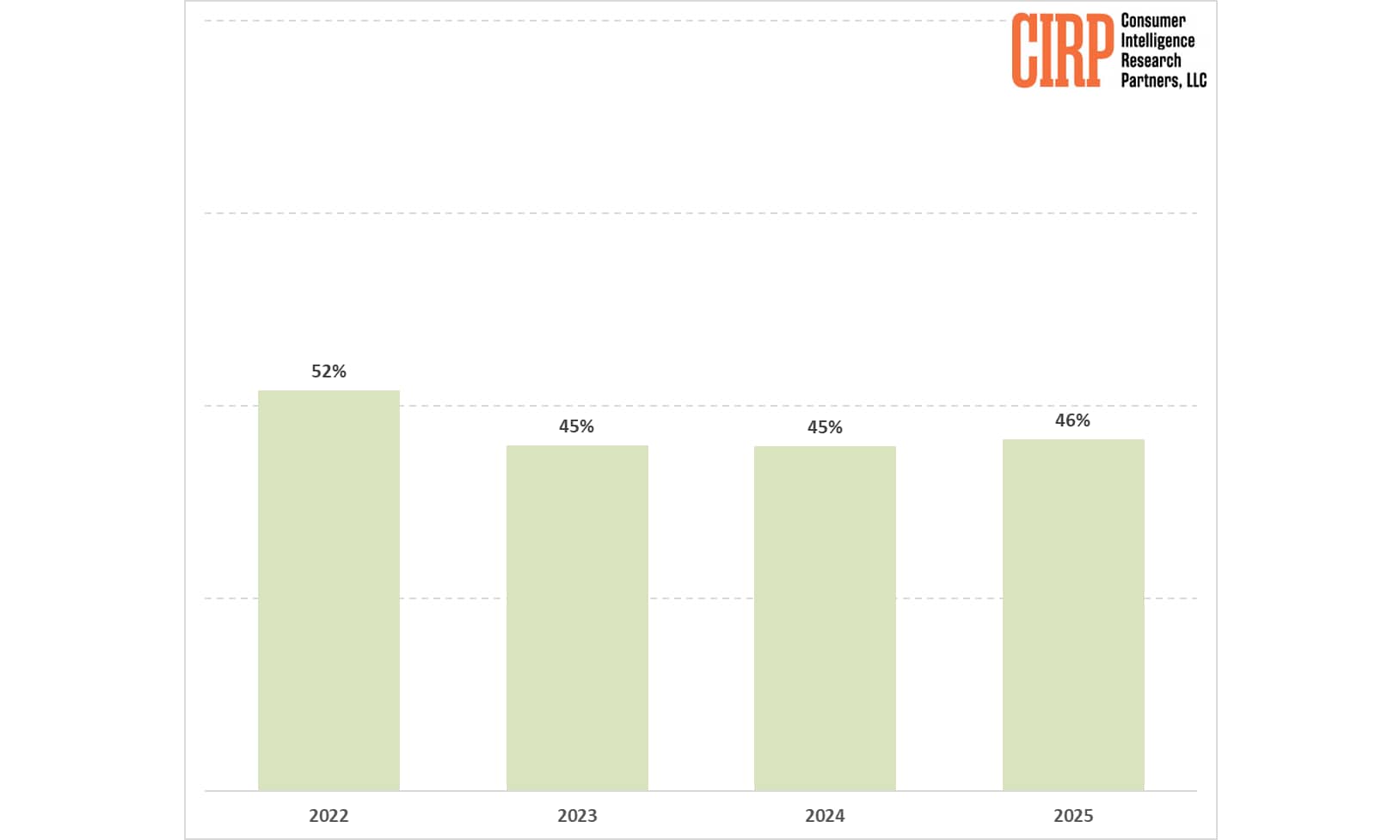
We expect Apple worries that higher base-storage levels on the newest, most popular models may give buyers less incentive to pay for upgraded storage. As it turns out, in the December 2025 Apple customers upgraded at about the same rate as in the previous two December quarters. In the December 2025 quarter, 46% of all iPhone buyers upgraded from base storage.
Michael Levin and Josh Lowitz
In other words, removing the 128 GB tier didn’t just force customers to pay $100 more — it actually pushed many to pay $300 more.
Much of this is undoubtedly a psychological push toward buying something a notch above the “base” model, regardless of whatever that happens to be. However, that’s even more significant when you consider that the jump to the second-tier iPhone 17 Pro capacity is now $200.
As Levin and Lowitz note at CIRP, some of that is the assumption that Apple treats the base model as the “minimum” storage, leading many buyers to believe they might be tight on space if they don’t opt for the next model up. However, the duo also adds that longer installment purchase contracts have helped by spreading out that $200 cost, so consumers feel it less. There are also more carrier incentives and trade-in deals to take away some of the bite, along with the “in-for-a-penny” mentality that the increased storage is an incremental cost on a $1,099 “investment.”
That reality is likely to put Apple in an even better position to weather the current RAM chip pricing storm, as there’s no reason to believe this consumer behavior will change significantly for this year’s models. The higher profit margins from those who opt for the 512 GB version should help to offset any increased costs, and if that’s not enough, there’s also the elephant in the room: the upcoming iPhone Fold, which is expected to be priced upward of $2,000. That’s a move Apple can certainly afford to make for its first premium foldable, and some analysts believe it’s going to be a high-margin “halo product” that provides the financial padding Apple needs to keep the iPhone Pro prices accessible to the masses.
[The information provided in this article has NOT been confirmed by Apple and may be speculation. Provided details may not be factual. Take all rumors, tech or otherwise, with a grain of salt.]






