Leak: The Dynamic Island Isn’t Going Anywhere on This Year’s iPhone 18 Pro
Toggle Dark Mode
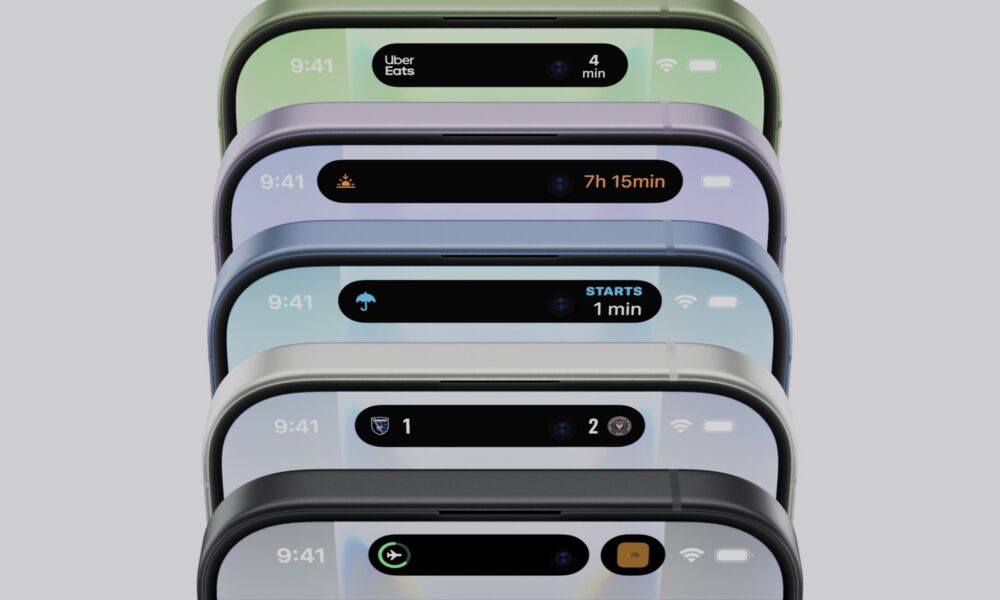
Recent reports that Apple may be switching to a top-left pinhole camera have been greatly exaggerated, a new leaker says, suggesting that the Dynamic Island and pill-shaped screen cutout will continue to be a marquee feature of the iPhone models — at least for this year’s models.
Yesterday, we covered a rumor roundup by FPT’s Jon Prosser that illustrated what could be some big changes to the camera layout on the iPhone 18 Pro and iPhone 18 Pro Max. While Prosser was mostly recapping previous rumors — The Information first reported on the camera change in December — he also provided the first high-quality concept-based renders of what these might look like.

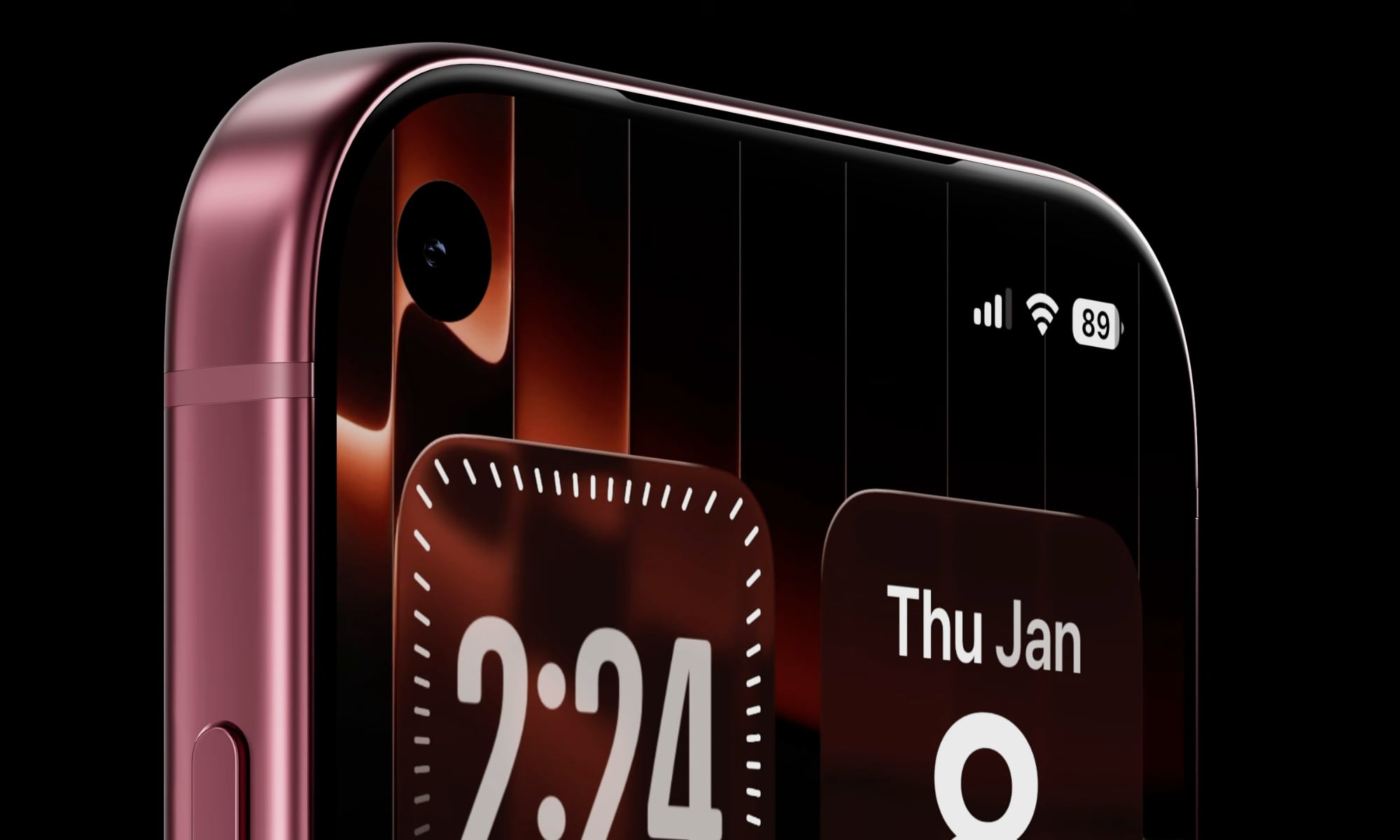
Nevertheless, it turns out these predictions may be based on a faulty interpretation of information that previously came out of Apple’s supply chain, and leaker “Instant Digital” has chimed in to set the record straight.
In a recent post on Weibo, the leaker not only maintains that the front-facing camera is staying in the same place on the iPhone 18 Pro that it’s been since a front camera came to the iPhone 4 in 2010, but that it also won’t be reduced to a punch-hole camera.
“The claim that the iPhone 18 Pro has a punch-hole front-facing camera on the left side is a complete misinformation,” the machine-translated Weibo post reads. Instant Digital goes on to explain that they had already stated, along with other Chinese and South Korean media outlets, that one of the infrared sensors would be placed on the left side. It’s this statement that seemingly led to the misinterpretation that this meant Apple planned to move the camera to the left corner.
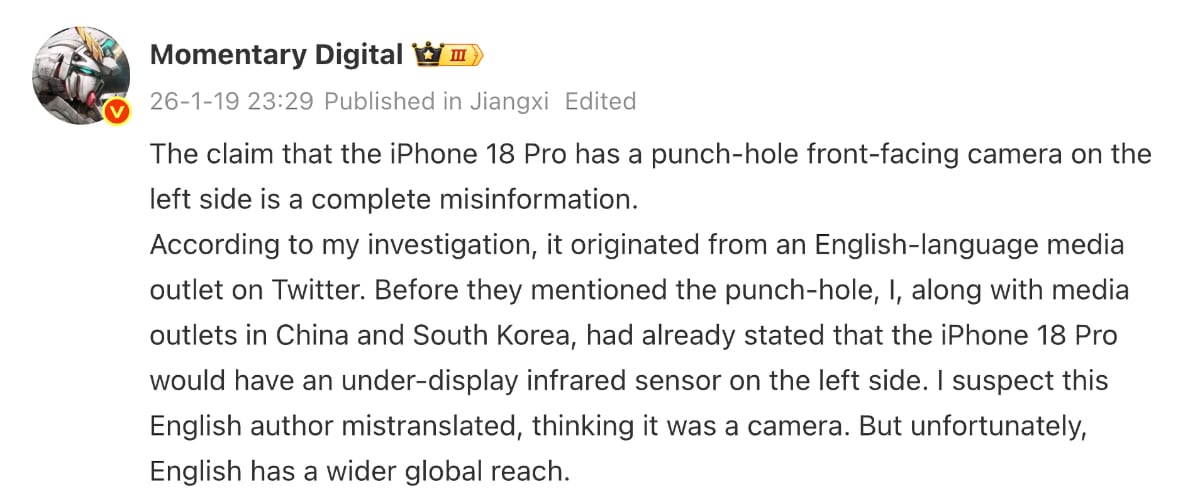
The leaker notes that Asian-language sites have been reporting the correct information, “but unfortunately, English has a wider global reach” that’s led to the incorrect information being more widely disseminated.
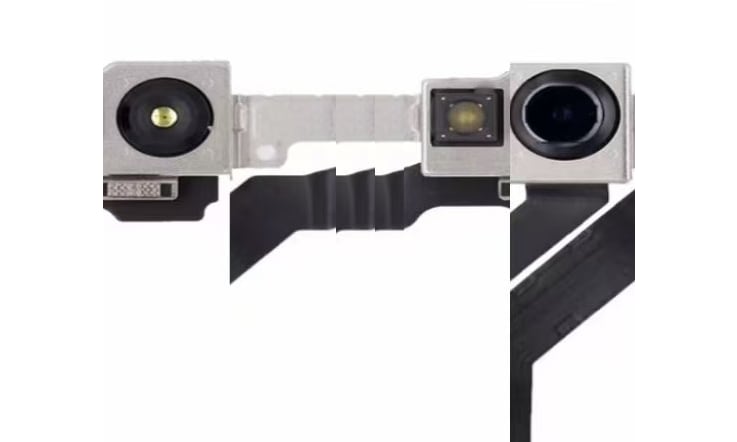
Instant Digital doesn’t have a flawless track record, so this could be written off as the usual “battle of the conflicting leakers.” However, in this case the post provides some additional corroboration in the form of a photo of what’s purportedly the actual part that will be going under the iPhone 18 Pro display.
Face ID vs. The Camera: The Under-Display Hurdle
Apple has reportedly been exploring full under-display camera and Face ID technology for years. While these are two distinct technologies, few industry insiders believe either is fully ready for prime time. Face ID is unique to Apple, but while the concept of an under-display camera has been tried by a few smartphone makers, it’s generally been written off as a bad idea, and it’s not hard to see why even Apple’s rivals like Samsung have yet to go there.
Getting a camera to work through an OLED panel without sacrificing image quality is a tough nut to crack. Apple is undoubtedly trying to figure this out, but in the meantime, most analysts have conceded that it will likely start with the easier task of putting Face ID under the display while leaving the camera with its own cutout.
If Apple could pull this off for the entire array of Face ID sensors — including the infrared camera — then it’s certainly plausible that it might move to a hole-punch cutout for the camera, and some iPhone 18 Pro rumors suggest it’s ready to do that. However, Instant Digital disagrees, saying that their sources have said that only one Face ID component — the flood illuminator — is moving below the glass this year. The other key component — the infrared dot projector — will still need a clear path to do its thing.
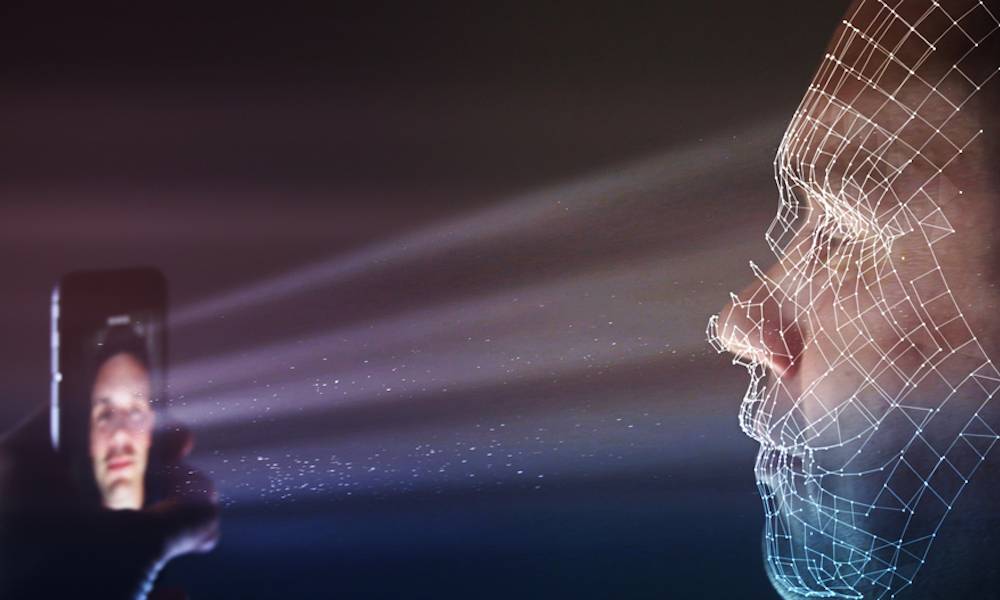
Face ID works so seamlessly that most folks don’t fully appreciate that it doesn’t actually use the front camera, but rather employs three distinct sensors. A flood illuminator is used to light up your face with infrared light, while the dot projector emits over 30,000 infrared dots to create a 3D depth map of your face, which is then read by an infrared camera that’s separate from the selfie camera.
It wouldn’t be all that surprising to discover that Apple hasn’t yet figured out how to make all three of these components work reliably from under a screen, which means the iPhone 18 Pro would still need a pill-shaped cutout. Apple might be able to shrink it in size if one of the components goes behind the display, but we’re still talking about a full Dynamic Island, even if it’s narrower than the one on the iPhone 17 Pro and prior models.
The flood illuminator is the simplest component of the bunch, so it stands to reason that it can more easily go under the display as all it does is emit a wide beam of infrared light. The dot projector and infrared camera could have a considerably more difficult time working accurately through an OLED panel.
The Consensus: Why Experts Agree the Island is Staying
Two other sources specifically corroborated Instant Digital’s claim today, including leaker ShrimpApplePro, who more pointedly says “western media messed up the info,” and industry display analyst Ross Young, who has also been alluding to Apple’s traditional design for months.
Other rumors persist that Apple may go with an all-glass front with full under-display camera and Face ID system for the 2027 iPhone Pro, but it’s unclear how much of that is based on the assumption that the company is going to do something extravagant in a 20th anniversary model. While the iPhone X certainly marked a significant 10-year milestone for Apple, many have suggested from the start that may have partly been good timing. Similar rumors about a 10th Anniversary Edition “Apple Watch X” turned out to be little more than wishful thinking — even after Apple held its September launch event ten years to the day of the original Apple Watch release.
Apple isn’t a particularly nostalgic company, and it usually prefers to look forward than back. It’s far more likely — and responsible — to release new technologies when they’re ready than to either delay them or rush them to meet arbitrary “anniversary” dates that matter to very few people outside the tech blogosphere. There’s little doubt we’ll someday see an all-glass front on a future iPhone, but when that will happen has more to do with the evolution of technology that it does with Apple marking a calendar event.
[The information provided in this article has NOT been confirmed by Apple and may be speculation. Provided details may not be factual. Take all rumors, tech or otherwise, with a grain of salt.]