Walmart Continues to Snub Apple Pay in 2026: Why the Retail Giant Won’t Budge
 Sundry Photography / Shutterstock
Toggle Dark Mode
It’s been well over a decade since Apple Pay launched, revolutionizing the mobile payments landscape, at least in the United States. However, even as the number of retailers accepting contactless payments has skyrocketed, one of the biggest US ones continues to stubbornly hold out.
We’re talking about Walmart, of course. Although it was only one of among many retailers who were initially skeptical of Apple Pay in 2015, nearly all of the rest have fallen into line, recognizing that Apple Pay is the way forward, and a failure to support it will only end up costing them business in the long run.

Still, Walmart holds out. Perhaps the retail giant assumes it’s big enough that people will shop there whether it supports Apple Pay or not — and maybe it’s right. Nevertheless, the company’s intransigence is frustrating to many of its customers.
To add insult to injury, this appears to be specifically a problem with Walmart in the United States. While Walmart was also weirdly a longstanding holdout in Canada — a country that was swimming in contactless payments when Apple Pay was still merely a gleam in Tim Cook’s eye — it finally caved at the beginning of the COVID-19 pandemic, enabling contactless payments, including Apple Pay, on most of its in-store terminals.
However, the US arm of Walmart continues to hold out, as 9to5Mac’s Chance Miller outlined earlier today. We can only speculate on the company’s reasoning, but it likely doesn’t help that it continues to push its own payment platform, Walmart Pay.
The Ghost of CurrentC: A War for Your Data
As I wrote in 2015, this began as a coalition among 17 of the other top 100 US retailers, including Rite Aid, CVS, Best Buy, and Gap, who planned to deploy their own system, CurrentC, which would compete with Apple Pay, while also allowing the retailers to hoover up more transaction data from customers — and likely share them among members of the consortium.
CurrentC was arguably the polar opposite of Apple Pay. Instead of using NFC credit card payments, the system required scanning a QR code that would be displayed in an app on the user’s smartphone, which would in turn take the payment directly from the customer’s associated checking account, which would need to be configured in the associated app.
The solution was attractive to retailers, as not only could they get more metrics on customer spending habits, but scanning QR codes was something most of their point of sale terminals could already do, so CurrentC would save the expense of replacing those terminals with NFC-capable ones.
Customers were considerably less enthusiastic. Between the complexity of dealing with another app, plus the privacy and security concerns of linking up their bank account with a retail consortium, the idea never gained much traction, and CurrentC ultimately failed. However while the rest of the retail consortium threw in the towel and eventually embraced Apple Pay and other contactless solutions, Walmart decided to stick to the plan. It had already stuck out on its own to create Walmart Pay, which was effectively the same thing, but entirely controlled by Walmart, and therefore available in the app that its most loyal customers were already using.
The North-South Divide: Why Canada Has It and the US Doesn’t

Walmart Pay has arguably had some success in the US, undoubtedly thanks to its loyal fan base, and the fact that the retailer has control over the platform — and can continue to profile customers — is likely why it prefers to keep those customers inside its own walled garden as much as possible. It’s also telling that Walmart Canada has no analogue to Walmart Pay, which means the retailer has less incentive to hold out in the Great White North.
Contrary to a popular misconception, retailers don’t pay any additional fees to support Apple Pay. Apple’s takes a small cut of the transaction fees from the banks, not the retailers (which explains why some banks and credit card companies are hesitant to support it, but that’s another discussion).
The only real cost to the retailers is having the necessary hardware to support contactless payments, but that’s not Apple Pay-specific hardware; a terminal that can handle a plastic contactless card can also handle Apple Pay (and Google Pay, and Samsung Pay). That’s why I was able to use Apple Pay at most retailers in Canada with my US debit card nearly a year before it officially launched here.
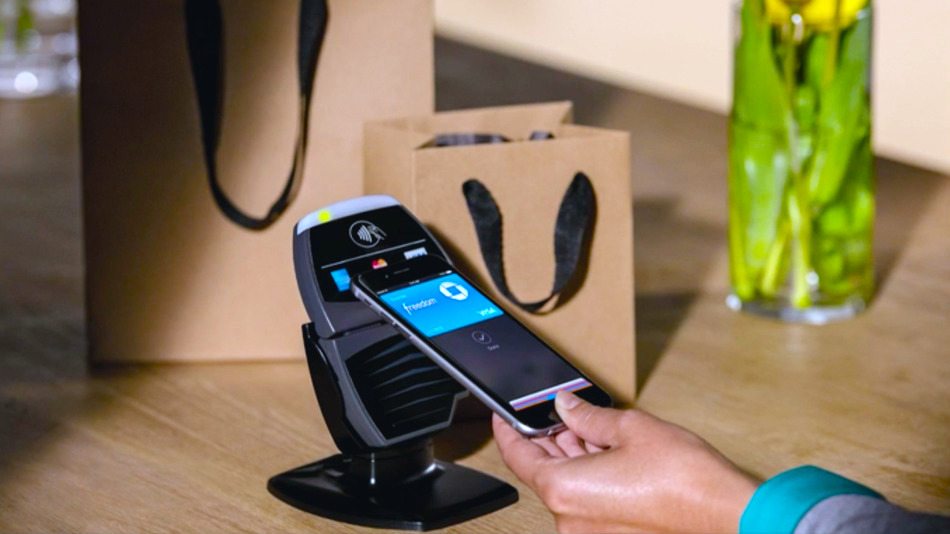
Replacing those terminals was ostensibly the biggest barrier to Apple Pay adoption for Canadian Walmart stores. Even though contactless payments has long been the norm in Canada, with over 80% of retailers supporting the technology even before Apple Pay launched, Walmart preferred to stick with chip-and-PIN technology, requiring customers to insert their cards instead of tapping them. To be fair, it wasn’t alone; Home Depot was another long-time holdout. Like Walmart still does in the US, these retailers didn’t just block Apple Pay; they refused to support any type of contactless NFC payments.
So, Walmart Canada had to get around to replacing its terminals with ones that supported contactless payments. That’s no small investment when dealing with hundreds of stores, but when the 2020 era of social distancing and lockdowns hit, the pressure was undoubtedly enough to convince Walmart Canada to take the plunge as it had nothing to lose but money — and the aging terminals eventually needed to be replaced anyway.
That’s equally true in the US, and many have hoped that Walmart US would follow Walmart Canada’s lead, but it seems that the benefits it reaps from Walmart Pay are still too good to give up. Industry reports have confirmed that Walmart US has now installed NFC-capable terminals in nearly all of its locations — but it’s deliberately chosen to turn those features off, forcing customers to either insert/swipe a physical card or turn to Walmart Pay for “contactless” payments — both of which are far less secure than the tokenized, encrypted signal used by Apple Pay.
Clearly, not much has changed since last year, when Walmart doubled down in statement to MacRumors in early 2025, claiming it offered “convenient solutions, such as Walmart Pay” that provided “easy, touchless payments on any smartphone.” We beg to differ.