Apple Extends 2026 Back to School Promo — Get a Gift Card Up to $150
Toggle Dark Mode
While Apple’s Back to School Promotions have become an annual event, this year’s has marked a bit of a departure. Apple launched it in mid-July rather than its more typical June schedule, limited to fewer products, and gave it one of the shortest runs we’ve seen, ending on August 27, 2026.
Thankfully, it’s addressed one of those shortcomings. Today, the company quietly updated the ending date to September 24, 2026, giving qualifying buyers another four weeks to pick up a new MacBook or iPad for the new school year.
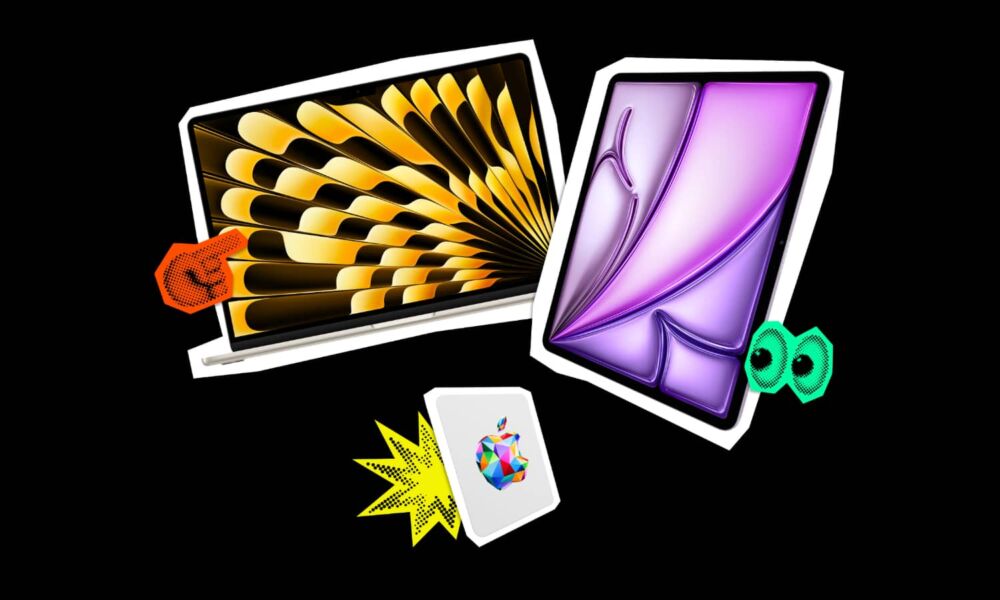
However, the other terms of the promotion remain the same as before. The qualifying products are limited to the MacBook Pro, MacBook Air, iPad Pro, or iPad Air. The good news is that any configuration of those models qualifies, but more affordable products, like the iPad, iPad mini, and MacBook Neo aren’t included, nor is the 24-inch iMac.
These products qualify for educational pricing year-round, so the purpose of Apple’s Back to School Promotion has never been about offering deeper discounts. Instead, buyers get a bonus when purchasing a qualifying product. Last year, Apple offered free accessories like AirPods, echoing what it did from 2015 to 2020, but this year’s it’s pivoting back to gift cards, much like it does for its Black Friday deals.
Specifically, students can get a $150 Apple Gift Card with the purchase of any MacBook Pro, or a $100 Apple Gift Card when buying a MacBook Air, iPad Pro, or iPad Air. These gift cards can’t be applied against the purchase price of the qualifying Mac or iPad, but they can be used for anything else Apple sells, from anything you can find on the shelves at your local Apple Store to digital goods, including apps from the App Store, books from the Apple Books Store, or music and TV shows from the Apple TV Store (formerly known as the iTunes Store).

Apple Gift Cards can also be used to pay for digital subscriptions from Apple or within third-party apps — even ones you already pay for. You simply need to redeem the Apple Gift Card balance into your Apple Account, where it becomes store credit that can be used in place of your normal payment method.
The qualifications for the Back to School Promotion are the same as those for the Apple Education Store. You need to be an employee of a public or private K–12 institution, faculty, staff, or a student at a higher education institution, or parents purchasing on behalf of a student in one of those institutions. This also includes students who have been accepted into a program at one of these universities, colleges, or other institutions. Note that Apple doesn’t offer educational pricing to K–12 students; only employees of those schools are eligible, although there is a carve-out for homeschool teachers.
The promotion is limited to one gift card per Mac or iPad, but students purchasing both a laptop and a tablet can get a gift card for each.
These gift card promos are the closest Apple ever comes to actually putting products on sale, but fortunately plenty of other retailers still do, so we’d recommend shopping around a bit.
You can also look for deals on Apple’s Certified Refurbished store, as these come in “like new” condition, fully tested with the same warranty and eligibility for AppleCare+ as a new device, and that’s especially relevant right now, as Apple is still selling a refurbished 14-inch M5 MacBook Pro with a 512 GB SSD for $1,439 — a configuration it no longer sells new. Refurb products aren’t eligible for Apple’s Back to School Promotion, but at $560 less than the lowest-priced 14-inch M5 MacBook Pro with a 1 TB SSD, it definitely beats a $150 gift card.