A $2,000 iPad Mini in Your Pocket? Here’s the Latest on the ‘iPhone Fold’
Toggle Dark Mode
Everything seems to be lining up for 2026 to be an exciting year for iPhones as Apple reportedly prepares to debut the “iPhone Fold” this fall. While almost every reputable analyst and leaker agrees that a new book-style foldable is coming, there’s been some debate on the specifics. However, one analyst believes he has the inside scoop on everything we can expect.
In a new investor note shared by 9to5Mac, Jeff Pu of GF Securities listed the hardware details for not just the so-called iPhone Fold, but Apple’s entire 2026 iPhone 18 lineup, which multiple insiders believe will include the iPhone 18 Pro and iPhone 18 Pro Max, but not the standard iPhone 18, as Apple reportedly plans to split the cycle and move its non-flagship models into the spring of 2027 to avoiding overcrowding its fall lineup and balance out its revenue stream.

While we already have a pretty good idea of what the iPhone Fold will look like in broad strokes — expect a device similar to Samsung’s Galaxy Z Fold series that opens along the long edge into something akin to an iPad mini — Pu predicts a few surprises, at least one of which feels like a sharp left turn.
Touch ID Redux

It’s not the first time we’ve heard this, but Pu claims that the iPhone Fold will eschew Face ID in favor of a return to Touch ID. If true, that’s a pretty big deal as it would mark the first iPhone released since the 2022 iPhone SE to incorporate Touch ID — and that model arguably only included it because it was a throwback design from the iPhone 8 era.
Going back to Touch ID on a modern iPhone would be a big shift for Apple, but it’s not entirely out of the question for a foldable. After all, the iPad Air and iPad mini still use a side-button Touch ID sensor, and if the iPhone Fold is going to effectively open into a tablet, it would make sense for it to share some of that design DNA.
More importantly, using Face ID on a foldable creates an interesting challenge. It’s not so much the thinness — Apple’s already proven it can fit Face ID into the 5.6 mm iPhone Air — but rather the need to build in two TrueDepth cameras and Face ID sensors to ensure that it can work both when opened and when closed.
We’ve heard some suggestions that Apple could go with a hybrid design, using a single Face ID sensor for quick access when the iPhone Fold is closed and relying on a Touch ID sensor when it’s open — or vice versa — but it’s not unreasonable to assume that a company like Apple that prides itself on user experience would want to opt for consistency over confusion.
Still, as certain as Pu sounds on this one, we remain skeptical. For one thing, the True Depth camera does more than power Face ID; it’s also key to depth sensing for features like Portrait Mode photos and Center Stage. Unless Apple is going to nix these features as well, it has to put most of the hardware into the iPhone Fold anyway, in which case it would be strange to solely omit Face ID. If anything, that takes us back to the notion of at least one powerful front-facing camera, but whether it’s on the outside or inside will depend on whether Apple considers video calls or selfies more important.
It’s interesting that Pu claims both the inside and outside cameras will be 18 megapixels. This suggests Apple will go with the same camera system it introduced in last year’s iPhone 17 lineup, with a square 24 MP sensor that can use Center Stage and capture landscape selfies in portrait orientation.
A Pocketable iPad?

The rest of the specs Pu shares aren’t too different than what we’ve been hearing for months, and some of these are things we’d assume even without any insights from analysts or leakers.
For instance, it’s a given that it will use an A20 Pro chip alongside the two new iPhone 18 Pro models. Multiple reports have suggested this next-generation chip will use new WMCM packaging to keep the logic board footprint tiny enough to fit inside the razor-thin body of an iPhone Air or iPhone Fold. It’s also expected to pack in 12 GB of RAM and use Apple’s next-generation of in-house Wi-Fi and 5G modem chips, the N2 and C2, respectively.
On the other hand, the outside screen is expected to be the smallest we’ve seen on anything since the ill-fated iPhone mini, coming in at only 5.3 inches, which may be a reasonable compromise for a device that will unfold into a 7.8-inch panel. Assuming it’s an edge-to-edge screen, that suggests it could be more compact than many other modern foldable on the market, with a “passport” style design that’s short and wide rather than tall and narrow, making it feel more like a small notebook than a cramped phone.
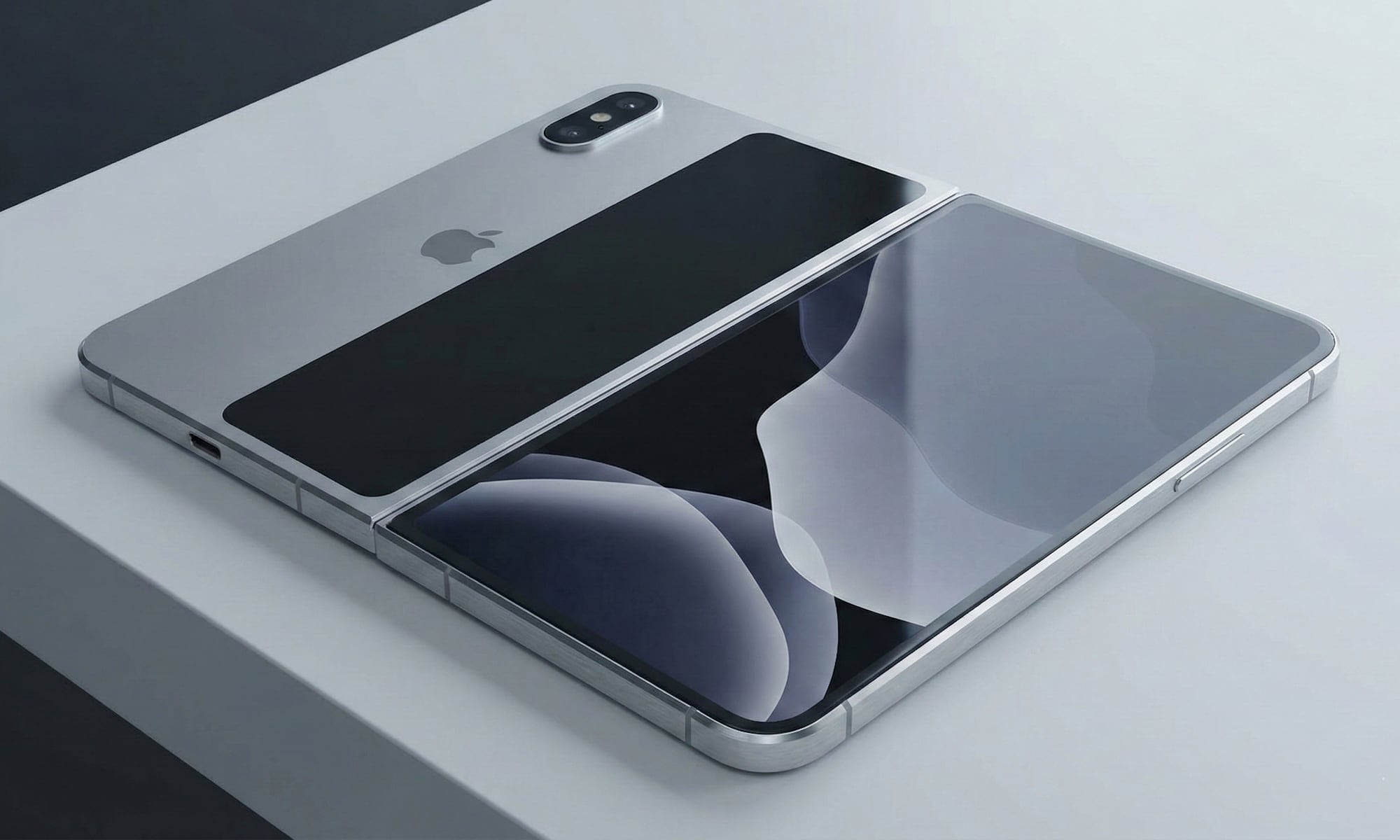
This would make it more pocketable, feeling like a small wallet rather than a smartphone, and the 5.3-inch screen would probably have a more comfortable aspect ratio for working on even when the iPhone is folded shut.
To get a feel for that, imagine an iPad mini folded in half. That’s an 8.3-inch screen, so it’s slightly lager, and has wider bezels, but most reports suggest the iPhone Fold will share a similar aspect ratio.
It’s also expected to get even thinner than the iPhone Air, with some reports suggesting as slim as 4.5 mm when opened. That shaves quite a bit off the 5.6 mm Air, but Apple also has a larger footprint to spread out the components, as we saw with the M4 iPad Pro models, where the 13-inch model managed to come in 0.2 mm thinner than the 11-inch one.
Finally, it looks like folks who want the best cameras will still need to opt for one of the Pro models, as Apple seems to be following its rivals in going with a more basic dual-camera system on the iPhone Fold. Pu says it will still get a pair of 48 MP shooters, but those will likely be similar to the main and ultra wide lenses the iPhone 17 sports now, with the telephoto reserved for the iPhone Pro.
However it turns out, the iPhone Fold isn’t expected to come cheap, with most reports pegging $2,000 as the minimum starting price. There’s also little doubt it will be a typical “first-generation” Apple product for early adopters, showcasing what the company can do with its technology, like it did with the Apple Watch, iPhone Air, and Vision Pro. It will no doubt be interesting, but we suspect most folks will be better off waiting another year to see what Apple does for an encore.
[The information provided in this article has NOT been confirmed by Apple and may be speculation. Provided details may not be factual. Take all rumors, tech or otherwise, with a grain of salt.]