The $349 iPad is About to Become Apple’s Most Affordable AI Powerhouse
Toggle Dark Mode
Apple is expected to release a refresh to its base model iPad alongside its entry-level iPhone 17e, with this year’s model featuring a silicon boost that will finally bring Apple Intelligence support to the entire tablet lineup.
An 18-month drought of any new iPads throughout all of 2023 ended when Apple unveiled the ultra-slim M4 iPad Pro and M2 iPad Air in early 2024, followed by an A17 Pro-powered iPad mini that fall. However, it wasn’t until early 2025 that we saw a refresh to the standard iPad, and what we got was a bit underwhelming to say the least.
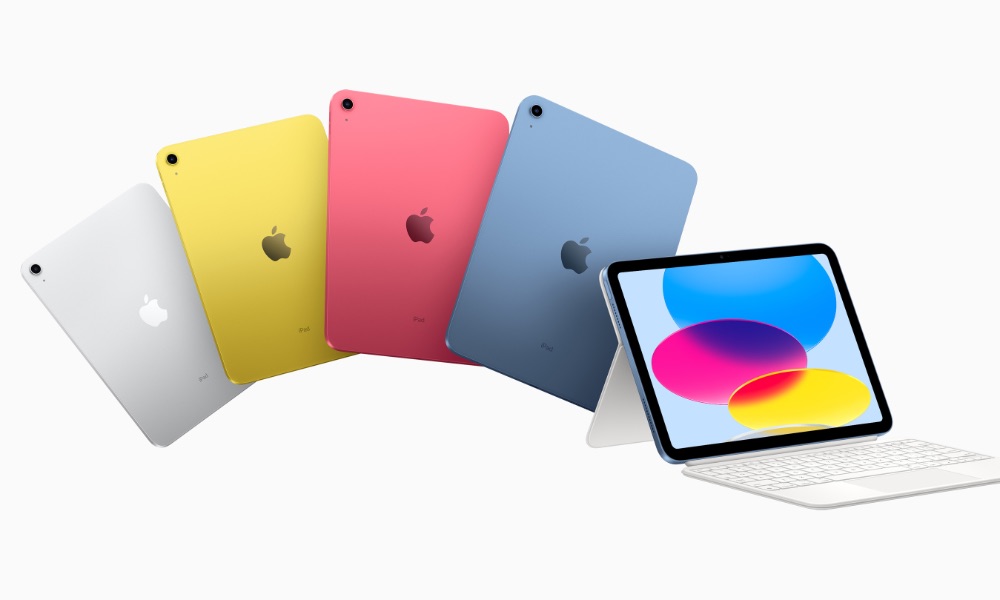
Two-and-a-half years after unveiling the 10th-generation iPad with a new design and an A14 Bionic chip in 2022, the 11th-generation successor came along with only modest upgrades: an A16 chip and… not much else.
There was the addition of a new 512 GB storage tier on the high-end, and some minor security improvements to the eSIM technology, but for all intents and purposes it was the same 2022 iPad with nothing more than a faster chip. Apple didn’t even change the color palette.
Adding insult to injury, the new chip wasn’t even up to the standard many had hoped for. After spending six months hyping Apple Intelligence on the new iPhone 16 lineup, the new iPad became the first — and only — mainstream Apple device to be released without support for Apple’s latest AI tools.
The A16 chip was the same class of chip used in the 2023 iPhone 15, which had also failed to make the cut for Apple Intelligence compared to its A17 Pro-powered iPhone 15 Pro siblings, but that was understandable for devices released before the new AI features debuted. Putting it in a new device was unusual, to say the least, especially after the iPhone 16e had just joined the AI family with an A18 chip; however, it also said a lot about Apple’s target market for its most affordable tablet. A lack of AI features isn’t really a deal-breaker for educational customers, and some schools might even consider it a plus.
Bridging the Intelligence Gap

Nevertheless, it seems Apple will rectify that with this year’s 12th-generation model, but that may also be simply because it has nowhere to go but up. The A16 was the last generation of Apple silicon to lack Apple Intelligence support, so any newer chip Apple puts into the iPad will have AI included unless Apple does something to deliberately hamper it, like cutting back on memory.
While some reliable reports have suggested the iPad 12 might skip the A18 and go straight to an A19 based on internal code found in iOS 26, Bloomberg’s Mark Gurman has just thrown a bucket of cold water on that notion. In this week’s Power On newsletter, Gurman gave us an idea of what to expect from the next iPad — and roughly when we can expect it, along with the mid-tier iPad Air:
The entry-level iPad is getting the A18 chip, while the iPad Air is moving to the M4, I’m told.
Mark Gurman
Unsurprisingly, Gurman says these faster chips will be about all we can expect from the new iPads, which seem to have fallen into a year-over-year cycle of spec bumps. Last year’s M3 iPad Air was similarly underwhelming, but at least we didn’t have to wait over two years just to get a new chip. Even the M5 iPad Pro that came out last fall didn’t move the needle that much over its early 2024 M4 predecessor.
Still, that’s not necessarily a bad thing, as it suggests that the iPad family, like Apple’s MacBooks, has found its groove. There’s no need to add new design changes and other tweaks for their own sake, and that’s especially true when it comes to Apple’s entry-level model. Higher-end iPads will eventually get some bigger changes — the iPad mini is still expected to move to OLED this year — but we’ve moved into an era when these things now run on much longer cycles.
A New $349 Entry Point for the AI Era
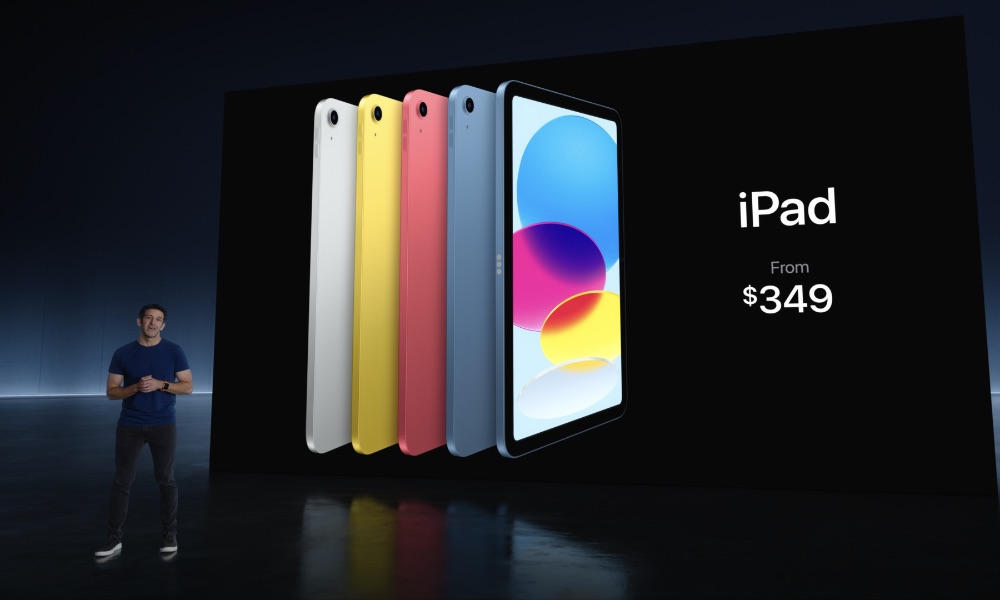
According to Gurman, Apple Intelligence won’t just be a side dish on this year’s new iPad. Apple plans to make it part of a marketing push for the new model, likely focusing on how the $349 device will effectively become the most affordable way to plug into Apple Intelligence, beating out the $599 low bar that’s currently held by the iPad Air and iPhone 16e by a healthy margin.
While Apple has undoubtedly had this new iPad in the pipeline for a while, some of this push also stems from the fact that the entry-level tablet is doing surprisingly well. Apple’s iPad segment grew by 6.3% in Q1 2026, an increase the company says was driven largely by the base model rather than the pricey M5 iPad Pro that was released during the quarter. At only 6% of Apple’s overall revenue, the iPad segment is dwarfed by the iPhone and Services, which now make up 80% of the pie, but it still grew faster than Wall Street’s expectations.
Apple’s lower-cost devices are also particularly important to enterprise and educational customers. The iPhone 16e has reportedly been a hit for companies that issue iPhones to their employees, and the $349 iPad has always been the go-to tablet for use in classrooms. Apple also has a sub-$600 MacBook in the works to round out that list and take the fight to Chromebooks, which are the iPad’s biggest competitor in the classroom. This will likely be powered by the same A-series chip as the iPad, and Gurman notes that it’s expected to be the company’s “centerpiece computer launch” for the first half of the year.
[The information provided in this article has NOT been confirmed by Apple and may be speculation. Provided details may not be factual. Take all rumors, tech or otherwise, with a grain of salt.]