Still on iOS 13 or 14? It’s Time to Move On (For Your Own Good)
 nikkimeel / Shutterstock
Toggle Dark Mode
Although Apple does a great job of ensuring even older iOS versions are patched against security flaws, there are two major versions from the past seven years for which it actually hasn’t released any new security patches since 2021, potentially leaving them vulnerable to the litany of exploits that have been discovered over the past few years.
However, Apple also has a pretty good excuse for skipping security updates for these: there’s no valid reason that anyone should still be running them.

We’re talking about iOS 13 and iOS 14, which were released with the debut of the iPhone 11 in 2019 and the iPhone 12 in 2020, respectively. Apple maintained each of these with security patches for about two years after their initial release, ending with iOS 13.7 on September 1, 2020, and iOS 14.8.1 on October 26, 2021. There have been no updates since then.
By contrast, Apple only stopped releasing security updates for iOS 12 in early 2023. That’s arguably fair for an operating system that was first released in 2018, and was the last available update for only the iPhone 5s and iPhone 6 lineups. Even then, Apple surprised us with an iOS 12.5.8 release in January, breathing new life into the 13-year-old iPhone 5s by ensuring it can continue to use iMessage and FaceTime.
The shorter update cycle is largely because iOS 13 and iOS 14 are somewhat unique among Apple’s software updates in that no iPhone was ever left behind on them. Every iPhone that can run these versions can be updated to iOS 15, so Apple naturally expected folks to make that move.
The company acknowledged that not everyone wants to make the jump to the next iOS version right away — hence an extra year of security patches — but sooner or later it just didn’t make much sense to stay behind. Now, Apple is pointing out how bad of an idea that really is.
Don’t Be a Sitting Duck for DarkSword
In a new support document titled Update iOS to protect your iPhone from web attacks, Apple lays out the dangers of new hacking tools that are known to be effective against older versions of iOS, making those who have stayed behind more at risk than ever.
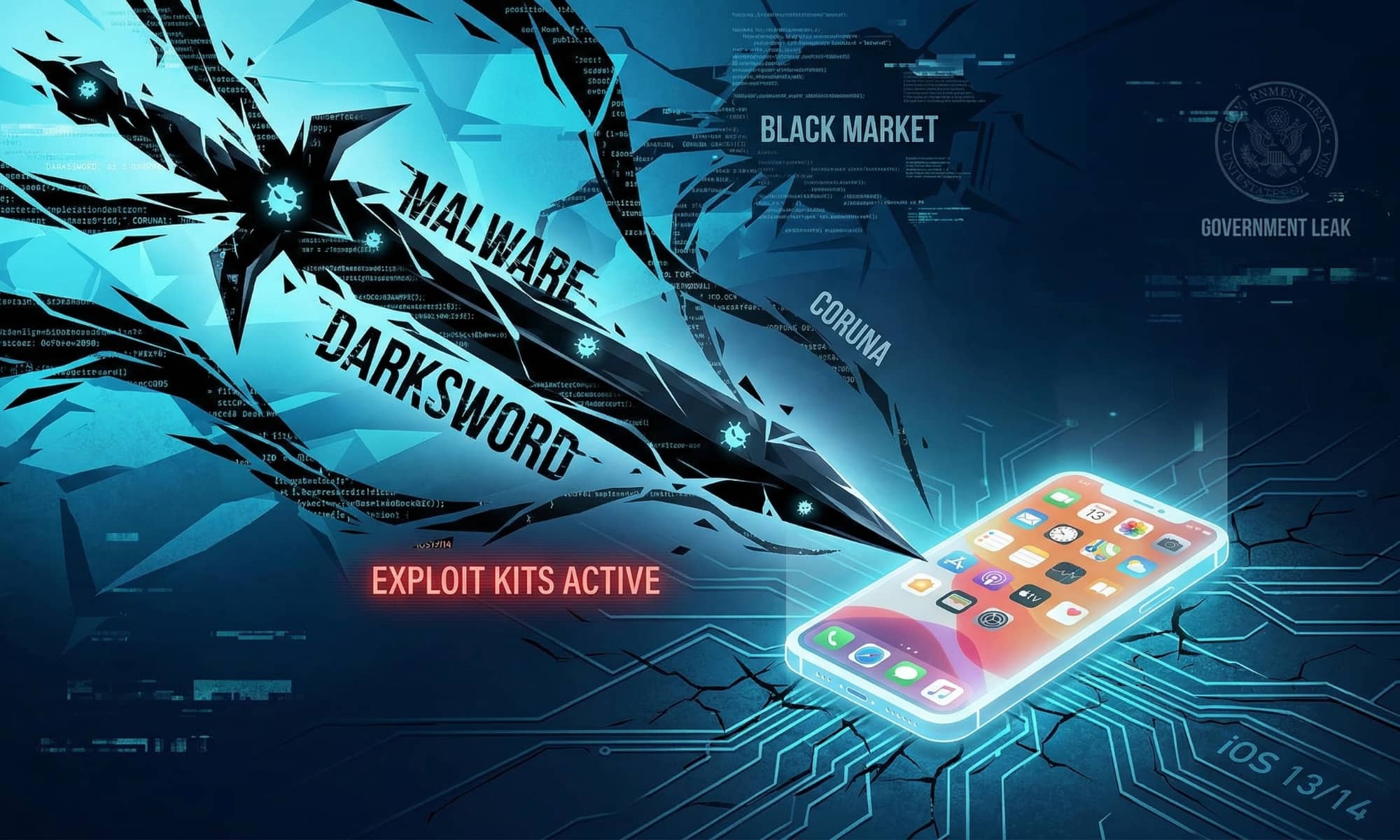
Exploit kits such as “Coruna” and “DarkSword,” some of which are believed to have leaked out of the US government and ended up on the black market, are out in the wild and designed explicitly to target iPhones running iOS 13 through iOS 17.2.1.
Apple has patched these vulnerabilities as they’ve come to light, and anyone who is running iOS 26.3.1, iOS 18.7.6, iOS 16.7.15, or iOS 15.8.7 is already safe, and while January’s iOS 12.5.8 release didn’t include any security patches, that wasn’t among the versions of iOS that are being targeted by these latest hacks.
It’s worth noting that iOS 18.4 through 18.7 are reportedly the primary targets of the DarkSword exploit, so those who are stuck on iOS 18 or haven’t yet made the leap to iOS 26 will definitely want to ensure that they’ve got iOS 18.7.6.
While the best possible thing you can do is to update to the latest security releases, if you’re unable to do so for whatever reason, you can also turn on Lockdown Mode, which Apple has confirmed will also protect your device from these specific attacks. That’s not surprising, as Lockdown Mode creates a headache even for the FBI, but we’ll also tell you now that it’s far better just to install the latest updates, as locking down your iPhone will prevent you from doing most of the things you likely do on a daily basis, dumbing down your web browsing experience by disabling “complex web technologies” that many advanced sites rely on, blocking links in Messages, disabling legacy cellular protocols like 3G and non-secure Wi-Fi networks, and disabling features like SharePlay and Live Photos.
The Party’s Officially Over for iOS 13 & 14
However, as you’ve probably already surmised if you’ve read this far, the most at-risk versions are iOS 13 and iOS 14. That’s because Apple didn’t address the vulnerabilities exploited by these toolkits until iOS 17.3 in January 2024 — over two years since the last update to iOS 14 was released. These devices also don’t support Lockdown Mode, as that wasn’t introduced until iOS 16.
Despite this, Apple is making it clear that it has no intention of releasing any further patches for iOS 13 or iOS 14. Like it or not, if you want to be safe, you’ll need to update to at least iOS 15.
Devices with iOS 13 or iOS 14 must update to iOS 15 to receive these protections and will receive an additional alert to install a Critical Security Update in the next few days.
Apple
iOS 15 is the last version supported by the iPhone 6s, iPhone 7, and 2016 iPhone SE, although users of newer models will likely need to skip that and jump ahead to their latest supported versions: iOS 16 for the iPhone 8 and iPhone X models, iOS 18 for the iPhone XS models, and iOS 26 for the iPhone 11 and all subsequent models.
That’s because Apple doesn’t typically let you install intermediate versions, but rather forces you to the latest available. Those who really want to stick with something older will need to go through a more cumbersome process of locating and downloading the appropriate image files and loading them on from a Mac or PC, but that’s beyond the scope of this article. Those with a legitimate need to do that will know how; everyone else should really just update to the latest version available as it’s the best way to ensure you’ll always have the latest security patches.