The Five Most Overrated Tech Trends of 2025 (And Why We’re Tired of Them)
Toggle Dark Mode
Every year, tech companies line up to tell you that they’ve finally developed a breakthrough in technology that will change everything from your daily life to the way you work. And because of that, the higher price is more than justified.
Sometimes that may be true, but more often than not, the “next big thing” turns into another fad that clutters your home screen, drains your wallet, or never quite works the way the presentation promised (we’re looking at you, Apple Intelligence).
If you’re deep into the tech world, you’ve probably already seen trends like these wash over the industry every few years. Unfortunately, not all tech fads die the same, and there are still a bunch of new trends that persist to this day that we’re getting really tired of.
Here are some of the most overrated and hated tech trends that still exist in 2025.
AI Is Still Everywhere

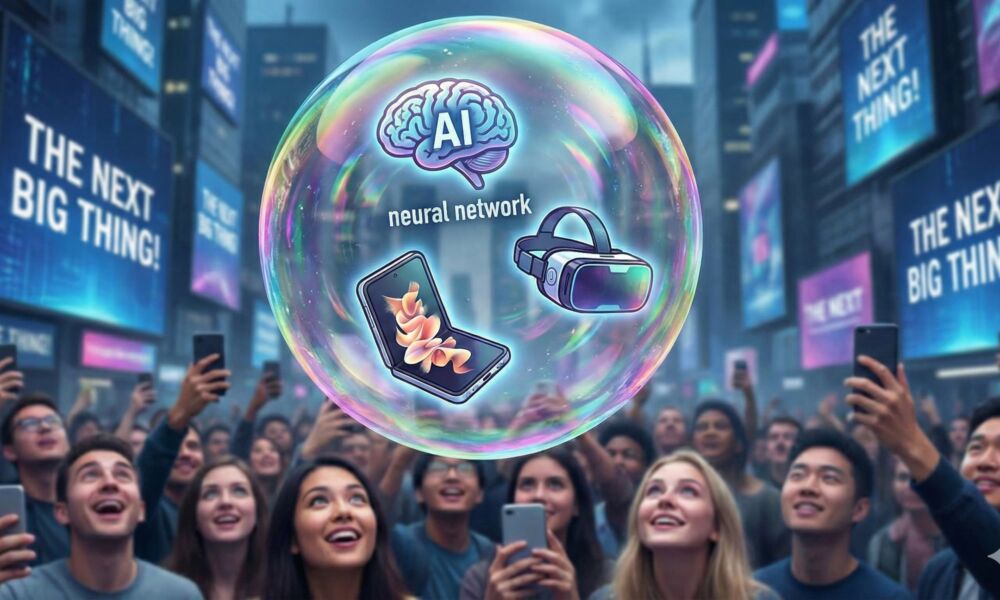
Let’s start with a trend most of us are already tired of: turning absolutely everything into an “AI product.” While real advances in AI are genuinely useful — it has some fantastic practical applications for consumers and can help in fields like medicine — we’re tired of seeing how Will Smith eats spaghetti.
The problem is that once “AI” became the buzzword of the decade, everyone decided they needed a piece. Suddenly, your TV “enhances” movies with distracting AI smoothing, smartphones have traded hardware innovation for generative AI tricks that no one asked for, and smart-home gadgets brag about “AI routines” that are basically just glorified timers.
Many of these “features” are just regular algorithms with a fresh coat of marketing paint. They don’t solve real problems, and sometimes they even make basic tasks slower.
You can see this clearly in consumer electronics. Smart TVs now ship with so-called AI upscaling or AI motion smoothing that’s barely distinguishable from the enhancements they’ve already been doing for years. Many apps claim that they have a new AI feature, when it is actually just a simple “If” statement, and if you drank a shot of vodka every time Samsung, Apple, or Google used the word “AI” in their last presentations, you’d be in the hospital before you could see the new iPhone.
AI in and of itself isn’t the problem here. Company overbranding is. When everything is “AI-powered,” nothing stands out, and you have to waste time figuring out which tools are genuinely helpful and which ones are just nothing burgers that do little more than needlessly consume energy to power their algorithms.
The Broken Promise of Foldable Phones
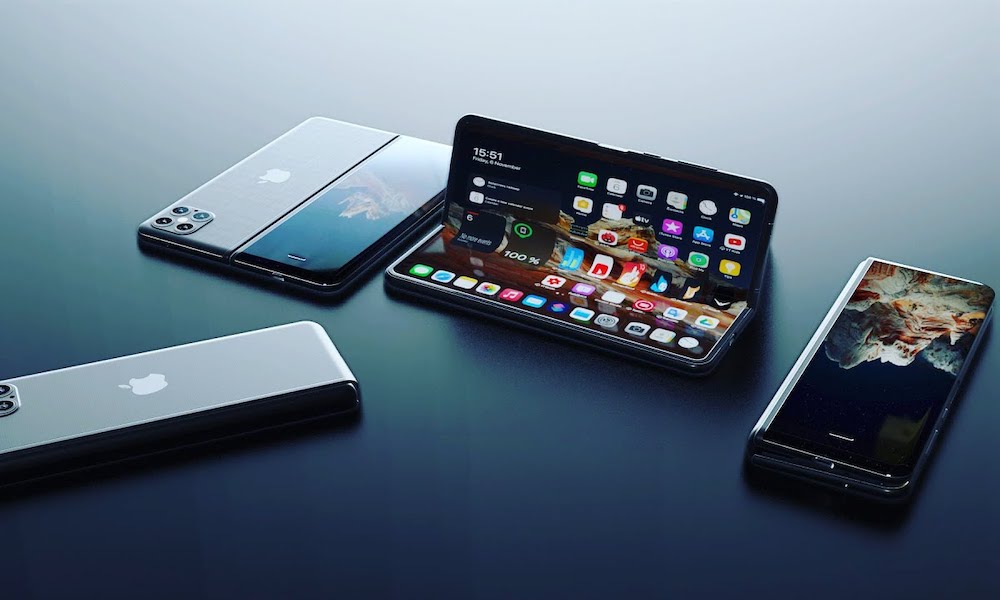
Foldable phones are one of those ideas that sound undeniably cool. A device that’s a phone in your pocket and a tablet when you open it feels like something straight out of science fiction. Samsung, Google, and a handful of smaller brands have been pushing this category for years, and Apple is widely rumored to be working on releasing its own foldable device next fall.
The problem is that even in 2025, the reality still doesn’t justify the price. Foldables usually cost in the neighborhood of $2,000, making them more expensive than even some of Apple’s premium computers.
For that extra money, you get a heavier, thicker device, a visible crease down the center of the display, and a long list of durability questions. Hinges have improved, sure, but they haven’t magically become immune to wear, dust, or accidental damage. If you drop your foldable phone once, you’re basically done, and repairs are complicated and more expensive than with a regular phone.
Then there’s the software issue. On paper, foldables are supposed to make multitasking easier, give you more room for apps, and transform productivity on the go. In practice, many apps still don’t scale elegantly across different screen ratios, so you end up with awkward layouts that clearly weren’t designed for a foldable form factor. A lot of users end up treating the extra screen space as a small plus rather than the game-changer it’s supposed to be.
Battery life can also take a hit. Two large displays demand more power than a single screen. That means vendors either cram in larger batteries (increasing weight even more) or accept shorter battery life compared to cheaper and thinner non-folding phones.
All of that might be easier to swallow if foldables were clearly the future, but right now they feel more like expensive prototypes, and it doesn’t look like that’s going to change anytime soon. With Samsung’s new trifold phone taking the spotlight, more companies will undoubtedly focus on copying yet another new trend instead of fixing the issues with current foldable technology.
VR Headsets as Everyday Computers
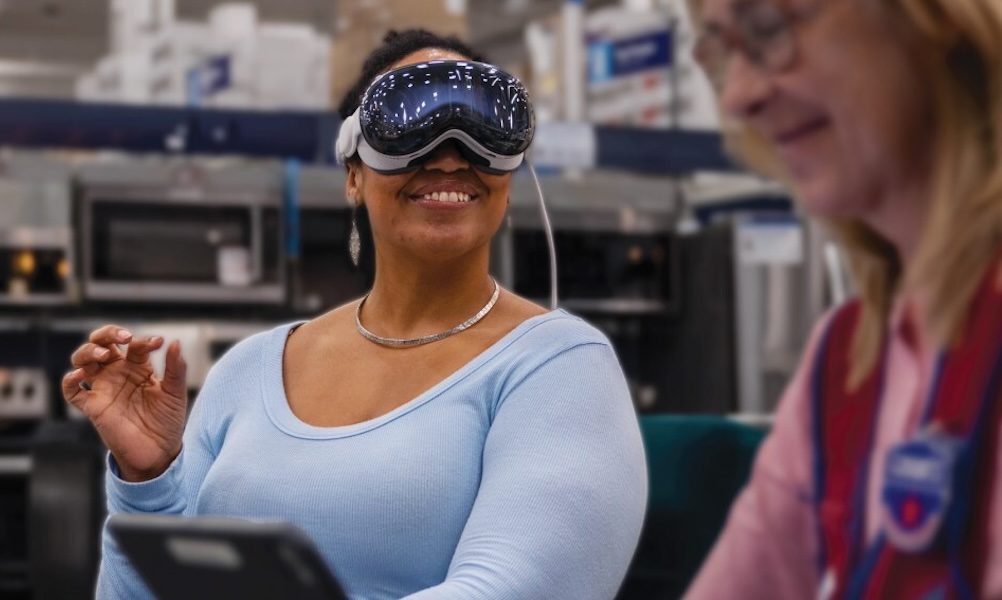
Virtual reality has been the future for some time now. Meta, Valve, and now Apple have all made big bets on headsets that immerse you in games, apps, and virtual workspaces. Apple joined the party in early 2024 with the Vision Pro, positioning it as a “spatial computer” rather than just another VR toy. For early adopters, it truly delivers some “wow” moments — but it also doesn’t come cheap.
Still, the larger trend of pushing VR headsets as everyday computing devices is badly overhyped. For most people, these devices are still too heavy, too expensive, and too isolating to replace a laptop, iPad, or TV.
Even the most polished headsets feel uncomfortable after long sessions, especially if you wear glasses or are sensitive to motion. Battery packs and cables add more problems than solutions. And as impressive as high-resolution displays and hand tracking are, you’re still strapping a computer to your face.
There’s also a content problem. Games like Beat Saber, Half-Life: Alyx, and Apple’s own immersive experiences can feel incredible in the moment, but once the novelty wears off, many struggle to see a place for virtual reality in their everyday lives.
Productivity apps often feel slower than using a MacBook or iPad with a physical keyboard. Social VR remains super niche, since most of your friends and coworkers aren’t hanging out in virtual spaces every night.
That doesn’t mean spatial computing is doomed. The long-term potential is there, especially as devices get lighter and cheaper. But right now, the idea that VR headsets could replace your regular computer or become as essential as your phone is more fantasy than reality.
Smart Home Everything
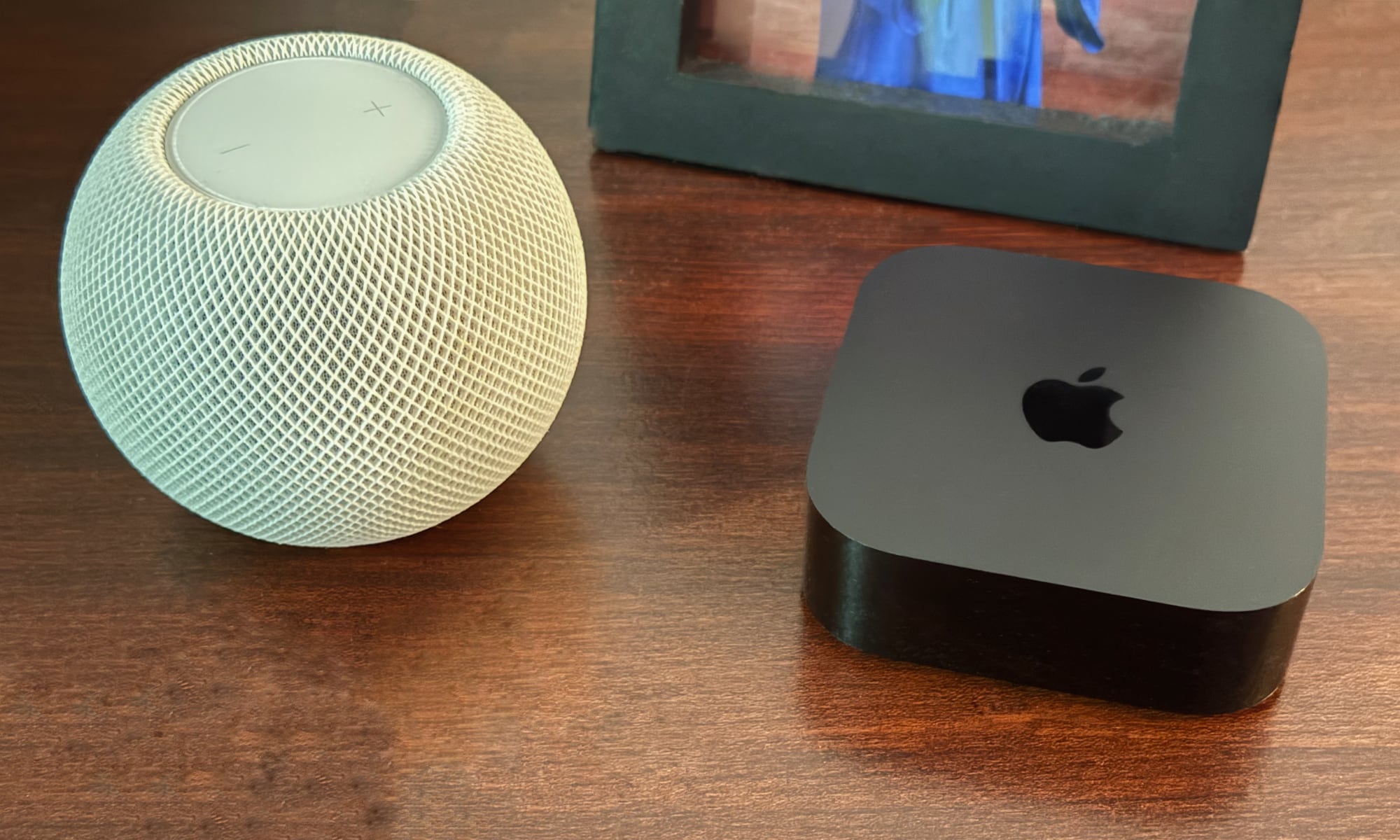
Turning your home into a smart, automated space sounds fantastic on paper. Lights that turn on as you walk in, blinds that adjust to the sun, locks you can check from your iPhone, and a thermostat that learns your habits. All of that genuinely can make life easier, not to mention that they can also help people with mobility issues.
The issue isn’t smart homes in general; it’s the mentality that “everything must be smart” that’s taken over the market. At this point, nearly every home product — from toothbrushes to trash cans — comes with a Wi-Fi chip and a companion app. Many of these don’t add meaningful convenience compared to their regular counterparts.
Even worse, some of them can be dangerous. Imagine that you can’t get out of your apartment because your smart lock decided to malfunction.
Privacy and security add yet another layer of concern. Cheap, poorly secured cameras and sensors can expose your home network to unnecessary risk. Even reputable brands sometimes collect too much data, and their privacy policies change over time. If you’re the type of person who already worries about your iPhone’s location or microphone access, the idea of filling your house with 10 extra microphones and cameras that constantly gather data isn’t exactly reassuring.
Smart homes absolutely can be great when you focus on a few genuinely useful devices, like reliable smart thermostats or lightbulbs. But the trend of stuffing Wi-Fi and an app into every object in your house has gone way too far, and more often than not, it’s not as useful as companies want you to think.
Endless Subscription Services
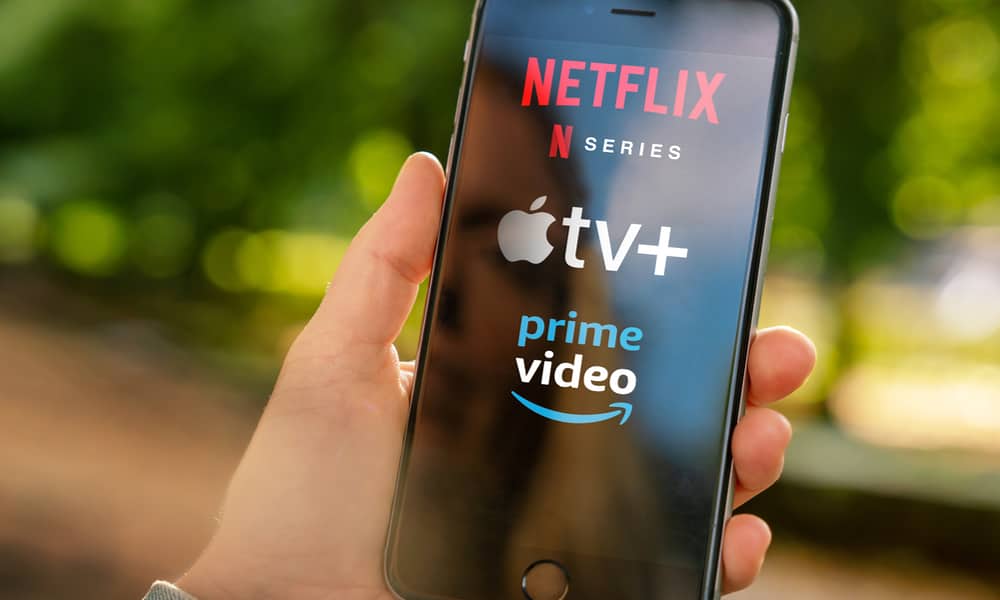
If there’s one trend that deserves the crown for “most overrated,” it’s turning every regular app into a subscription-based service.
A monthly fee for streaming services makes sense. Plus, there are other products that absolutely need recurring payments in order to keep their servers running and staff secured. But at some point over the last few years, the industry collectively decided that every piece of software should be a subscription forever.
If you go to the App Store, you’ll find subscription-based apps for everything. There are even apps that track your daily water intake that ask for a monthly fee to unlock everything.
This has real consequences for how people use their devices. Instead of trying a bunch of apps and slowly building a library that fits your workflow, you have to constantly think about ongoing costs. Small subscriptions add up over time, leading to “subscription fatigue,” and not all of us can afford to pay dozens of dollars for apps that we use every now and then — especially when you add them up with more important monthly payments like your electricity bill.
With all of that said, the issue might get worse before it gets better. For instance, users have reported that Adobe charges you if you try to cancel your subscription. Yes, you read that right. If you subscribe to one of Adobe’s yearly plans and pay it monthly, and decide to cancel before the end of your subscription, you’ll have to pay something that’s called an “Early Cancellation Fee.”
If that starts to become the norm, you won’t even be able to cancel your subscriptions without paying extra fees.
Developers do need recurring revenue to survive; that part is fair. But not every app justifies a subscription, especially when the overall functionality hasn’t changed much in years.
These Trends Aren’t Going Anywhere
Of all the trends on this list, subscription overload is the one that drains your bank account the most month after month while offering the least visible innovation in return. It’s not going away anytime soon, but it’s absolutely worth pushing back: cancel what you don’t use, choose apps that respect your wallet, and reward developers who offer fair pricing instead of endless micro-subscriptions.
For now, the best move you can make as a regular user is to focus on tools that actually solve problems in your daily life. If a feature saves you time, makes your devices easier to use, or legitimately improves your privacy and security, it’s probably worth exploring. If it mainly adds new buzzwords to your settings menu or charges you a monthly fee for something your iPhone already does, you’re not missing out on anything by skipping it.