Paramount Puts Warner Bros. Back in Play with $108 Billion Hostile Bid
 Paramount Studios Bronson Gate [Hannah Wernecke]
Toggle Dark Mode
Netflix may not have won Warner Bros. quite yet. Following news last week that the two companies had reached an $82.7 billion acquisition deal, a new contender has entered the ring to challenge that arrangement. Paramount Skydance, which has been vying to take over the entire Warner Bros. Discovery empire, has launched a hostile takeover bid, offering $108.4 billion in the hope of winning over shareholders.
In what Reuters is calling a “last-ditch effort to outbid Netflix,” Paramount is not only offering more money, but once again trying to secure the entire company — from streaming and studios to the cable television networks — and there’s a political element to this that could give it a unique spin.
While the Warner Bros Discovery board of directors has agreed to review Paramount’s offer, it also said it’s not modifying its recommendation with respect to Netflix, advising the company to “take no action at this time” in regards to the Paramount Skydance proposal, Reuters says.
The catch is that major acquisitions with potential monopoly stakes need to receive government approval. While regulators are already chafing at letting Netflix take over the Warner Bros. streaming and studio business, Paramount Skydance is not only on better terms with the current administration, but the offer itself is directly connected to US President Donald Trump.
Paramount’s $30-per-share cash offer includes financing from Affinity Partners, the investment firm run by Jared Kushner, U.S. President Donald Trump’s son-in-law, and several Middle Eastern government-run investment funds, and is backstopped by the Ellison family. Larry Ellison, the world’s second-richest person, is the father of Paramount head David Ellison and has close ties to the White House.
Reuters
With $18 billion more in cash on the table, Paramount makes a valid argument that its bid is better for shareholders. It also insists it has an “easier path to regulatory approval,” although it’s unclear whether that would be true if not for the Ellison family’s political connections.
We believe our offer will create a stronger Hollywood. It is in the best interests of the creative community, consumers and the movie theater industry. We believe they will benefit from the enhanced competition, higher content spend and theatrical release output, and a greater number of movies in theaters as a result of our proposed transaction. We look forward to working to expeditiously deliver this opportunity so that all stakeholders can begin to capitalize on the benefits of the combined company.
David Ellison, Chairman and CEO of Paramount
A Tale of Two Monopolies
Regulators on both sides of the aisle have expressed concern about Netflix becoming the dominant streaming platform, since rolling HBO Max into its portfolio would give it a subscriber base that’s twice the size of its nearest rival, Disney. Add the studios into the mix, and Netflix would also gain a level of control over Hollywood that’s unprecedented for a streaming service. After all, even some of Apple’s biggest hits, like Ted Lasso and Shrinking, are produced by Warner Bros. Studios.
On the other hand, while Paramount Skydance would be an easier sell on the streaming side — Paramount+ is hardly a major contender in the business — the consolidation of more cable networks under one media empire should also give regulators pause.
Paramount Skydance is already one of the “Big Five” Hollywood studios alongside Warner Bros., so consolidating them would reduce that to the “Big Four,” with Disney, Universal, and Sony being their other rivals. The combined library of intellectual property would rival Disney’s, combining Top Gun, Mission Impossible, and Star Trek with Batman, Superman, Harry Potter, Game of Thrones, Lord of the Rings, Barbie, and Looney Tunes under a single umbrella.
CNN would also join Paramount Skydance as part of the deal, putting it alongside CBS News, marking the first time a major broadcast network news division (CBS) and a major 24-hour cable news network (CNN) were owned by the same entity. That would be joined by a massive bundle of cable channels that would account for up to 40% of all linear TV viewership, allowing it to dictate terms to companies like Comcast and Charter. The combination of CBS’ and TNT’s sports packages would also create an empire that would make it hard for tech giants like Amazon and Apple to play on the same field.
In other words, US antitrust regulators should be just as skeptical of a Paramount bid, just for an entirely different set of reasons. This is the kind of merger that would typically be blocked to preserve competition, even more so than the Netflix deal, as streaming is far less familiar territory for regulators.
The Trump Factor
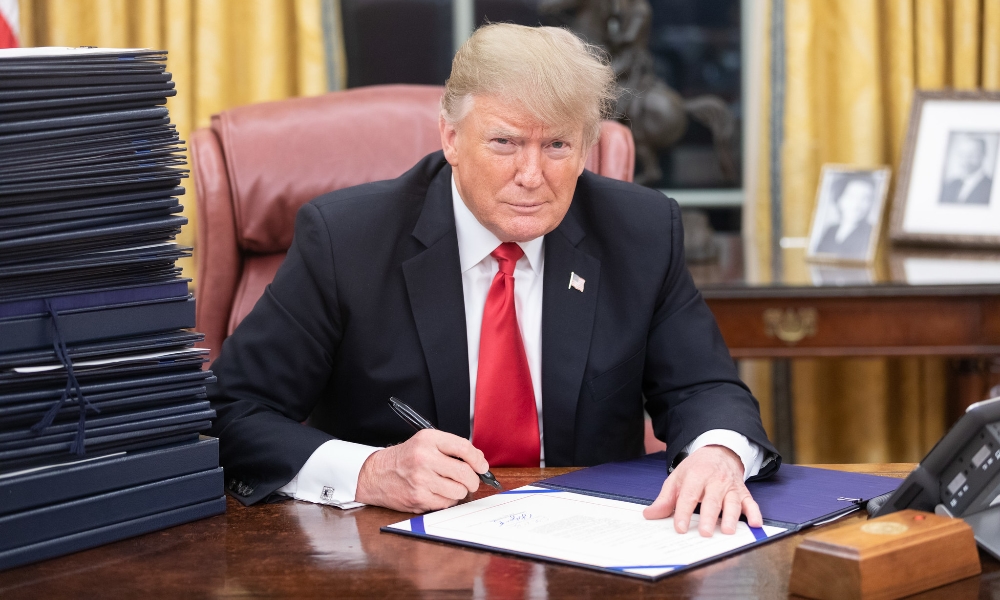
President Trump has already voiced his opposition to the Netflix deal, saying that the company has a “big market share” and the combined size of Netflix and Warner Bros. “could be a problem.” He said he’d be personally involved in the decision on whether or not to approve the deal, while saying he has “a lot of respect” for Netflix co-CEO Ted Sarandos, who recently visited the Oval Office. “He’s done one of the greatest jobs in the history of movies.”
The President has yet to comment publicly on the Paramount Skydance bid, much less endorse it, but it’s notable that this combined media conglomerate is also rather new; the Trump administration approved an $8 billion merger between Paramount and Skydance in July, following a tumultuous legal battle between Trump and 60 Minutes that was settled for $16 million shortly before the acquisition was greenlit — a settlement that critics called a veiled bribe to clear the pathway for the merger to go through.
While either deal should be subject to close regulatory scrutiny, the current political climate makes it hard to say which way the wind will blow. At the end of the day, it’s up to Warner Bros. board of directors which deal will be recommended, and while Paramount is offering more money, it’s also a bid for the entire company, not just the streaming and studio business, so it’s not a dollar-for-dollar comparison.
However, the Paramount bid offers a distinct advantage for shareholders: a clean exit. Unlike the Netflix deal, which leaves shareholders holding stock in a declining cable business, Paramount takes the entire portfolio off their hands. While the board has already rebuffed Paramount’s advances several times, the threat of a regulatory block on the Netflix deal could force their hand.
The Tale of the Tape: Netflix vs. Paramount
| Feature | The Netflix Deal | The Paramount Bid |
|---|---|---|
| Total Value | $82.7 Billion | $108.4 Billion |
| Structure | Acquisition of Streaming & Studios only. Cable networks spun off into a new company (“Discovery Global”). | 100% Acquisition. Includes Studios, Streaming, and all Cable Networks. |
| Cash to Shareholders | Partial (Stock + Spinoff shares) | $30/share Cash |
| Key Regulatory Hurdle | Streaming Monopoly. Combines Netflix & HBO Max (unprecedented market share). | Legacy Media Monopoly. Combines 2 of “Big 5” Studios + CBS/CNN News + massive Cable bundle. |
| Political Status | Hostile. Trump calls it a “problem”; DOJ wary of tech dominance. | Friendly. Backed by Ellison family & Kushner firm; likely favored by White House. |
| Board Stance | Recommended. Current agreed deal. | Reviewing. Historically rejected by WBD board. |