iTunes Isn’t Just Surviving — It’s Becoming a Superfan Powerhouse
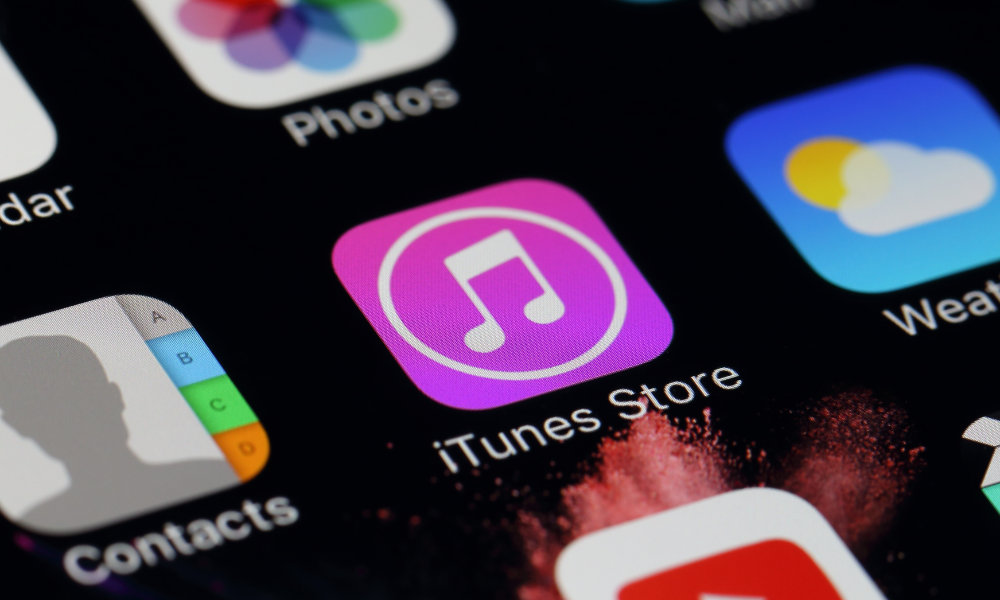 charnsitr / Shutterstock
Toggle Dark Mode
Although streaming services dominate the modern music landscape, Apple hasn’t abandoned traditional music sales. The iTunes Store is still alive and well for those who’d rather own their music, and it turns out that there’s more to this side of the digital music business than simply keeping the lights on.
A recent report from Bloomberg’s Ashley Carman revealed that the record labels care a lot more about iTunes than most folks realize. That’s because it turns out that even though Apple Music boasts nearly 100 million subscribers, that’s just a drop in the bucket compared to the people who are still buying music on iTunes.
That’s probably not too surprising when you actually think about the numbers. After all, Apple recently announced that there are over 2.5 billion active Apple devices in the wild, and while there’s undoubtedly some overlap among folks who own more than one device, that still adds up to a large number of Apple users who don’t subscribe to Apple Music.
The ‘iTunes 80%’ — A Hidden Powerhouse
In fact, over 80% of iTunes users are not subscribed to Apple Music, according to Carman.
It’s not clear what metric is used to define an “iTunes user,” but whether this includes occasional casual buyers or those who use the iTunes Store app as their primary music hub, the fact remains that they are a distinct cohort. We’re not talking about iPhone owners who simply don’t use Apple Music, but rather those who actively purchase content from the iTunes Store.
It’s also not just old-school iPod and iTunes fans like me who got entrenched in digital music in the days before streaming services were a thing. Apple reports that iTunes has been doing steady business over the past decade — an era during which it’s run parallel to Apple Music.
An Apple spokesperson tells me that half of iTunes customers began buying songs on the platform in the past 10 years, or since the launch of Apple Music, and almost 50% of the top 10,000 best-selling albums each quarter are new releases. This suggests that people aren’t just using iTunes to revisit old music from their youth.
Ashley Carman
It’s no wonder the record labels are sitting up and taking notice. In addition to there being a large, untapped audience, there’s more revenue to be made from digital sales than streams, and the folks who buy an artist’s music are more likely to be serious fans.
The Rise of ‘Digital Vinyl’ and the Superfan Economy
That’s not just a logical inference; the stats also back this up. Jaime Marconette, vice president of music insights and industry relations at Luminate, told Carman that “US consumers who say they listen to music through their own personal, digital libraries are 44% more likely than the average music listener and music streamer to agree or strongly agree that ‘artist’s opinions matter to me.’” They’re also more likely to listen to new releases as soon as they drop.
Put these stats together and this listener is one that is loyal to their artists and will activate for first week consumption at exceptionally high rates. This highlights the digital download buyer as a key target demo during the album release week.
Jaime Marconette
Both physical and digital album purchases have also become a way for superfans to demonstrate support for their favorite artists. Some of this is just a desire to own a hit album in every possible format, while in other cases it’s a conscious decision to spend the money on “Digital Vinyl,” knowing that a single $1.29 track or $9.99 album purchase often yields more for the artist than hundreds of individual streams.
These are particularly interesting stats in light of the rumors of iTunes’ demise over the years. Rumors of iTunes’ death were so pervasive in 2018 they practically had an obituary written, yet the platform has proven to have staying power backed by a small yet important minority. Here we are, nearly seven years later, and it’s still going strong enough to be a part of Apple’s business. A side business, to be sure, but still relevant to artists, labels, and fans alike.
A Niche Market with Outsized Influence
That’s not to say that iTunes will live on in perpetuity. As Carman points out, the overall size of the digital downloads market continues to shrink, but it’s been a much slower decline than anyone would have predicted ten years ago. Downloaded singles dropped a mere 0.3 percent between 2024 and 2025, although album downloads dropped by a more substantial 14 percent, suggesting Steve Jobs’ original $0.99-per-track iTunes Music Store strategy has continued to pay off.
However, it’s also still a small slice of the overall pie; the $139 million in revenue from digital downloads in the first half of 2025 was dwarfed by the $4.7 billion coming from streaming services.
That kind of revenue may be a rounding error for Apple, but it’s a high-margin signal for labels. After all, a streaming penny is passive; an iTunes dollar is an active endorsement.
That makes it easy to understand why record labels see value in this niche market. This is where many of the most loyal fans live. Carman says they’ve been building new strategies around digital downloads, leveraging them as “a tool that can yield an extra boost” during album release weeks in an increasingly limited market for the attention of fans.