How One Wife’s Intuition — and Find My — Saved Her Husband
 ImagineThatStudios / Adobe Stock
Toggle Dark Mode
We know by now Apple packs many life-saving features into its devices. Most recently, Apple’s Emergency SOS via satellite helped rescuers locate six survivors from an avalanche in Lake Tahoe. Last year, the same feature led to the successful recovery of a young family of three lost on a hike in Kentucky.
The Apple Watch’s health and emergency technology often grabs the most glamorous headlines for features like heart health alerts and Fall Detection. The Apple Watch Ultra even has a siren that saved a diver’s life after surfacing too quickly, mysteriously activating by itself in what might have been an undocumented feature but was most likely just a fortunate stroke of luck.

Today, there’s another scary story with a happy ending that will hopefully encourage readers to make sure they don’t hit the mountains this season without their iPhone or Apple Watch.
On February 26, Michael Harris of Bothell, Washington, spent four hours buried in an avalanche at Stevens Pass Ski Resort. The skier had his iPhone with him and was wearing an Apple Watch, but was trapped upright with only a small air pocket and unable to move. Following the incident, Harris told Fox13 Seattle it felt like he was “encased in cement.”
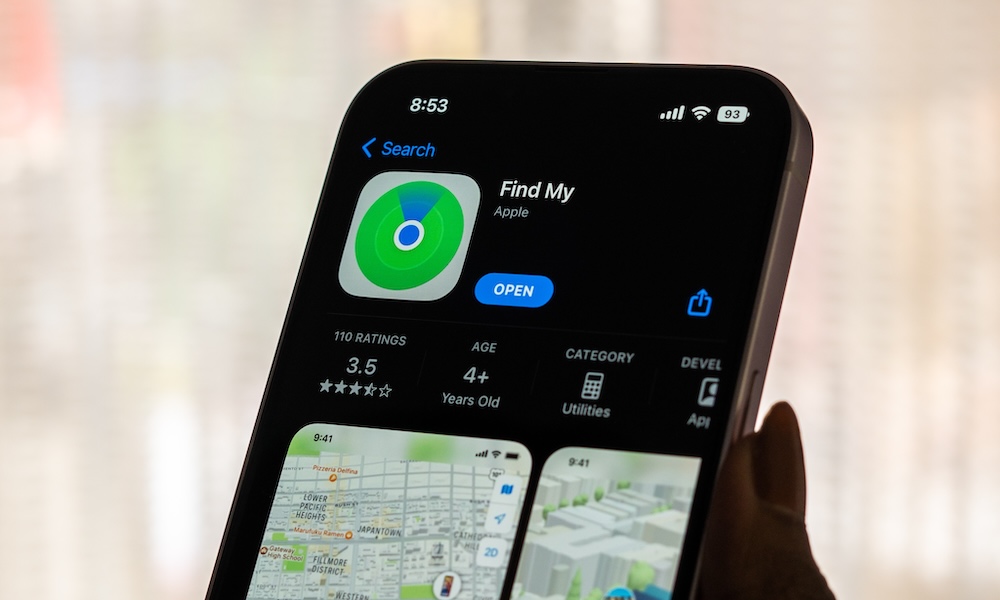
Harris couldn’t move his arms to reach his Apple Watch or iPhone, which he could feel vibrating in his pant pocket. It’s unknown whether or not Siri was enabled on either device to allow him to initiate a call or message with his voice. Fortunately, Harris’ wife, Penny, was trying to call him. When he didn’t respond she checked his location through her Find My app and noticed he wasn’t moving.
“You get a feeling something’s just not right,” Penny Harris said. “I followed my intuition, saw his location, checked it a couple times and saw it wasn’t moving.”
She contacted the ski patrol and drove up to wait for them at Stevens Pass. They used the app location to find him several feet down, with the help of his iPhone and watch. Ski patrol found Michael with a broken leg and hypothermia, but he’s alive.
It appears Harris was still within cellular range on the mountain allowing Find My to function precisely. If his Apple Watch and iPhone were out of range or without power, Find My might have still worked via a Bluetooth signal from another nearby Apple device, but if there was no cellular service and no nearby skiers, it’s possible he wouldn’t have survived the ordeal. Further, although the iPhone 14 and newer devices and the Apple Watch Ultra 3 also support Find My via satellite, this feature requires the user to actively report their location or initiate the Emergency SOS via satellite feature.
If you’re planning a trek off of the grid or hitting the slopes, make sure to wear your Apple Watch or bring your iPhone along. You may also want to consider going to Settings > Accessibility > Siri to set your iPhone to Always Listen for “Siri”, which ensures it will respond to voice commands even when the screen is covered, such as when it’s in your pocket. Also, make sure you’re familiar with Messages via satellite and Emergency SOS via satellite before your next adventure. Stay safe!