Fly Me to the Moon: The iPhone 17 Pro Max Reaches the Farthest Point in Human History
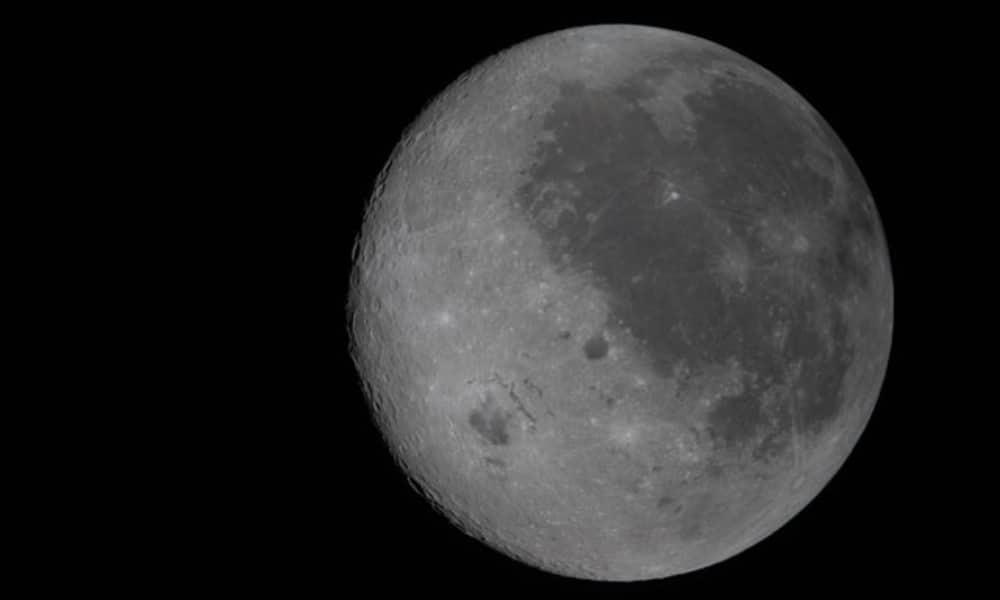 NASA Artemis / X
Toggle Dark Mode
Apple’s iPhone is going along for the ride on NASA’s 10-day Artemis II Moon orbit mission, although they’re making the trip as personal tools of the astronauts instead of as official equipment of the spacecraft.
Five days ago, NASA launched four astronauts into space on a 10-day mission that, while not landing on the Moon’s surface, will do a flyby of Earth’s natural satellite to test equipment for future missions to the Moon. As we reported in February, NASA Administrator Jared Isaacman approved personal smartphones to be carried by astronauts on missions, ending a decades-long restriction on such consumer electronics being carried by mission members. However, it wasn’t entirely clear if an iPhone was scheduled for launch.
At the time, NASA said only that it was “… giving our crews the tools to capture special moments for their families and share inspiring images and video with the world. Just as important, we challenged long-standing processes and qualified modern hardware for spaceflight on an expedited timeline.”

An Apple spokesperson said this will mark the first time the iPhone has been fully qualified for extended use in orbit and beyond.
When Artemis II launched last Wednesday, iPhones were snuggled into crew members’ orange Orion survival suits.
NASA does not allow the iPhones to transmit to the ground on their own, and instead route their signals to send and receive data through the spacecraft’s communication systems. “Well DUH!” I can hear you say. You’d be right in pointing out that 5G and Wi-Fi are nowhere near powerful enough to reach the Earth from the Moon or even in Earth orbit, but AppleInsider notes that it’s a question they’ve been asked on social media.
While NASA is testing high-speed laser links for this mission, the lunar 4G/5G “network-in-a-box” it’s working on with Nokia isn’t slated to come into play until next year’s Artemis III landing. Instead, astronauts will use their iPhones to record content and connect to the spacecraft’s on-board Wi-Fi network, using its stable connection to transmit content to ground stations back on Earth.
The astronauts won’t be using their iPhones for any mission-critical operations, but merely to capture photos and videos along the way. The Orion spacecraft’s essential functions will still rely on the traditional methods NASA has used to keep its astronauts safe on missions, including its flight-qualified avionics and communication systems.
Those systems are all designed to withstand the extreme conditions of outer space, which can expose equipment to extreme temperatures, high levels of radiation and more. The iPhone 17 Pro may be durable, but spaceflight conditions are a whole new level of “extreme” — one that no consumer device is designed to stand up to. That’s why they’ll stay zipped up inside a pocket in the crew’s orange Orion survival suits.
The Artemis II mission is the first crewed flight to venture beyond low Earth orbit in more than fifty years, and they’re expected to be breaking a distance record today by going farther than Apollo 13 ever did. The mission takes the four astronauts on a figure-eight flyby around the Moon, reaching it at its apogee — 252,760 miles away from the Earth. That’s a pretty big deal for me, considering I was nine years old when Apollo 11 landed a man on the Moon on July 20, 1969 and we were supposed to be living on Mars by now! (Sorry, I had to vent)
There has been no official information posted as to which specific iPhone (or Android) handsets are onboard, although pre-launch handling footage shows a device that looks like an iPhone Pro model, and videos shared from the mission have been making the rounds showing what’s clearly an iPhone 17 Pro Max in Natural Titanium floating around the cabin — a surreal sight for a device usually found on a nightstand.
Prior to this, NASA astronauts were not allowed to carry their own personal smartphones on missions, although they were allowed to bring some NASA-approved DSLR cameras and other equipment.