Apple Just Updated the Apple Watch Series 1 in 2026 — Here’s Why
Toggle Dark Mode
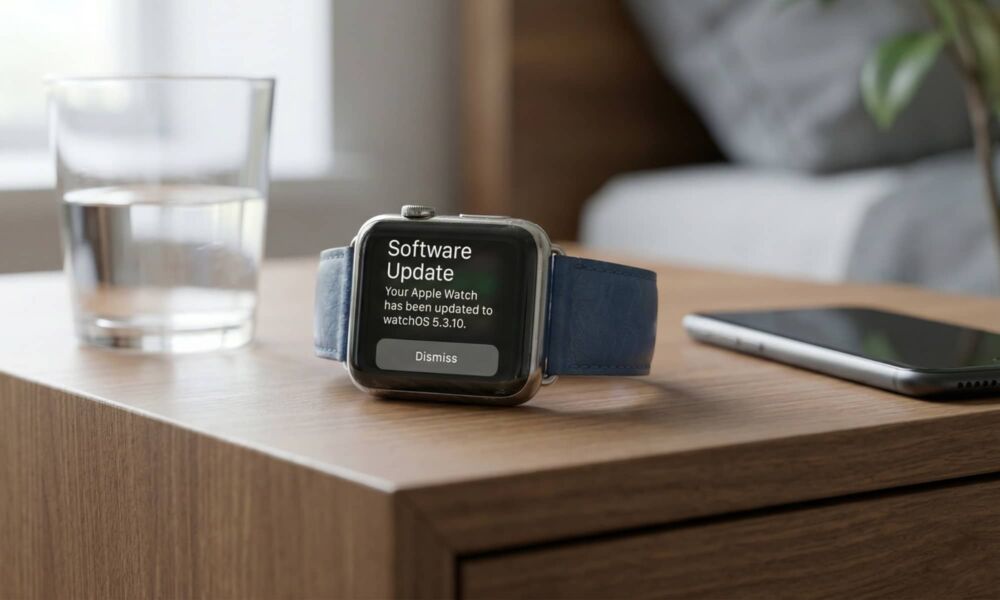
Following a surprise January iOS update for the iPhone 5s, Apple is now inviting legacy Apple Watch models into the fold. Alongside this week’s release of watchOS 26.4, Apple also snuck out watchOS 8.8.2 and watchOS 5.3.10.
To give you an idea of just how unusual these updates are, they come 3–5 years after the previous updates for these major watchOS releases. For context, watchOS 8.8.1 arrived in June 2023, and watchOS 5.3.9 was ostensibly the final update for the older Apple Watch models, released way back in November 2020.

However, unlike the collection of security patches inspired by the “DarkSword” exploit and other similar security threats, these watchOS updates arrive with an entirely different purpose in mind: ensuring that users of older models of Apple’s wearables can keep using iMessage and FaceTime.
This is the same reason Apple released iOS 12.5.8 in January, providing the iPhone 5s, iPhone 6, and iPhone 6 Plus, none of which can be updated to iOS 13, with an extended certificate for iMessage, FaceTime, and device activation. That security certificate was set to expire in January 2027, but getting these updates out now ensures that the majority of older devices will have time to receive it before getting cut off.
The same holds true for the Apple Watch Series 1 through Apple Watch Series 3, all of which were cut off from future updates by the time watchOS 9 rolled around in 2022. However, there’s an additional nuance to the specific versions Apple has released, as they also encompass even newer models.
Specifically, watchOS 5.3.10 is listed for the “Apple Watch Series 1, Series 2, Series 3, and Series 4,” while watchOS 8.8.2 covers the “Apple Watch Series 3, Series 4, Series 5, Series 6, Series 7, and SE.” That might seem unusual, since the Series 4 and later models can be updated well beyond even watchOS 8, much less watchOS 5, which wasn’t even the end of the road for the original Apple Watch (aka the “Series 0”) — that was watchOS 4.
The reason for this discrepancy almost certainly comes down to the iPhone these Apple Watch models can be paired with, and where their iOS support ends. Since each watchOS update requires the corresponding iOS update to be installed on the wearer’s iPhone, Apple has to make sure these older versions are still covered.
As I mentioned earlier, the end of the road for the iPhone 5s, iPhone 6, and iPhone 6 Plus was iOS 12. That was released in 2018, alongside (you probably guessed it), watchOS 5. Even if someone has an Apple Watch Series 4, which could otherwise be updated all the way to watchOS 10, they’ll be stuck on watchOS 5 as long as it’s paired with one of those iPhone models.
Similarly, even though the Apple Watch Series 6 shipped with watchOS 7 and can run watchOS 26 today, Apple considers watchOS 8 to be a critical juncture for that model; that’s because every Apple Watch Series 6 owner should be able to reach at least that version. It can’t be paired with an iPhone running anything older than iOS 14 (which was released the same year), but any of those iPhones can be upgraded to at least iOS 15, which is compatible with watchOS 8.
This is why we’re not seeing similar patches released for watchOS 6 and watchOS 7, as these are matched with iOS 13 and iOS 14 — two software updates that it’s no longer safe to continue running, so everyone really should be updating to at least iOS 15, which means they’ll also be able to update their paired Apple Watch to watchOS 8.8.1.