Apple Confirms Ads Are Coming to Maps This Summer
Toggle Dark Mode
Following several rumors over the past few months that Apple Maps could be Apple’s next advertising platform, the company made it official today: ads are indeed coming to Apple Maps this summer.
Tucked inside a newsroom announcement about Apple Business, a new initiative targeted at business invested in the Apple ecosystem who may not be fans of Google Workspace or Microsoft 365, is a note on “a new option coming this summer that will enable businesses in the U.S. and Canada to place local ads in Maps during key search and discovery moments.”
It’s not clear exactly how these ads will work, but based on previous reports by Bloomberg’s Mark Gurman, mixed with reading between the lines on Apple’s new Ads on Maps website, it seems they’ll simply allow businesses to pay to be at the top of relevant search results. That’s similar to how advertising works in Google Maps, so it’s not entirely surprising, but it will give folks one less reason to opt for Apple Maps over the competition.

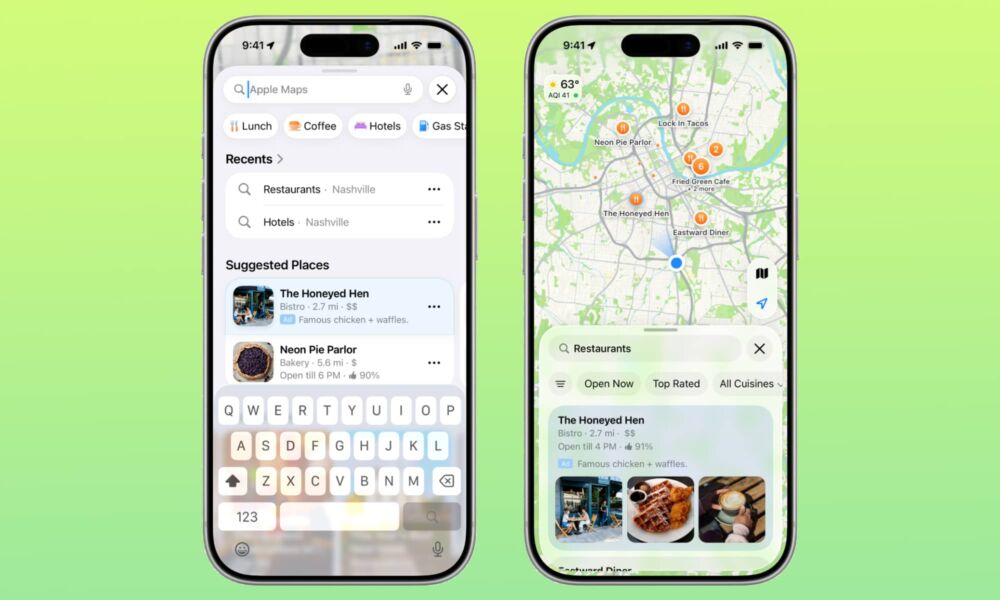
Beginning this summer in the U.S. and Canada, businesses will have a new way to be discovered by using Apple Business to create ads on Maps. Ads on Maps will appear when users search in Maps, and can appear at the top of a user’s search results based on relevance, as well as at the top of a new Suggested Places experience in Maps, which will display recommendations based on what’s trending nearby, the user’s recent searches, and more. Ads will be clearly marked to ensure transparency for Maps users.
Apple
It’s also likely similar to how advertising works on the App Store, where developers can put their money down on specific keywords, ensuring that their apps get top placement when customers search for those terms. Sadly, those can sometimes produce odd results, as a search for “Mail” might bring up a result for Google Chrome as the first hit.
Thankfully, the results are clearly tagged “Ad” and highlighted in a slightly different color, so while they can sometimes get in the way, they’re also easy enough to scroll past. Hopefully the implementation in Apple Maps will be similar. However, if it’s handled right, it could also produce more useful results.
For one thing, Apple Maps will only run local ads. That makes sense, as there’s no point in letting someone in New York City pay for placement in the search results in Toronto. It’s unclear how Apple will define the geographic radius within which businesses will be able to bid, or if it will simply be focused on where a user is searching.
For example, a local restaurant could pay to be featured against searches for the word “pizza,” with their name coming up at the top of the list, but whether that only appears if the restaurant is within the user’s current view or the user’s current city remains to be seen.
The “ad card” that appears will effectively be the same business listing that users would normally tap through to view — merely placed at the top of the search results, even if it’s a bit further away from the user’s location.
If it’s purely location-focused, Apple’s new ad experience could actually turn out to be helpful to end users, especially since Apple is promising to wrap it up in its usual array of privacy protections. Apple notes that “Maps with ads is just as private as Maps without ads,” meaning that neither Apple nor its advertising customers will get to know anything about you that you don’t explicitly share.
Maps with ads is just as private as Maps without ads. Where you go and the ads you see and interact with are not associated with your Apple Account. Personal data stays on your device, is not collected or stored by Apple Ads, and is not shared with third parties. Age and gender are not used to target ads on Maps.
Apple
Apple goes on to say that it won’t use “information like your precise location or history of interactions with Maps.” Instead, it relies on approximate locations or the area you’re viewing on the screen. While Apple collects metrics on the ads you view or tap on, that’s tied to a random identifier that changes several times each hour, preventing it from even being linked to a persistent identity, much less your personal Apple Account.