
Report: iPhone 18 Prices Won’t Budge Despite ‘RAMageddon’

Toggle Dark Mode
Even amidst skyrocketing chip costs, Apple reportedly plans to hold the line on iPhone pricing again this year, according to supply chain analyst Ming-Chi Kuo.
In one of his usual long-form posts on X, Kuo notes that even though many of the predicted price increases on chips are coming true, Apple’s negotiating power is still likely to get it a much better deal — even in the midst of an AI gold rush that has Apple competing against surging demand from Google and Nvidia for high-performance components to power their high-end AI servers.

Kuo acknowledges that these “AI brands” are dominating the market right now, shutting out nearly everyone else, but Apple isn’t just another player in the market — it has massive leverage and deep enough pockets to weather the storm and play the long game.
For most non-AI brands, even if you’re willing to pay up, there’s no guarantee you’ll get the supply. The fact that Apple can lock in a deal like this shows just how much leverage they have.
Ming-Chi Kuo
As a four-trillion dollar company, Apple is a force of nature in the supply chain, and it plans to use that power to spin the “market chaos” to its own advantage, Kuo says. Apple can’t avoid rising memory costs, but it can also afford to eat the margins and make the money back elsewhere — particularly from its burgeoning services side.
It’s far from the first time we’ve seen concerns about rising chip costs driving iPhone prices up. In 2021, a massive price hike from TSMC led many folks to believe the iPhone 13 was about to get more expensive, but that never happened. In fact, that was the year Apple doubled the base storage, on the standard iPhone 13, increasing it to 128 GB while maintaining the same $799 price point. The capacity of the iPhone 13 Pro remained unchanged from its predecessor, but so did the price at $999.
It’s only in recent years that Apple’s almost unflappable pricing structure has started to show some strain. The 2017 iPhone X, which was effectively the spiritual predecessor to today’s pro models, set a new $999 price point that the company maintained until 2024’s iPhone 16 Pro, even as it increased the number of cameras, doubled the storage, and moved to newer and more expensive materials and chips.
It was only last year that Apple finally caved and raised the iPhone 17 Pro’s starting price into the four-digit range, but it also did it in a somewhat roundabout way: it simply removed a 128 GB model from the lineup. The 256 GB iPhone 17 Pro was no more expensive than any of its 256 GB predecessors over the prior five years, so it wasn’t technically a price increase, but it also raised the cost of admission to the iPhone 17 Pro family.
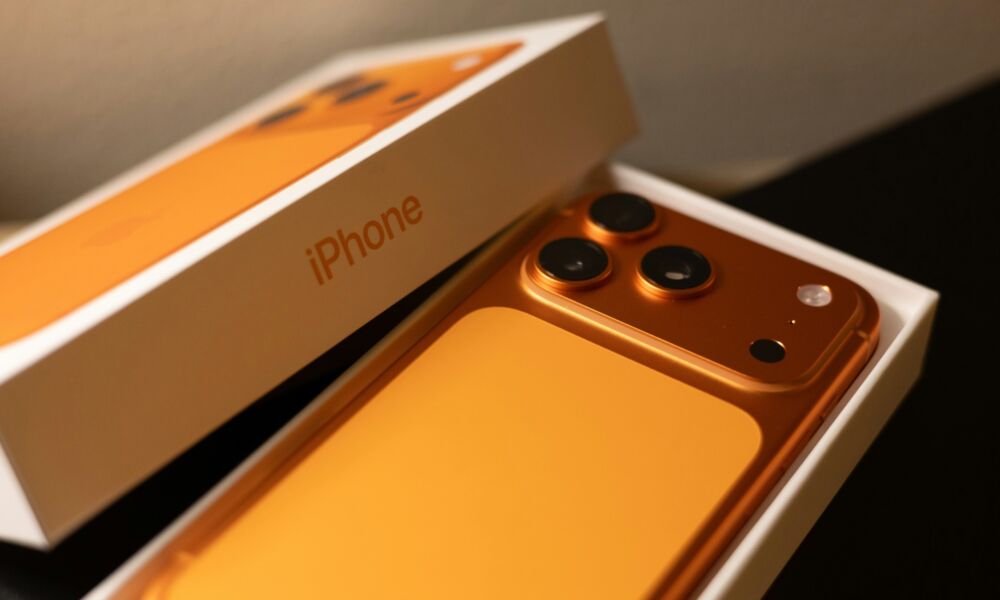
However, 2025 was also the first year that 256 GB became the storage baseline for the entire lineup. Even the iPhone 17 saw its storage doubled over the 2024 iPhone 16 while maintaining its $799 price tag, repeating what it did only once before — with the iPhone 13 in 2021.
Meanwhile, Apple slipped a new iPhone Air into the $999 price point, which may have been part of its incentive to leave the 256 GB iPhone 17 Pro at a higher price.
Needless to say, it’s obvious that Apple works very hard to keep its iPhone pricing at fixed and predictable levels. The standard iPhone models have only seen five price increases in 18 years, with one minor bump in the road the year the iPhone XR officially shifted the iPhone family into two full tiers:
| Years | Models | Starting Price |
|---|---|---|
| 2007 | Original iPhone | $499 |
| 2008–2010 | iPhone 3G – iPhone 4 | $599 |
| 2011–2016 | iPhone 4S – iPhone 7 | $649 |
| 2017 / 2019 | iPhone 8 / iPhone 11 | $699 |
| 2018 | iPhone XR | $749 |
| 2020–2025 | iPhone 12 – iPhone 17 | $799 |
The jump to $799 in 2020 was also likely prompted by the addition of the 5.4-inch iPhone 12 mini, which took up the $699 price point. While that smaller model only lasted two generations, Apple held the higher price point for the mainstream 6.1-inch model even after it swapped the mini for the larger — and also ill-fated — iPhone Plus models.
The iPhone X/Pro and Max models have been even more consistent, with $999 and $1,099 starting prices that were maintained for a six-year run from 2017 to 2023, and phased out only when Apple dropped lower capacities from the lineup: the iPhone 15 Pro Max in 2023 and the iPhone 17 Pro in 2025.
Kuo notes that “the cost pressure from memory could be a hot topic for investors and analysts at Apple’s earnings call this week,” which will begin soon, so it will be interesting to see what types of questions Tim Cook ends up fielding from investors — and how they might shake up the industry as a whole.






