Apple Gains Breathing Room as US and China Ease Tariffs
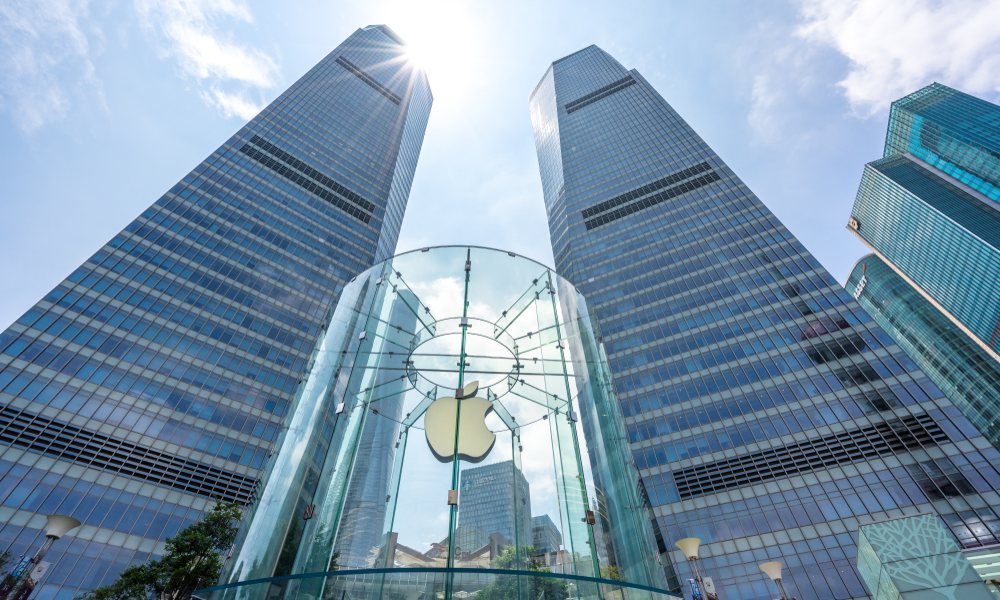 THINK A / Shutterstock
Toggle Dark Mode
The US and China have agreed to a temporary “tariff truce” that will ease import duties on consumer goods, including Apple products. The deal, announced after Presidents Trump and Xi Jinping met in South Korea, could offer some short-term relief after years of escalating trade friction.
According to The New York Times, Trump and Xi met at an airport in Busan — their first in-person encounter of Trump’s second term — where the mercurial U.S. president found friendlier footing in face-to-face diplomacy. While Trump was threatening an additional 100 percent tariff on Chinese goods earlier this month, the two world leaders emerged from the meeting with a year-long truce that removes much of the tariff pressure.
Some of this was merely a continuation of a deal the two presidents had reached in May, which was subsequently extended in August, but set to expire on November 10. As of today, that date has been moved into late 2026.
Trump also told reporters that he agreed to halve one of his earliest China tariffs — a 20 percent punitive tariff imposed as leverage in the fentanyl-trafficking dispute. The US president said he now believes Beijing is serious about stemming the tide of fentanyl and the chemicals used in making it.
In return, China has agreed to suspend the limitations it was putting on rare-earth mineral exports, which are crucial to advanced US manufacturing industries — including Apple.
What This Means for Apple
Today’s new deal only shaves 10 percent off the overall tariff on Chinese goods, most of which are now tariffed at an average of 45 percent. Still, ten percent can make a big difference at the scale at which Apple operates.
One thing that’s easily forgotten among the current tariff wars is that the US government has always had product-specific tariffs on most countries — including China. Many imports from its closest trading partners, such as Canada and Mexico, are exempt under specific treaties; however, these are the exceptions, not the rule.
All the levies the Trump administration has placed on China over the last several months are above and beyond the normal tariffs. Therefore, when a 20 percent punitive tariff was imposed in March, it was in addition to the already existing tariffs in each product-specific category.
Major companies like Apple budget for these tariffs as the cost of running a global supply chain. However, it’s difficult to maintain equilibrium in the shifting landscape, which is the real problem that Apple faces — not the tariffs, but how to balance its books when they’re so unpredictable.
A Rollercoaster Year for Tariffs
For example, the White House initially imposed a 10 percent tariff on China in February, which was increased to 20 percent in March. Additional tariffs then escalated throughout the spring, rising from 54 to 145 percent within weeks as both sides retaliated. With the base tariffs factored in, some products were now facing tariffs of up to 200 percent.
Fortunately for Apple, the White House decided this was too much for some sectors and quickly drew up a list of exclusions that let the iPhone and other related consumer electronics off the hook. This was ostensibly done as part of a review on moving semiconductors and devices that contain them into a different tariff “bucket,” but for now, that remains pending, leaving the iPhone tariffed at 20 percent. In September, the Trump administration drew up a broader list of exclusions that added additional product categories, including AirPods and HomePods.
Today’s meeting ultimately means that Apple will now pay only 10 percent more on imports from China for products sold in the US, rather than the previous 20 percent. That doesn’t mean we’ll see iPhone prices decrease, particularly since there’s no indication that the increased tariffs caused them to rise. By all estimations, Apple likely ate the increased costs — part of its years-long strategy of holding the line on base prices — with possibly only a few minor adjustments, such as dropping the base 128 GB iPhone 17 Pro from the lineup to raise the price of admission.
The company isn’t about to sit still and eat any more tariffs than it has to. China has long been President Trump’s number one trading target — even during his first term — so Apple has spent years diversifying its supply chain. Apple began shifting production to India earlier this year, to the point that many iPhone models destined for the US are already coming from countries where the tariffs are at a lower rate — and a lower risk of unpredictably increasing.
Even with Apple shifting much of its supply chain out of China, there are plenty of Chinese-made Apple products that hit US shores. However, the significance of today’s deal isn’t the 10 percent reduction so much as Trump and Xi’s agreement to pause further tariff action. For Apple, the biggest win may be predictability. A calmer tariff climate allows the company to plan production and pricing more confidently, even as it accelerates its shift toward India and Vietnam.