The Secret CIA Briefing That Put Tim Cook on High Alert
Toggle Dark Mode
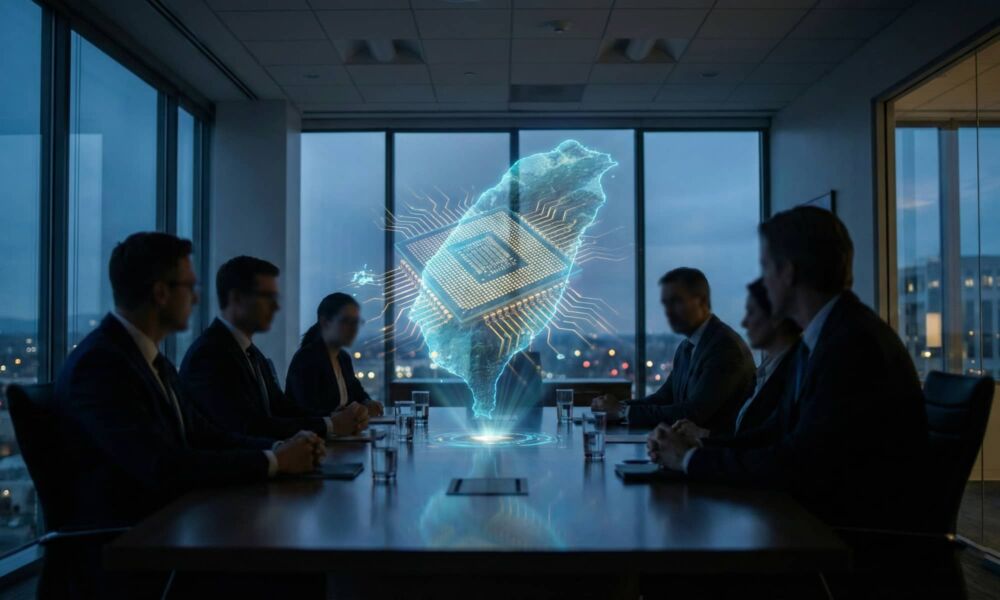
During the summer of 2023, the CIA held a classified briefing for Apple CEO Tim Cook and a select number of other top tech executives, according to an in-depth investigation by The New York Times, in which the clandestine agency warned them that China could invade Taiwan by 2027.
Cook reportedly met with William Burns and Avril Haines, who were serving as the head of the CIA and director of national intelligence in the Biden administration. The group, which met in a secure briefing room in Silicon Valley, was rounded out by Nvidia CEO Jensen Huang and AMD CEO Lisa Su while Qualcomm head Cristiano Amon joined by video.

During the meeting, the two senior intelligence leaders shared the latest intelligence on China’s military plans for Taiwan — a sobering reality that left Cook sleeping “with one eye open,” as he later told officials.
While this is the first we’ve heard about the clandestine Silicon Valley briefing, the information reportedly shared with Cook and the other executives lines up with what intelligence and defense officials were saying publicly. Two years earlier, a senior US military official had testified in front of Congress that the armed services were convinced that Chinese President Xi Jinping was pushing his army to be ready to invade Taiwan by 2027.
Jake Sullivan, Mr. Biden’s national security adviser, ranked the U.S. reliance on Taiwan for semiconductors as one of America’s greatest vulnerabilities. He wanted the industry to recognize the risk and support construction of U.S. manufacturing plants. Mr. Biden also wanted to provide $50 billion in government subsidies to build semiconductor plants domestically [resulting in the CHIPS and Science Act of 2022].
“We were saying: ‘This is crazy. We have to do something about it,'” Mr. Sullivan said in an interview.
Tripp Mickle, The New York Times
A Chinese invasion of Taiwan could be devastating for Apple, Nvidia, AMD, and other tech firms due to their heavy reliance on Taiwan Semiconductor Manufacturing Company (TSMC) for their chipmaking needs. The Taiwanese company produces around 90% of the advanced chips used by those tech firms.
TSMC supplies all of Apple’s custom silicon needs, fabricating the Apple Silicon powering its iPhone, iPad, and Mac lineups. Apple’s iPhone and iPad had already long used TSMC to manufacture its custom A-series chips used in the devices even before Apple announced its plan to move its Mac computer lineup from Intel processors to its own in-house developed M-series chips in 2020. Today, there isn’t an Apple device that goes out the door without at least one chip that was fabricated by TSMC, and that dependency is only increasing with Apple’s move to C-series and N-series chips to power 5G, Wi-Fi, and Bluetooth.
In 2022, the Semiconductor Industry Association commissioned a confidential report outlining how an interruption of access to the Taiwanese chip supply could cause the worst global economic crisis since the Great Depression. The report indicated that US GDP alone could plunge by as much as 11% if China moved forward with its invasion plans. Later on, a January 2024 Bloomberg report estimated that the global economy could take a $10 trillion hit if such a conflict ignited.
Despite these chilling possibilities, the Times investigation revealed that Apple, Nvidia, and the other tech firms have been reluctant to source their chips from factories based in the US, due to the higher cost of such chips. After all, rumors of war are one thing, but profit margins are the final decider for any manufacturing decision.
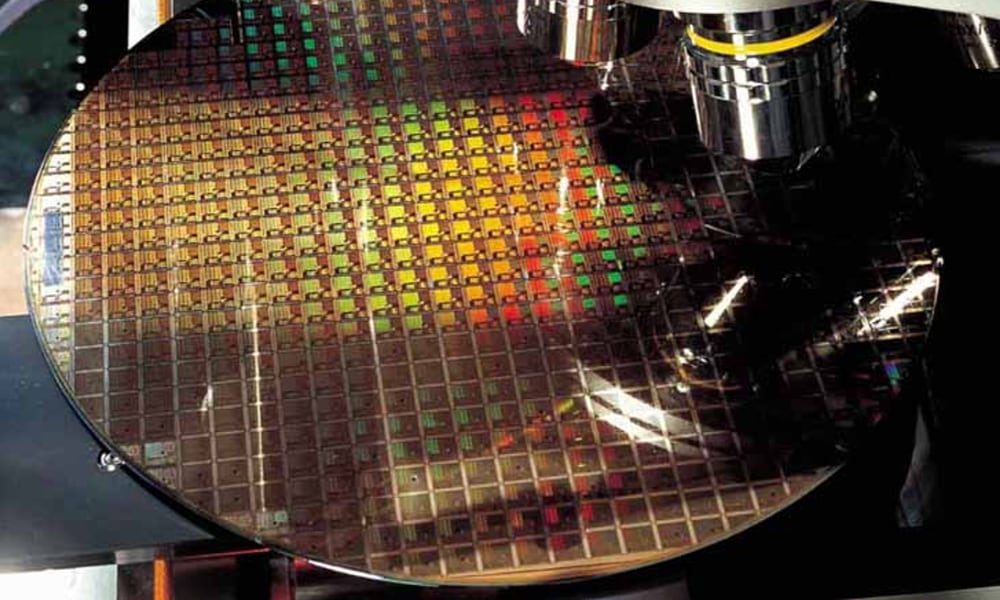
As pointed out by Mactrast, US-produced chips can cost as much as 25% more than similar chips made in Taiwan. This is due to increased labor and material costs, as well as the costs of permits and other government requirements.
While Apple chip supplier TSMC has US chipmaking facilities located in Arizona, the technology there typically runs a generation behind its Taiwanese fabrication facilities, due to the Taiwanese government’s unofficial requirements that TSMC uses its most advanced manufacturing technology solely on the island of Taiwan.
While Apple may be reluctant to make the move to US-produced chips, that doesn’t mean it hasn’t made moves to ease the impact of China’s impending invasion of Taiwan. In 2025, Cook announced the iPhone maker would spend $100 billion to increase US manufacturing capacity, supporting TSMC and other chipmakers’ plans for domestic production expansion. Apple is also said to be looking closely at Intel’s manufacturing capabilities to pick up the slack.