The iPhone 17e’s Secret Weapon: Why the C1X Modem Is a Massive Upgrade

Toggle Dark Mode
Apple walked a long road to develop its own in-house modem chips, and it’s arguably still taking baby steps, but the investment in time appears to be paying off, with a new report showing that the C1X chip used in the iPhone Air and recently-released iPhone 17e is actually holding its own against Qualcomm’s X80 — the chip found in the iPhone 17 Pro and iPhone 17 Pro Max.
It’s no secret that Apple prefers to own all the important pieces of its products. However, modem chips are complicated, and Apple was forced to long rely on Qualcomm and Intel to provide the 4G and 5G chips that powered modern iPhones.
While Apple was undoubtedly exploring ways to replace those with its own modem chips, it appeared to be biding its time. It wasn’t until things heated up with Qualcomm and Intel dropped out of the 5G chip race that Apple kicked its efforts into high gear. After all, the ability to choose from two suppliers gave Apple some control; being stuck with one company that had a monopoly on high-end 5G modems was an untenable situation.
Apple picked up Intel’s 5G modem business for $1 billion — essentially pocket change for the $3 trillion company, and the journey to the C-series chips began. However, knowing that would take some time, it also ended its fight with Qualcomm to the tune of a $4.5 billion settlement to ensure it would still have a steady supply of X-series modem chips to tide it over.
When the C1 chip finally arrived in last year’s iPhone 16e, it proved to be a strong performer, although the iPhone 16’s Qualcomm X71 still beat it out in some metrics. To be fair, Apple never boasted about performance for the C1; the chip was about power efficiency and tighter integration with its A-series silicon. It was also a fact that Qualcomm’s chips did things the C1 couldn’t, like four-link carrier aggregation and mmWave, both of which allow the iPhone to achieve faster and more reliable download speeds — under the right conditions, that is.
That’s likely the reason why the C1 chip only appeared in Apple’s budget model. It certainly wasn’t ready for the iPhone Pro models, where buyers expect top-notch performance. Apple is expected to address some of these limitations in a new C2 chip that could make its debut in this year’s iPhone 18 Pro, but in the meantime, it produced the C1X for the iPhone Air to tide us over, and that chip is turning out to be more than a minor spec bump.
C1X Real-World Performance
Cleverly dubbing it “the Air Apparent,” Ookla has published the results of its aggregated Speedtest Intelligence data showing exactly how well the C1X has been performing against its competitors — and it’s pretty impressive.
Apple’s in-house C1X modem represents a generational leap over the previous C1 model, achieving real-world parity in download and latency performance with the Qualcomm X80 across numerous networks.
Ookla
To be clear, Ookla’s data is based on the C1X inside the iPhone Air, not the iPhone 17e, so there could be some subtle differences based on other factors like antenna placement and Apple’s use of an A19 chip in its budget model (the iPhone Air uses the A19 Pro). The A-series chip mattered little in the Qualcomm days, but Apple’s modem chips tie more tightly into the core SoC.
Nevertheless, in almost every case the iPhone Air’s C1X represented a significant leap in performance over the C1 in the iPhone 16e, and actually ran neck-in-neck with the iPhone 17 Pro Max, which uses the Qualcomm X80 chip. However, that comes with one important caveat: the iPhone 17 Pro Max still has more raw peak power in theory, but the real-world results show that most folks aren’t taking advantage of that.
The iPhone Air with C1X modem does not trump the iPhone 17 Pro Max with Qualcomm X80 in terms of raw, theoretical peak power, but across many performance aspects it has achieved parity for general consumer use.
Mark Giles, Ookla
It’s like buying a Ferrari to run errands around town. Sure, it can go faster, but you’ll never really need it to.
The C1X also stands out in several other areas that are of equal importance, and can actually give it an edge over Qualcomm’s chips. The first is latency. “Apple has built the most responsive modem for daily use on the market,” Ookla notes, likely due to its integration with the A19 Pro to handle some of the heavy lifting.
The C1X modem consistently provides a responsiveness upgrade over the C1 modem, particularly noticeable in China (+6 ms advantage), Indonesia (+6 ms), and the United States (+5 ms). It also provides a latency boost over the iPhone 17 Pro Max across the vast majority of markets, with the exception of Taiwan and Japan.
Mark Giles, Ookla
The iPhone 17e’s Hidden Bonus
Latency is much more important to the user experience than raw download speeds, especially on a smartphone. After all, even 4K UHD streaming will run more than comfortably over a 50Mbps connection, and how often do you really need to download massive files to an iPhone? Meanwhile, mobile games tend to sip data in terms of quantity, but generate a ton of back-and-forth traffic.
That’s where latency comes in; this is a measure of how fast smaller data packets can move back and forth (what gamers often call “ping times”), and it only improves gaming, but makes the entire user experience feel faster and more responsive for all the little things we do with our iPhones every day.
Like its predecessor, the C1X also does a better job of maintaining connectivity in weak coverage. When a signal is at its worst, such as inside a building or out at the edge of a cell tower’s range, the C1X is more likely to hold on to a signal. You won’t get rocking fast speeds, and latency will suffer, but at least you won’t be staring at “No Service” errors.
Lastly, Ookla also found that the C1X is much better at handling network congestion, especially in the mid-band ranges. That’s on par with the X80 under real-world conditions, but also a significant improvement over the C1.
That’s not to say that Qualcomm’s X80 doesn’t have an advantage in some areas; Ookla found it pulled ahead in places like Japan, Poland, and Taiwan in most of these areas, but it’s safe to say that the two are running pretty close, with the differences being more about negligible advantages and tradeoffs versus any clear winner in every area except upload speeds, where the X80 still held a solid 32% lead over the C1X.
It’s worth keeping in mind that Apple’s release cycles usually have it using older Qualcomm modems. The X80 was announced in early 2024, and superseded by the X85 in early 2025, but these typically aren’t available to smartphone makers until the fall, long after the iPhone designs have been fully locked down. Qualcomm has just announced the X105; it’s unclear why it skipped the X95, but it might have to do with it being the first chip that lays the foundation for next-gen 6G technology. That gives Apple some catching up to do, but these results prove that it’s up for the challenge.
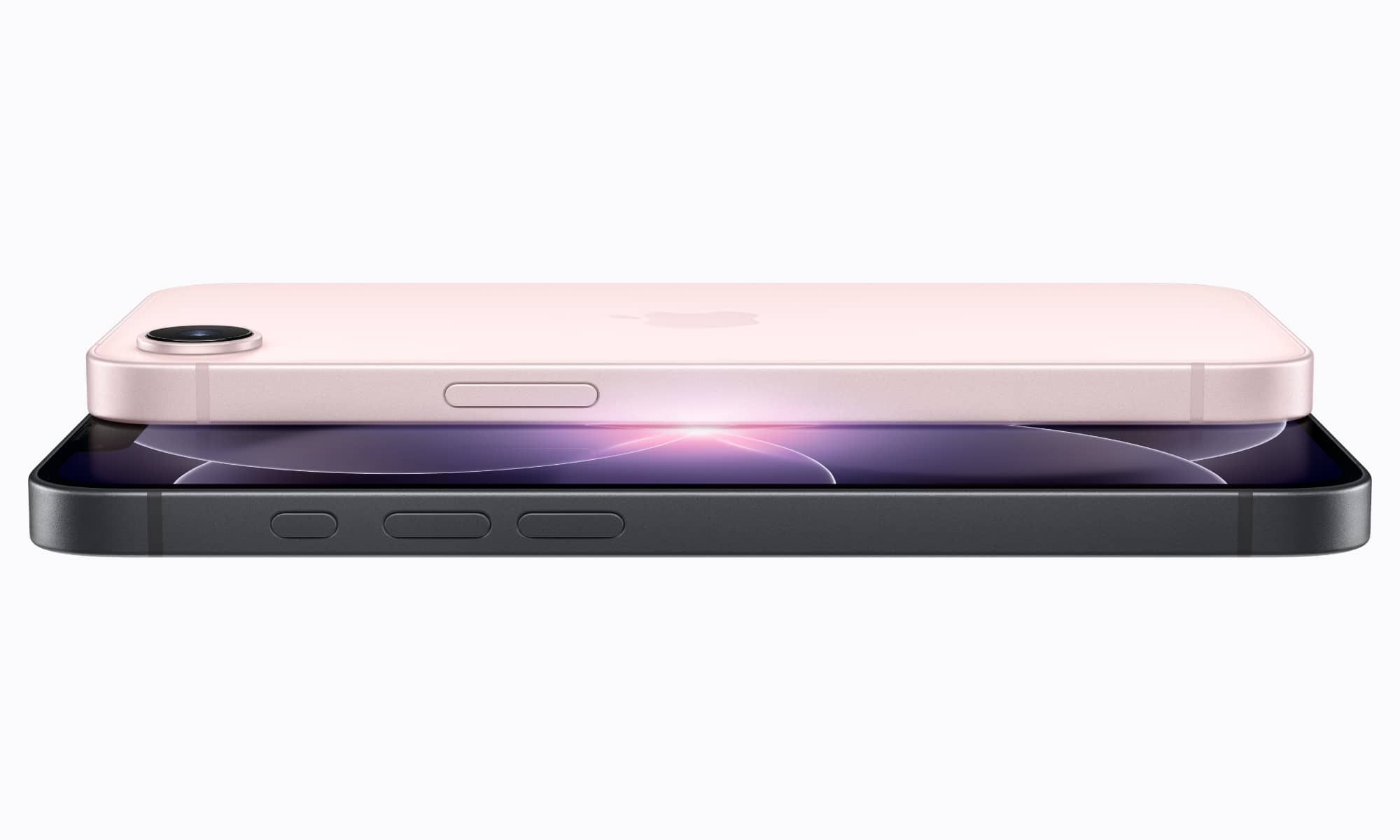
One thing that’s certain is that the C1X is a definite improvement over the C1, at least in the iPhone Air. Since the same chip is used in the iPhone 17e, that alone might persuade you to make the jump from last year’s e-series model, especially if you can get a good trade-in deal. Again, the performance of the iPhone 17e version may differ from the iPhone Air due to other design factors, but it’s still going to be a considerable leap above the original C1.
These C1X results bode well for whatever Apple has in store in the C2. After all, if what’s effectively an “interim” chip is already proving itself nearly ready for prime time, a C2 that ups the raw specs and power should be able to easily compete on the same footing as Qualcomm, even as the rival chipmaker continues to push its own technologies further ahead.