What’s Actually New in the ‘AirTag 2’?
Toggle Dark Mode
This week, Apple released the so-called “AirTag 2” without much fanfare, and it’s pretty much everything we expected it to be — which isn’t really that much.
Of course, there arguably isn’t much for Apple to change in a $29 tracking tag, and the only significant flaws in the original AirTags weren’t exactly fixable; it’s hard to build a tag to track your own stuff that can’t also be misused to track people and things that don’t belong to you.
Nevertheless, the second-generation AirTags have a few small improvements that will make them slightly safer while offering a slightly better user experience overall.

AirTag vs. ‘AirTag 2’
For the sake of our own sanity, we’re going to join pretty much everyone else in calling this new model the “AirTag 2,” even though Apple hasn’t formally added a number. Like many of Apple’s products, you’ll see it listed as “AirTag (second-generation)” when it needs to make a distinction, but the marketing materials and packaging all still say “AirTag.”
That’s because Apple isn’t selling two versions of the tracker. As soon as the new AirTag launched on Monday, the old ones vanished from the shelves — at least in Apple Stores. That may not happen as quickly everywhere else, but mainstream retailers are selling the original AirTags at some hefty discounts.
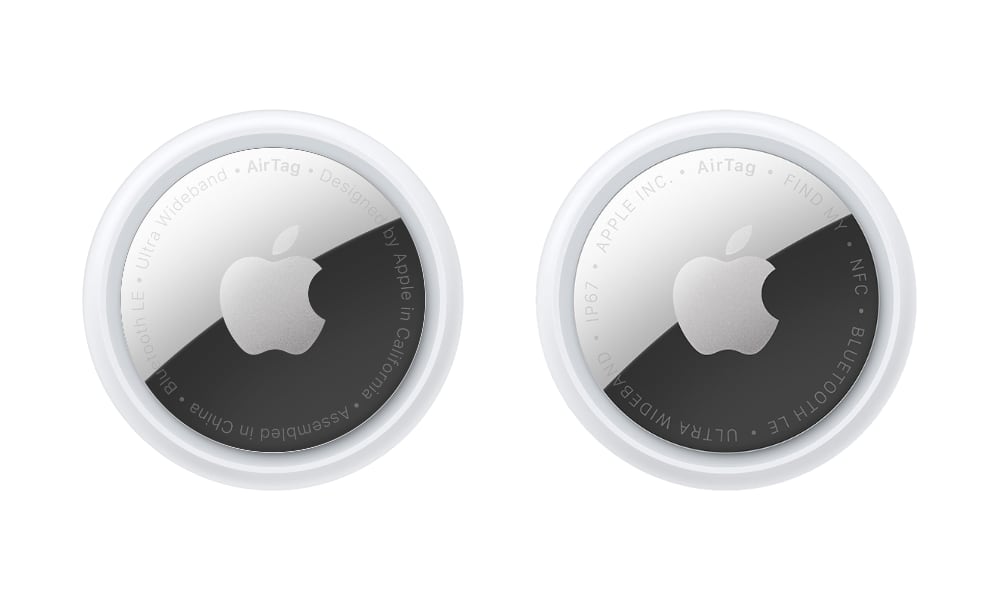
The price will be an easy way to tell in many places, but if you want to be sure, look closely at the lettering written on the circumference of the silver back; if it’s in all-caps, you’re looking at an AirTag 2.
That said, if you can get a good deal on the original AirTag, you may want to think about it. The new AirTag 2 has some nice enhancements, but it’s by no means a slam-dunk, especially if you want to save a few bucks. In fact, there are only three new user-facing features to speak of:
- Better Range: Apple promises up to 50 percent better range for Precision Finding, plus an unspecified increase for general communications over Bluetooth. The catch is that you’ll need at least an iPhone 15, Apple Watch Series 9, or Apple Watch Ultra 2 or newer models to take advantage of the Precision Finding increase — and the iPhone 16e and Apple Watch SE are still left out as they don’t support Precision Finding at all due to their lack of any Ultra Wideband chips.
- A Louder Speaker: The range increase is joined by an equivalent boost in loudness; Apple says the AirTag 2 is 50 percent louder than the previous one, making it easier to find in situations where Precision Finding doesn’t help (or you don’t have a Precision Finding capable device).
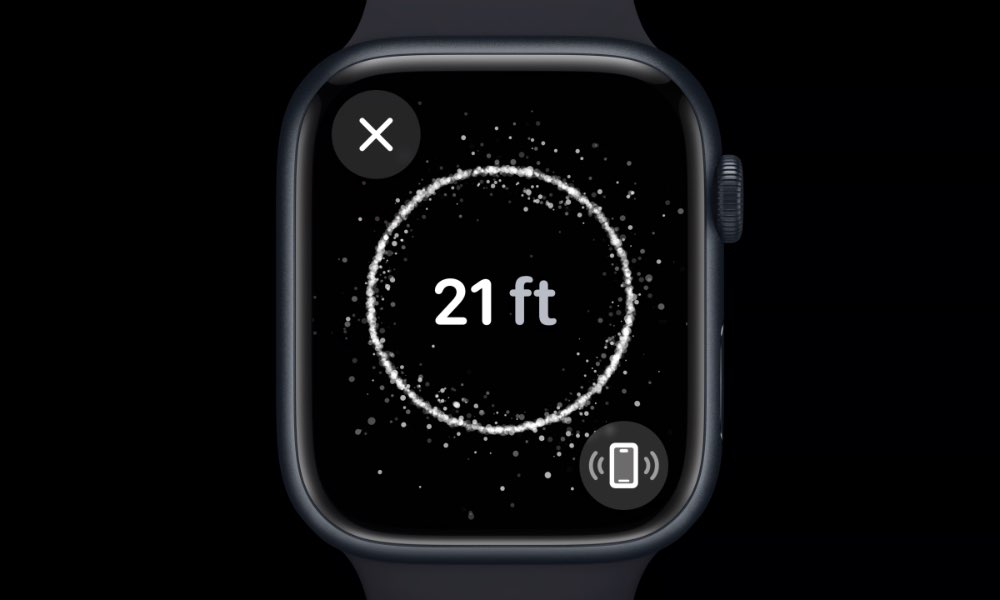
- Precision Finding on Apple Watch: If you have a compatible Apple Watch, you’ll also be able to use Precision Finding to locate an AirTag 2 from your wrist. This is unique to the new AirTag, similar to how you can already locate a lost iPhone from your wrist, and requires an Apple Watch Series 9 or Apple Watch Ultra 2 (but not the Apple Watch SE).
These are the most obvious reasons to buy the AirTag 2, but if you don’t care about these things, you may want to think about tracking down one of the originals at a better price before they’re all gone.
Still, before you write off the new AirTag entirely, it’s worth noting that the above improvements have additional benefits that may not be apparent at first glance.
Most significantly, the improved Bluetooth range doesn’t just mean you can find your AirTag at greater distances, but also ensures a lost AirTag will be picked up and reported in by more Apple devices that happen to pass by. That might not make a huge difference if you live your life in a built-up urban center, where hundreds of iPhones wander around within a few feet of each other every day, but in a rural or suburban area it could mean the difference between finding your lost wallet or giving up and reporting your credit cards stolen.
The increased volume also isn’t just about helping you hear your AirTag. This doubles as one of Apple’s anti-stalking features, as it will alert a potential victim to the AirTag’s presence when it’s been wandering around with them. That’s not something a law-abiding AirTag owner is likely to care much about, but it’s good to know that as the old AirTags die off and get replaced by the new ones, you’ll be more likely to hear an AirTag that someone tries to plant on your car.
What’s Under the Hood
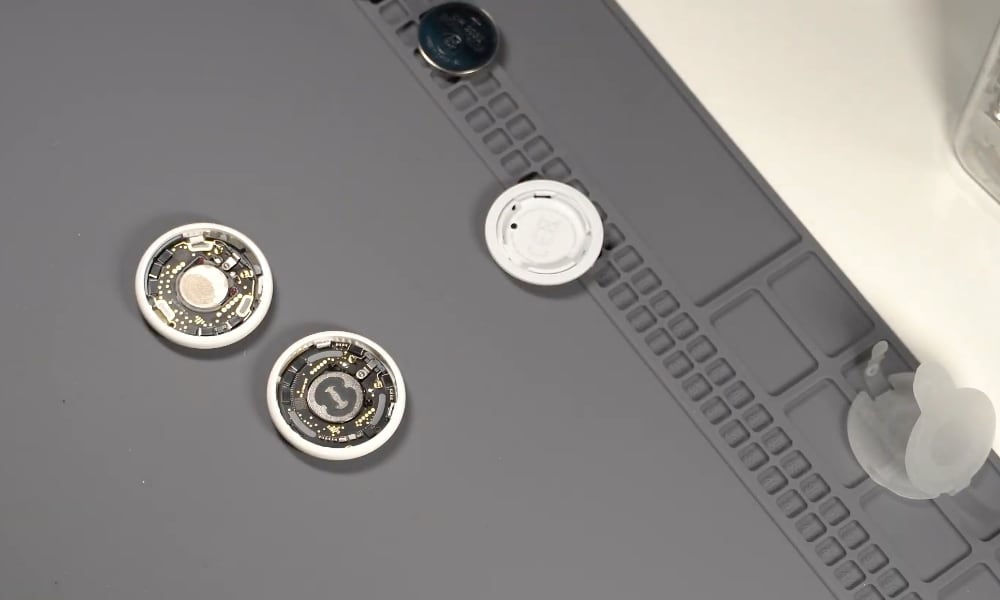
The AirTag 2 may look the same on the outside, but the improvements are more than skin deep. A teardown by YouTuber Joseph Taylor reveals some significant re-engineering on the inside of the AirTag 2, including confirmation that the speaker is indeed more difficult to remove.
To be clear, this isn’t the kind of advanced tamper proofing we were hoping for; we’re sure somebody could still figure out a way to remove the AirTag 2 speaker if they really wanted to, and there appears to be no firmware lockout to disable the AirTag if the speaker is removed.
Taylor confirmed this after he managed to get the speaker out, but he also added that it it was “glued in quite well” and took multiple tools and significantly more effort than the previous model. This makes it a more risky and potentially destructive process, but even if fewer folks will be able to try this at home, we wouldn’t be surprised to see another gray market for “silent AirTags,” like the ones that popped up on eBay and Etsy a few years back.
There are also several other small but noticeable design changes inside the AirTag 2, including a thinner PCB, and some repositioned battery connectors and additional test connections. You can see the full rundown in Taylor’s video below.
In another interesting twist, X user Karagana noticed that the “chime” on the AirTag 2 is now a tone higher than the original AirTag, having shifted from an F to a G.
Macworld’s David Price confirmed this using Virtual Piano, noting that only the pitch has changed; the rhythm and tempo remain the same: “a little flourish, followed by three sets of seven notes.” We can only speculate on why Apple made this change. A higher frequency is easier to discern in noisy environments, but as Price notes, it may have been as simple as a “product manager’s whim” or a way to audible set the two generations of AirTag apart.
None of these are features that Apple has mentioned in relation to safety and security, saying only in this week’s announcement that the AirTag remains for tracking objects and not people and pets — something it’s been saying for nearly five years already — and that it includes leading protections against unwanted tracking:
Designed exclusively for tracking objects, and not people or pets, the new AirTag incorporates a suite of industry-first protections against unwanted tracking, including cross-platform alerts and unique Bluetooth identifiers that change frequently.
Apple
While I’ve seen some folks suggesting this points to improvements in the new AirTag, I’ve been reading Apple’s PR language for long enough that I’m not fully convinced of that. Reading the above statement carefully, you’ll see nowhere does it say those features are “new” — only that the AirTag is.
It’s also far from the only place where Apple is highlighting features for the AirTag 2 in the same way. It also says “the new AirTag is designed from the ground up to keep location data private and secure,” but we’d like to hope the original AirTag was also designed this way. Also, “the new AirTag integrates seamlessly with Share Item Location,” but we know the old AirTag did that too, as Apple rolled out that feature over a year ago in iOS 18.2, and it’s fast become the industry standard for airlines and lost luggage services.
Price and Availability
Even if the new AirTag isn’t a revolutionary upgrade, it’s still better than the original in every conceivable way, so there’s no reason not to opt for it unless you can get the 2021 version at a substantially lower price. However, it also means you probably don’t need to rush out and upgrade to the new AirTag unless you’ve been having problems finding your items or you want to be able to start tracking them with from your wrist.
The AirTag 2 is available from Apple for $29 for a single tag or $99 for a four-pack, and should be showing up at major retailers soon. You’ll need iOS 26.2.1 and watchOS 26.2.1 for full support of the new features. For a more affordable option, you can still pick up a four-pack of the original AirTags from Amazon for $69.99.