The Original HomePod mini Isn’t Getting Siri AI — But What About Its Big Brother?
 Niks Evalds / Shutterstock
Toggle Dark Mode
It’s probably not a big surprise that this week’s “Welcome Home” releases are all about bringing Siri AI into the living room, but what’s come as a nice treat is that in at least some cases Apple is also bringing this power to older models of the Apple TV — and possibly even the HomePod.
In a move that defies the notion that Apple Intelligence requires an A17 Pro or M-series chip, Siri AI is arriving not only on the new A19-powered Apple TV 4K, but Apple has also promised to bring it to the second- and third-generation models. To put that in perspective, those are powered by an A12 Bionic and A15 Bionic, respectively — and the last of those was released nearly two years before Apple Intelligence officially arrived in iOS 18.1.
Even more interesting is that the HomePod mini 2, which is powered by an S10 chip, will also be gaining some support for Siri AI. It’s not clear precisely how this is going to work, but since watchOS 27 brings the full Siri AI experience — app and all — to Apple Watch models using the same chip, it’s not all that surprising that the smart speaker will be able to do the same.
While there’s some dubious evidence that the current full-sized HomePod model might get Siri AI, some other reports mistakenly predicted that this would also come to the original 2020 HomePod mini. However, Apple has told 9to5Mac that won’t be happening.
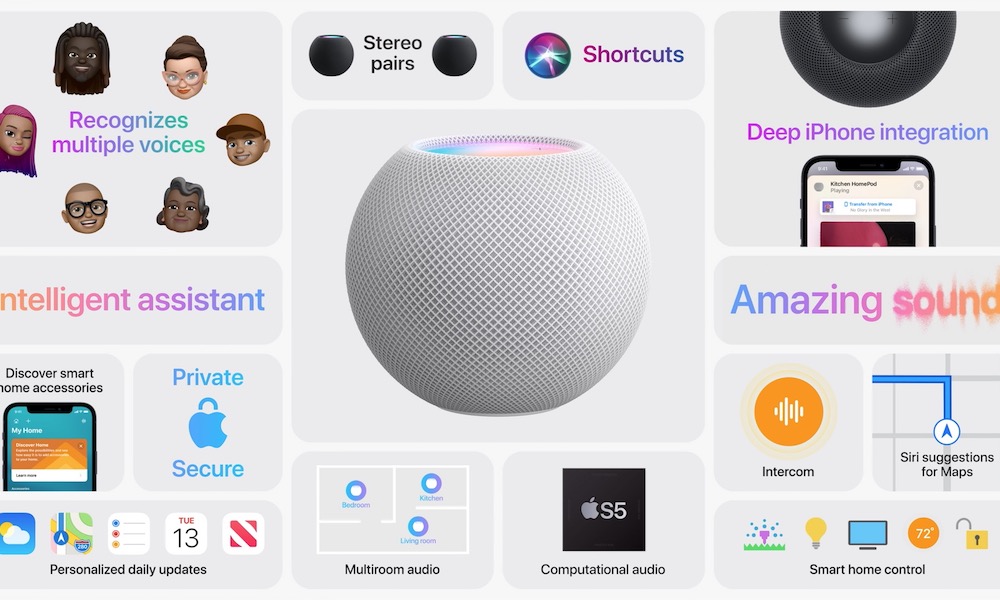
That makes sense, since although the S5 chip in that model has a basic two-core Neural Engine, it’s unlikely that 2019-era silicon has the chops to handle this kind of AI processing.
Apple’s Neural Engine first came to the A11 Bionic in 2017, but that was a rather limited two-core version. The A12 Bionic upped that to eight cores, the A14 Bionic doubled that to 16, and the latest A20 Pro chip offers a “dual 16-core” Neural Engine, which for all practical purposes means 32. All of Apple’s M-series chips also feature Neural Engines with at least 16 cores.
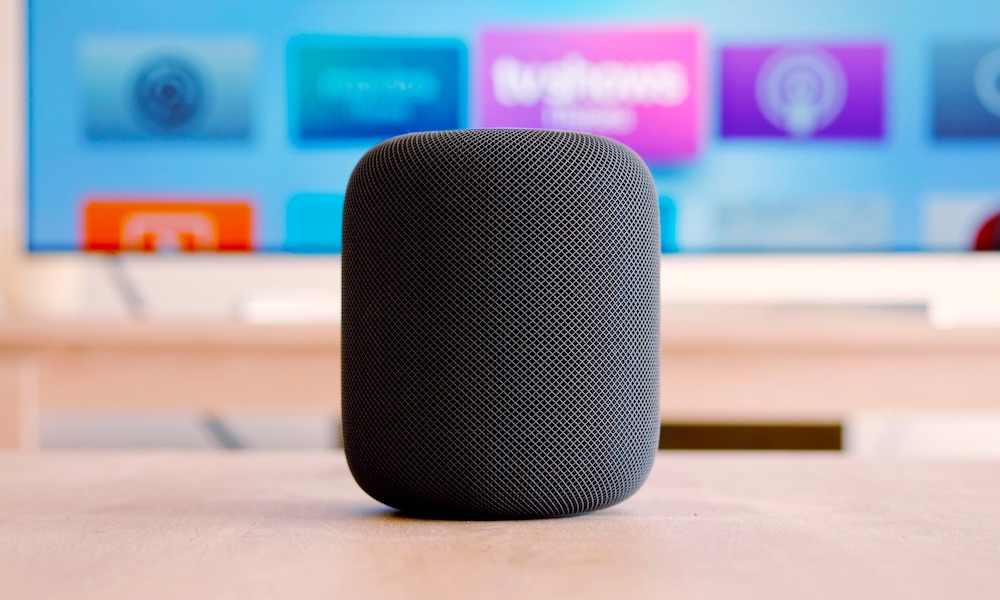
The second-generation HomePod could end up straddling the line. It uses Apple’s S7 chip, which still features a two-core Neural Engine, but at least those cores are faster. Whether that’s enough is an open question, and we’re not holding our breath, especially since Apple’s statement to 9to5Mac seems to preclude that:
Apple confirmed to 9to5Mac that Siri AI will only be available on HomePod mini 2 as well as Apple TV 4K (2nd generation or later).
Ryan Christoffel
The current four-core Neural Engine arrived in 2023 with the Apple Watch Series 9 and Ultra 2, which was the first time we saw it applied to Siri. It was sufficient to allow the classic voice assistant to handle some on-device requests, and the S10 chip used in the Apple Watch Series 10, Series 11, Ultra 3, and now the HomePod mini 2 is just a repackaged version of that.
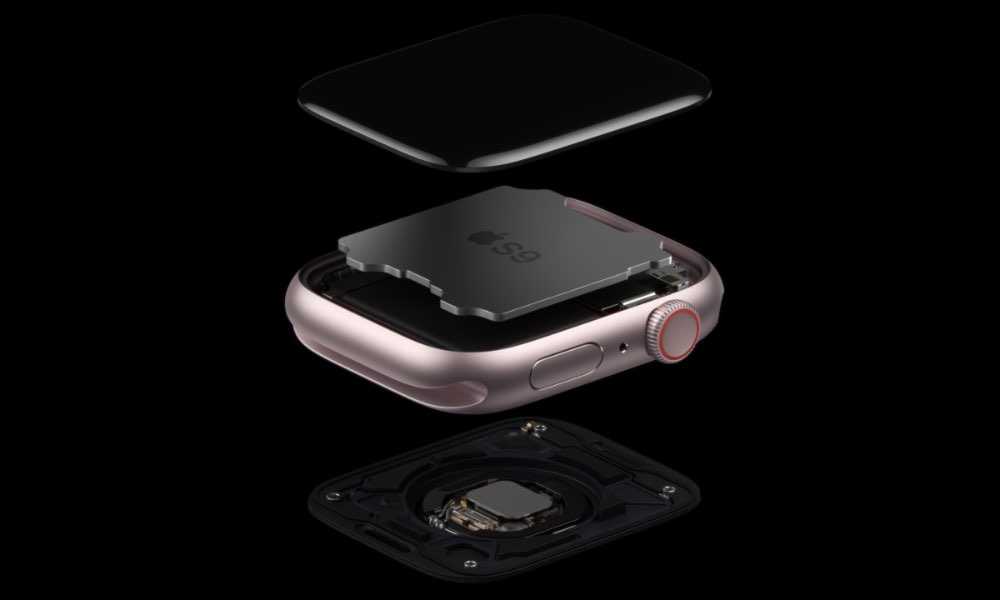
While Apple Intelligence was (and still is) restricted to the A17 Pro or later on the iPhone side, that’s also arguably more about RAM than processing power. The iPhone 15 Pro was the first to pack in 8 GB of RAM, with the A19 Pro chip increasing that to 12 GB. However, the A14 Bionic of the iPhone 12 era had essentially the same Neural Engine as Apple’s first M1 chip — both capable of 11 trillion operations per second (TOPS) — but it only had 4 GB or 6 GB of RAM (depending on the iPhone model), and half the memory bandwidth.
Of course, a lot has changed since Apple Intelligence arrived two years ago, and Siri AI also isn’t the full experience. The HomePod mini 2 and Apple TV 4K aren’t going to run Image Playground or Writing Tools. This is just about interacting with Siri AI, and that’s a whole new set of AI models.
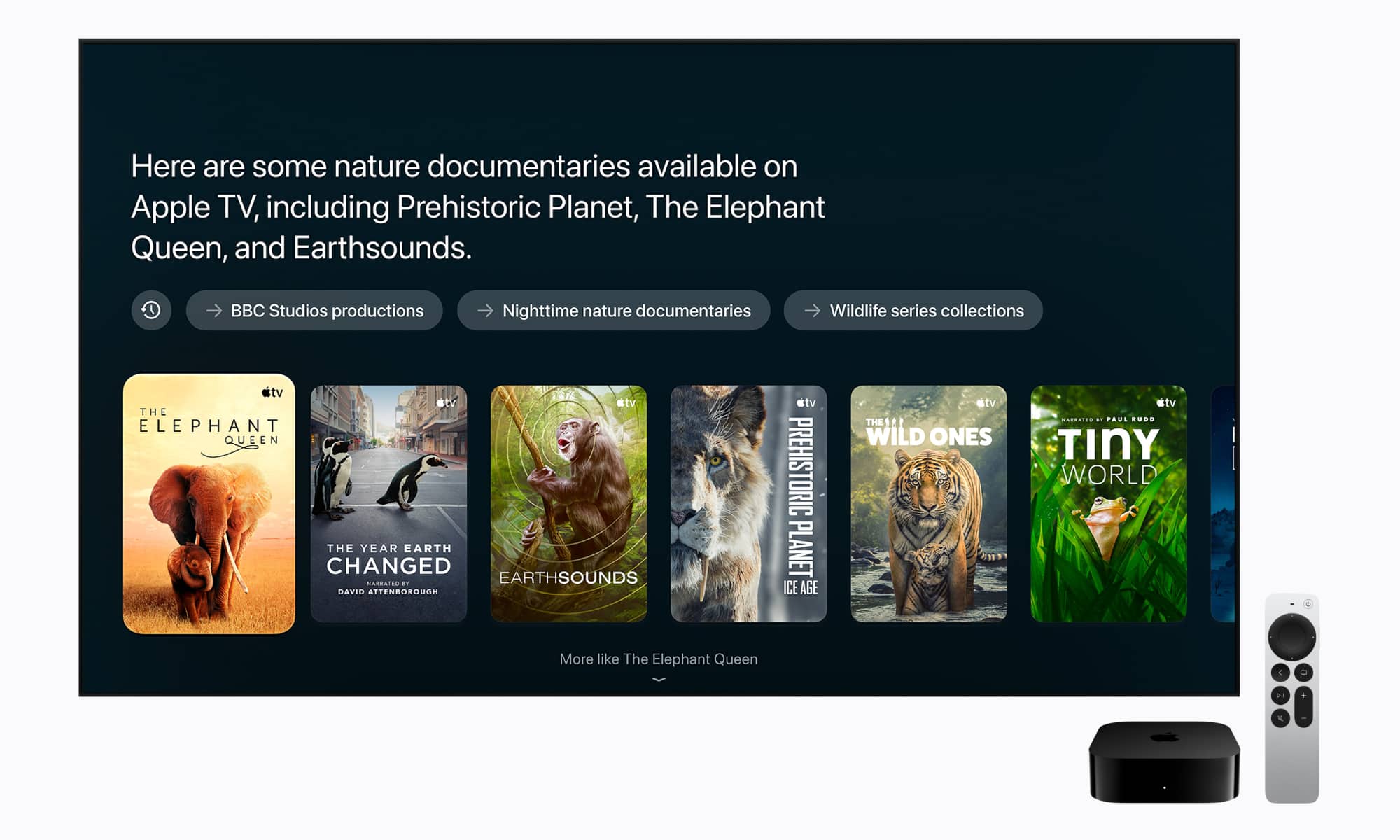
The A12 Bionic in the 2021 Apple TV 4K may have an eight-core Neural Engine, but it only packs in 3 GB of RAM, and with only 2 GB of RAM in the HomePod mini 2’s S10 chip, it’s unlikely either of these will be running AI models on-device, so they’re going to have to lean on other devices, such as the owner’s iPhone — which is precisely what Apple says in the fine print:
Siri AI is available in beta in tvOS 27.2 and requires the owner of the home in the Home app to have an Apple Intelligence-enabled iPhone or iPad running the latest software version and have Siri AI turned on and set to a supported language.
This may also answer why Apple isn’t able to turn the key on Siri AI for older iPhone models. After all, if an A12-powered Apple TV can run Siri AI, then the A13-powered iPhone 11 should have no problem with it — unless, of course, Apple needs a more powerful device in the mix to handle the heavy lifting.
We’ll have to wait until this all rolls out to find out how it works. Other family members will still be able to use Siri AI when the “owner of the home” isn’t around, so we’re guessing Private Cloud Compute factors in here as well. Anyone will be able to use Siri AI to answer general knowledge questions, although they’ll need an Apple Intelligence-enabled device — an iPhone 15 Pro or later or an iPad with an A17 Pro or M-series chip — to access personal context on these new devices to get Siri AI to draw from data in apps like Messages and Calendar.
Apple says Siri AI will be coming to the 2021 and 2022 Apple TV 4K models in tvOS 27.2. While it hasn’t shown up yet, the company also has yet to release a fourth tvOS beta this week, so those on the developer or public betas might see it soon.