This is How You Outsmart Modern Digital Scams
Toggle Dark Mode
Scams have become much harder to spot than they used to be. Years ago, you could usually recognize a scam by the obvious spelling mistakes, strange email addresses, or ridiculous promises. Now, scammers impersonate banks, delivery companies, government agencies, and even people you know.
The dangerous part is how convincing everything can look. A scam message might use a real company logo, a fake website that looks almost identical to the official one, or a phone number that appears to come from a trusted business. Now we even have to worry about scammers using AI-generated voices to make it sound like a family member or friend is calling for help.
Most scams have one thing in common: they want you to react before you think. They’ll try to scare you, excite you, confuse you, or pressure you into acting quickly. If you know the biggest warning signs ahead of time, it becomes much easier to slow down and protect yourself. Here are a few tips.
They Create a Sense of Urgency

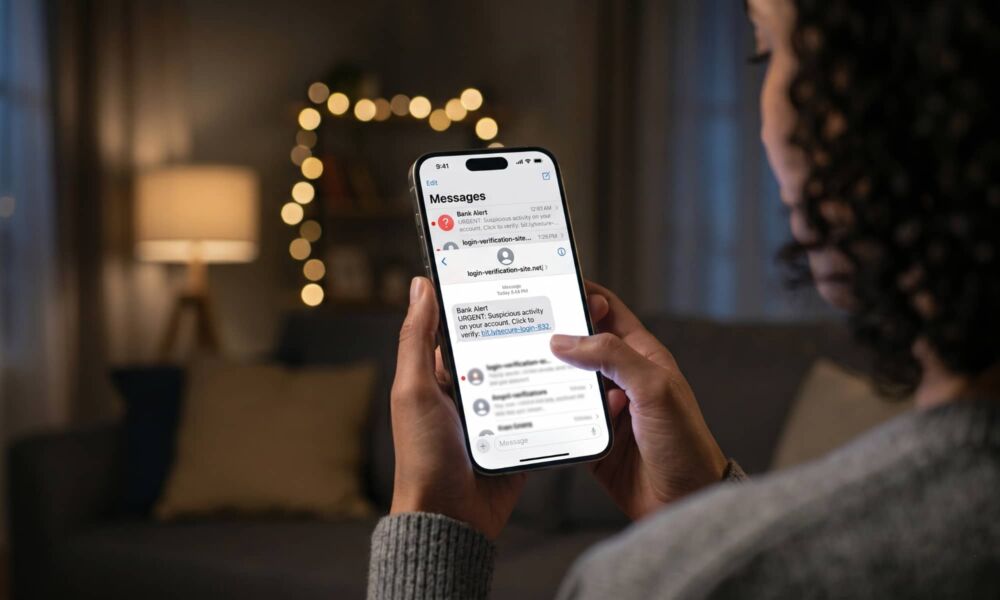
One of the most common scam tactics is making you feel like you have to act immediately. The message might say your account will be locked, your payment failed, or your bank account has been compromised. The goal is to make you panic before you can stop and think.
Scammers know that urgency makes people careless. When you feel rushed, you’re more likely to tap a link, call a fake phone number, or share information you’d normally keep private. That’s why so many scams include threats, warnings, or language that makes the situation feel like an emergency.
You might see messages saying your iPhone has been hacked or your bank card was used for a suspicious purchase. Combine that with scams pretending to be from Apple, Amazon, your bank, or a government agency, and you might actually start to worry.
Whether the threat is real or fake, the safest move is to pause. You can and should take your time, as legitimate companies rarely require you to act immediately — especially since they know about all these scams too. If you’re talking to an official company representative on the phone, they will fully understand your need to hang up and call them back at a legitimate number.
Don’t tap the link or call the number in the message. Open the official app or website yourself, or contact the company using a number you already know is legitimate.
The Message Contains Suspicious Links
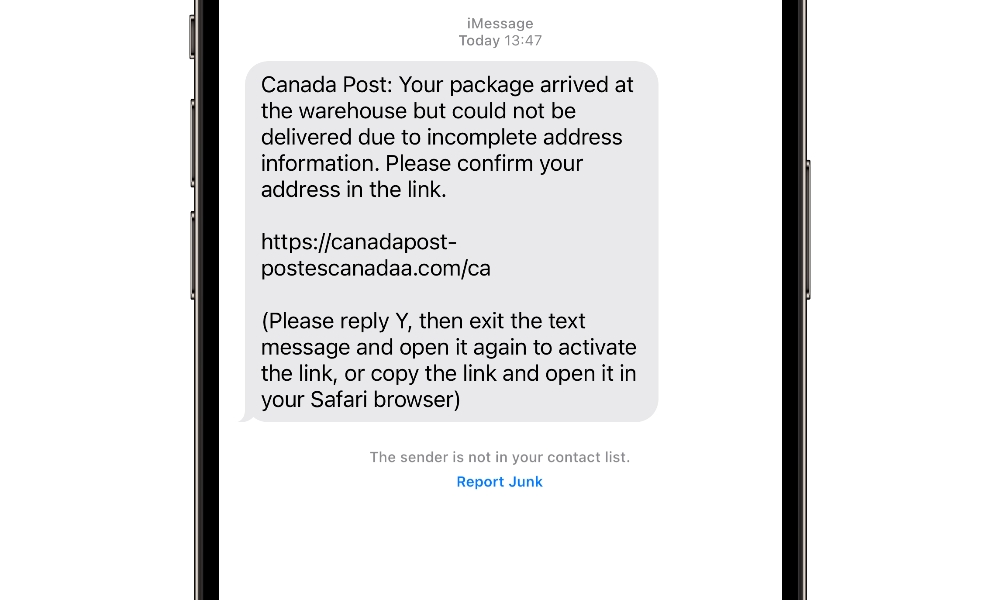
Scam messages often include links that look normal at first glance. They may pretend to lead to your bank’s website, a delivery company, or an online store. Once you tap the link, you’ll likely land on a fake website designed to steal your login credentials, credit card number, or verification code.
Some fake links are easy to spot because they contain misspelled company names or strange, random characters. Others are much more convincing, as scammers often add extra words to a domain, use shortened links, or create pages that visually copy the official website.
If you’re on your iPhone, you can long-press a link to preview where it goes before opening it. Still, the best option is to avoid links in unexpected messages altogether. If a message claims there’s a problem with your account, open the official app or type the website address manually. If it’s true, you’ll usually see the notification there as well.
The Offer Sounds Too Good to Be True
Scammers don’t always use fear; sometimes they use excitement. They’ll offer free iPads, guaranteed investment returns, high-paying remote jobs, giveaways, or you suddenly won a lottery you never participated in.
Of course, who doesn’t want free stuff? But if someone says you can make thousands of dollars with no experience, win a prize without entering, or receive money from a stranger online, it’s time to slow down. Legitimate opportunities rarely arrive out of nowhere with no strings attached.
Fake job scams are especially common. A recruiter may offer a great salary, flexible hours, and easy tasks, then ask you to pay for equipment, training, background checks, or crypto transactions. Real employers don’t usually ask new hires to send money before starting.
Before trusting any offer, ask yourself whether it makes sense. Why would this person contact you? Can you verify the company independently? Is there a real website, official email address, and consistent information outside the message you received?
They Pretend to Be Someone You Trust
Impersonation is one of the strongest tools a scammer can use. They may pretend to be your bank, Amazon, a delivery company, your boss, a friend, a family member, or a government agency. People naturally lower their guard when the message appears to come from a familiar name.
This is why you should be careful even when the sender looks legitimate. Phone numbers can be spoofed, email addresses can be faked, social media accounts can be copied, and company logos can be stolen. A message looking official doesn’t automatically make it real.
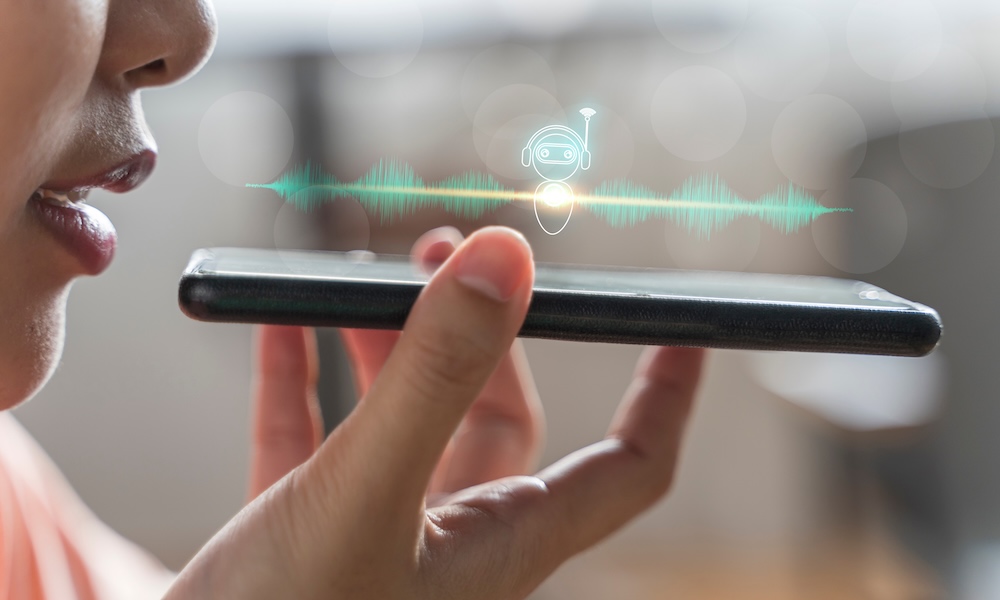
Family impersonation scams have also become more alarming because of AI voice cloning. A caller may sound like a relative and claim they’re in trouble, need money, or can’t speak for long. The voice may be convincing enough to make you panic.
If someone you know asks for money, secrecy, passwords, or urgent help, verify it through another method. Call them on a known number, ask a personal question, or contact another family member before doing anything.
The Message Has Strange Grammar or Formatting
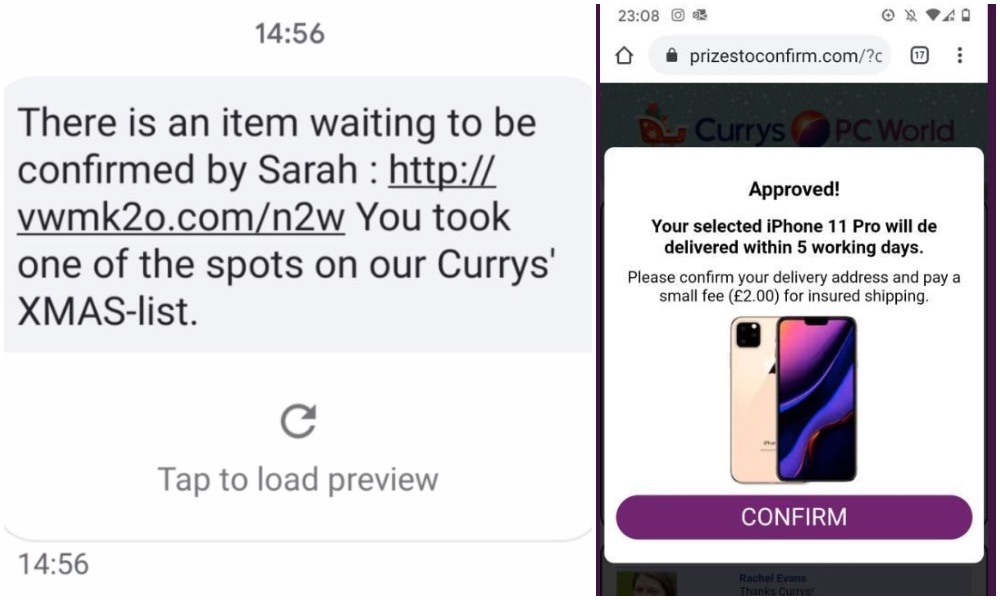
Poor grammar, awkward wording, strange capitalization, and odd formatting can all be warning signs. Many scam campaigns are created quickly, translated poorly, or sent in large batches to thousands of people at once.
You might see missing words, unnatural phrases, random punctuation, weird spacing, or generic greetings like “Dear Customer.” Sometimes the message will sound almost right but still feel a little off. That awkwardness can be a clue that something isn’t legitimate.
With all of that said, grammar alone doesn’t prove something is a scam. Some real companies send poorly written messages, and some scammers write very well. Modern scams can look polished, especially when criminals use AI writing tools.
The key is to look at the whole message. Bad grammar combined with urgency, suspicious links, unusual payment requests, or requests for personal information should make you much more cautious.
They Ask for Personal Information
It’s always a red flag when someone asks you to send sensitive information directly through text, email, phone, or social media. Legitimate companies won’t ask for your full password, complete credit card details, Social Security number, or two-factor authentication code in a random message.
Scammers often pretend they need this information to “verify” your account. They may ask you to confirm details such as your bank account number, date of birth, address, or card information. The wording may sound official, but they’re actually just gathering all of that data to use it later.
A real company may ask you to log in through its official app or website, but it shouldn’t ask you to reply with private information. Entering information into a fake link is also dangerous, which is why you should open the official app yourself before doing anything.
If you’re unsure, stop talking to the person and contact the company directly. Don’t use the contact details from the suspicious message.
They Refuse Normal Payment Methods
A scammer may avoid payment methods that offer protection. For example, they may refuse PayPal, credit card payments, official marketplace checkout, or any platform that allows disputes or refunds.
Instead, they may ask for crypto, wire transfers, gift cards, or another method that gives you little protection. They may claim it’s faster, cheaper, or necessary to secure the deal.
This is common in online selling scams, rental scams, ticket scams, and freelance scams. The person may seem friendly and trustworthy until payment comes up. Then they’ll push you toward the method that benefits them most.
Whenever possible, use secure payment options with buyer protection. If someone refuses every normal payment method and pressures you to use something irreversible, walk away.
A Few Minutes of Checking Can Save You a Lot of Trouble
Modern scams are designed to look convincing. They use real logos, polished websites, spoofed phone numbers, and even AI-generated voices. Some are obvious, but many are good enough to fool careful people.
The safest thing you can do is to slow everything down. Be cautious when someone creates urgency, asks for money in an unusual way, requests verification codes, sends suspicious links, or tells you to keep the conversation secret. Those warning signs appear in many different types of scams.
When in doubt, don’t respond to the message you received. Open the official app, type the website yourself, call a trusted number, or ask someone you trust for a second opinion. A scammer wants you to act quickly. Taking a few extra minutes can protect your money, your accounts, and your personal information.