Apple Podcasts Finally Goes All-In on Video
Toggle Dark Mode
Although it’s rare for Apple to announce new features alongside developer betas, yesterday was a notable exception when it shared that the OS 26.4 updates will bring “a transformative update” to video podcasting.
In a newsroom announcement, Apple explained how Apple Podcasts will be adopting Apple’s HTTP Live Streaming (HLS) technology to give podcast creators more control over their video and end users a more seamless experience.
HLS is essentially the same tech that Apple has been using for its own event livestreams for years. In this context, it will allow users to easily switch between viewing a video podcast or listening to the audio without any friction or interruptions while also ensuring that users get optimal quality regardless of whether they’re on LTE, 5G, or Wi-Fi.
While Apple Podcasts has offered video support for years, these have traditionally been delivered as standard video streams, which has often resulted in a less-than-ideal experience unless users were willing to download them. Meanwhile, Spotify and YouTube have raced ahead of Apple by offering a better experience, so now it’s Apple’s turn to try and take the lead again.
HLS offers automatic quality adjustments so that not only will the playback adjust for network conditions, but it will do so smoothly enough that viewers shouldn’t notice any glitches or awkward transitions, even when moving between cellular towers or Wi-Fi hotspots.
Twenty years ago, Apple helped take podcasting mainstream by adding podcasts to iTunes, and more than a decade ago, we introduced the dedicated Apple Podcasts app. Today marks a defining milestone in that journey. By bringing a category-leading video experience to Apple Podcasts, we’re putting creators in full control of their content and how they build their businesses, while making it easier than ever for audiences to listen to or watch podcasts.
Eddy Cue, Apple’s senior vice president of Services
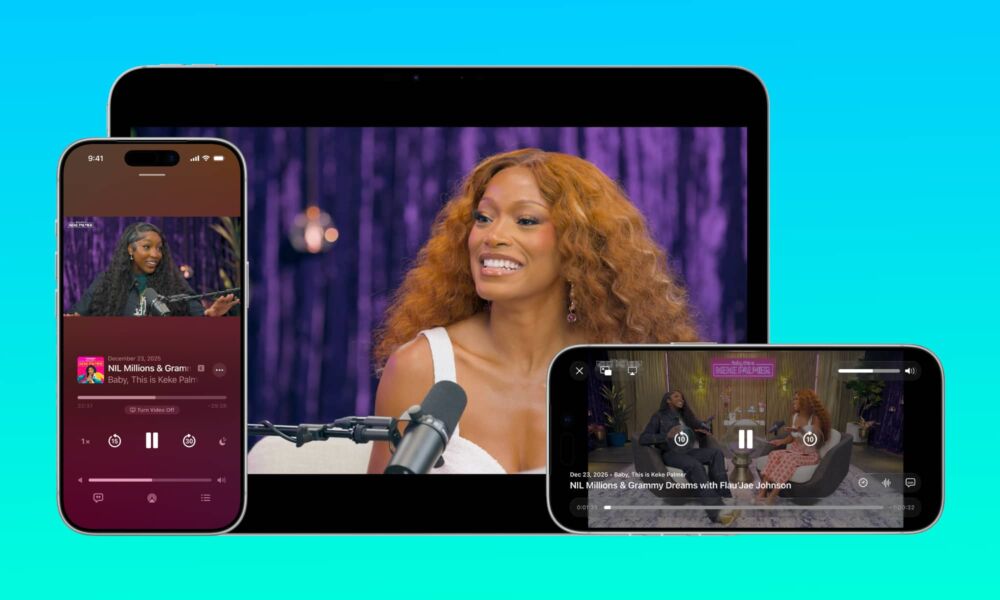
The new Podcasts app in iOS 26.4 will offer the ability to switch between watching and listening on the fly via a simple toggle button above the playback controls, as well as easily moving to a full horizontal display.
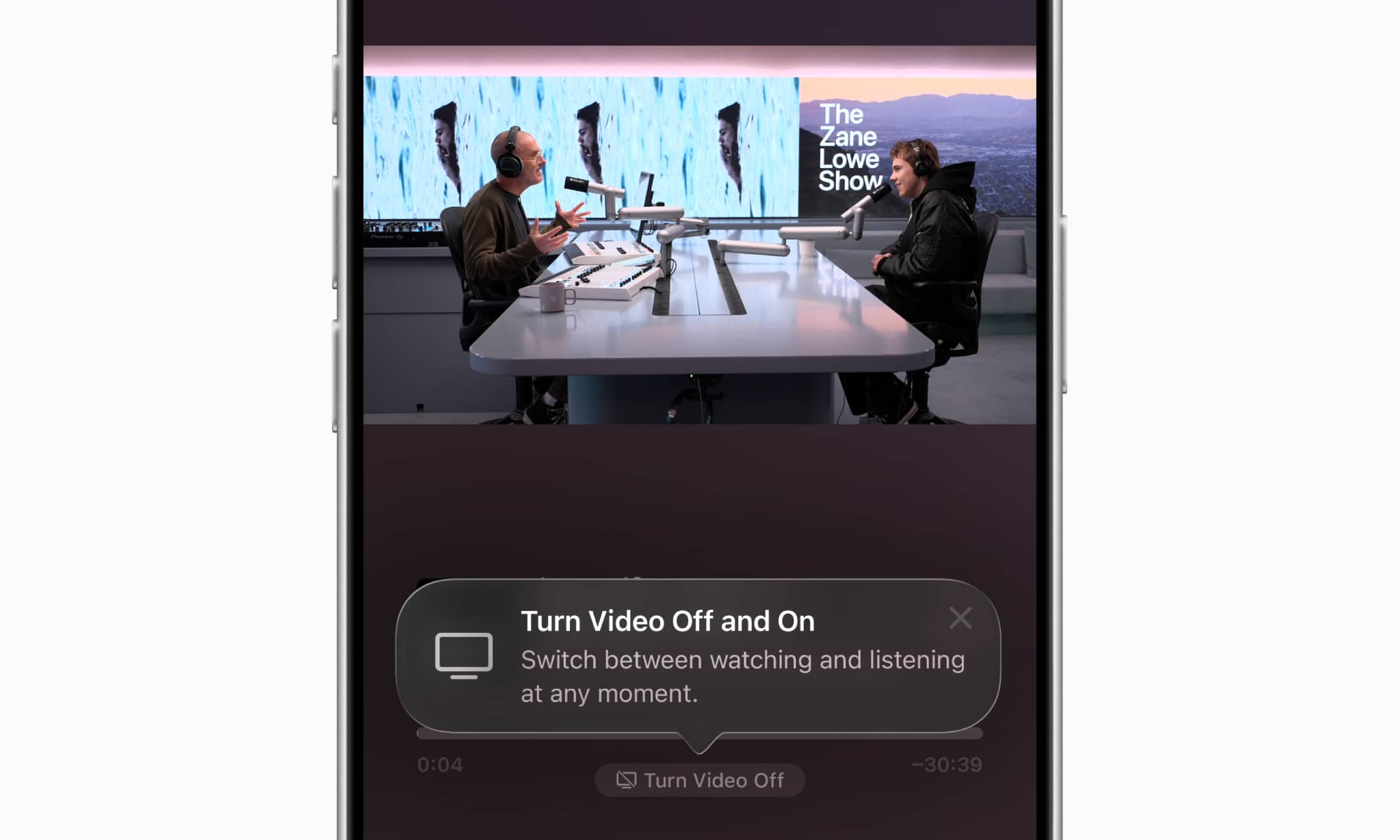
What’s ideal about this is that you’re not merely “muting” the video; the nature of HLS means it’s not even streaming to your device when you’re merely listening to the audio portion, thereby avoiding needless data usage.
Videos can also still be downloaded for offline viewing as before, but this is now opt-in; automatic downloads will stick to audio by default to save storage space and bandwidth.
Apple has also partnered with several of the biggest hosting providers to support HLS video at launch, including Acast; ART19, an Amazon company; Triton’s Omny Studio; and SiriusXM, inclusive of SiriusXM Media, AdsWizz, and Simplecast, with more expected to come on board in the future. The new experience will also let creators dynamically insert ads for the first time, whether host-read or third-party, giving them more ways to monetize their podcasts without giving up creative control.
The new HLS video support will continue to be offered at no charge to creators and hosting providers, with Apple taking an impression-based fee of any ads run through participating networks later this year.
HLS video is already available in the first betas of iOS 26.4, iPadOS 26.4, and visionOS 26.4, and Apple has promised that it will be rolled out in these updates for the iPhone, iPad, and Vision Pro this spring, along with Apple Podcasts on the web. While Apple Podcasts is also available for macOS, Apple hasn’t said anything about its plans to bring the enhanced video experience to the Mac.